Week of July 17 Weekly Recap & The Week Ahead
Do More of What Works and Less of What Does Not
1. US CPI Falls for the First Time Since 2020, Core Gauge Flat — The consumer price index fell 0.4% from May, dragged down by the biggest decline in gasoline prices since 2022, according to Bureau of Labor Statistics data out Tuesday. Excluding food and energy, the index was flat from the prior month. The report suggests a slide in prices at the pump in June offered consumers some relief as the worst of the Iran war energy shock started to fade. Fed officials will likely welcome the data ahead of the US central bank’s upcoming meeting at the end of the month, though a new upturn in oil prices amid renewed hostilities between the US and Iran risks prolonging the inflationary fallout from the conflict.
2. US Producer Prices Come in Tame as Pipeline Pressures Abate — The producer price index excluding food and energy increased 4.7% from a year earlier, according to Bureau of Labor Statistics data out Wednesday, below the median estimate in a Bloomberg survey. Overall PPI inflation slowed in large part due to a 12% drop in gasoline prices. The report showed broad-based cooling in several key categories that had been boosted in recent months by the fallout from the war. That likely gives the Federal Reserve more room to postpone an interest-rate increase — especially after a separate report Tuesday showed consumer prices were also tame in June. However, with the Middle East conflict heating up again, the reprieve may prove short-lived.
3. US Retail Sales Rise Modestly as Consumers Spend Less on Gas — The value of retail purchases rose 0.2% in June after a revised 1% advance in May, Census Bureau data showed Thursday. The figures are not adjusted for inflation. Outside of gasoline stations, sales increased 0.7%. Seven of 13 retail categories posted gains. Gasoline-station receipts fell 5.3%, the sharpest decline since 2022, as average national pump prices dropped roughly 50 cents a gallon in June. Receipts at nonstore retailers jumped 1.9%, the biggest increase in nearly a year, likely boosted by Amazon.com Inc.’s Prime Day event.
4. China’s Economy Grows at Weakest Pace Since 2022 — China’s gross domestic product expanded 4.3% in April to June from a year ago, according to official data released Wednesday, down from 5.0% in the first quarter of the year. This marks the slowest growth since the end of 2022, when the country was grappling with the economic fallout of the Covid-19 pandemic. Earlier this week, Beijing reported that exports rose 27% from a year earlier in June, largely fueled by demand from the AI sector, with outbound shipments of semiconductors up more than 120%.
This week’s data underscores the lopsided nature of the Chinese economy. Chinese exporters are booming in everything from chips to electric vehicles and industrial batteries. The country’s tech companies are churning out winning AI models in a high-stakes race with the U.S. But, at the same time, much of the domestic economy is a mess. A crash in the property sector has drained family savings and made many unwilling to spend. Young people increasingly struggle to find jobs. Deflation is eroding company profits.
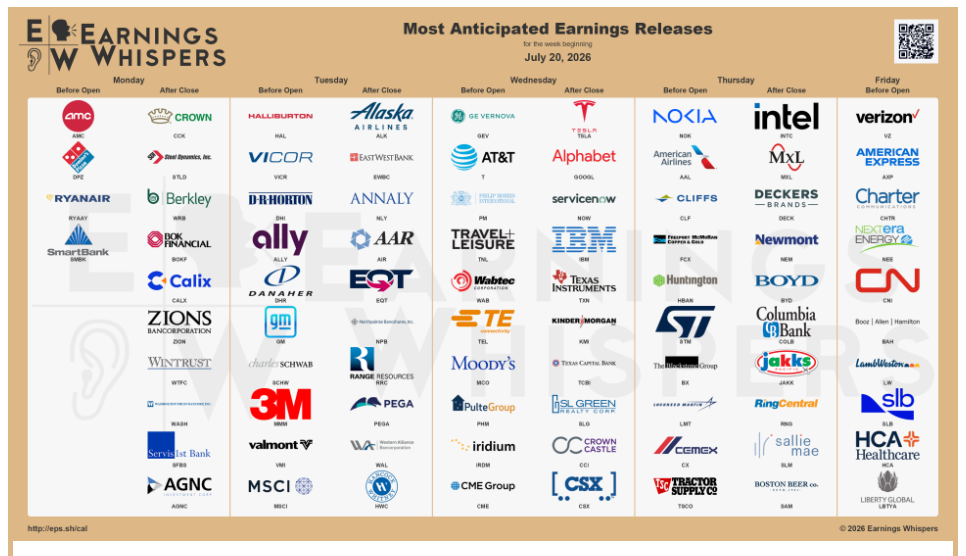
The week ahead — Economic data from Econoday.com:
 This entry was posted
on Thursday, July 23rd, 2026 at 5:56 pm and is filed under Weekly Summary.
You can follow any responses to this entry through the RSS 2.0 feed.
You can leave a response, or trackback from your own site.