“The market doesn’t reward the smartest traders. It rewards the most disciplined ones.”
1. US 30-Year Treasury Yield Rises to Highest Level Since 2002 — The 30-year rate surpassed 5.59% on Tuesday to touch a level last seen in 2002, in the wake of the dot-com bust. The latest leg higher came as elevated energy prices added to inflationary pressures and hefty corporate-debt supply weighed on the market. It’s latest in a series of milestones for the $32 trillion Treasuries market, which is in the throes of a months-long selloff. Government debt has been flailing around the world as elevated oil prices — tied to the war in the Middle East — ripple through the global economy, pushing investors to bet central banks including the Federal Reserve will further raise interest rates.
2. US Consumer Confidence Plunges to Lowest Level Since 2014 — US consumer confidence fell in September to the lowest level since 2014 as views about the economy and the labor market deteriorated. The Conference Board’s gauge of confidence decreased 6.7 points to 81.9 after a downward revision to the prior month, data released Tuesday showed. The figure was well below all expectations in a Bloomberg survey of economists. US consumer confidence fell in September to the lowest level since 2014 as views about the economy and the labor market deteriorated.
The Conference Board’s gauge of confidence decreased 6.7 points to 81.9 after a downward revision to the prior month, data released Tuesday showed. The figure was well below all expectations in a Bloomberg survey of economists.
3. Growth, Inflation Figures Show Signs of an Economic Pickup — according to WSJ, The Commerce Department raised its reading for annualized gross domestic product growth in the second quarter to 2.2%, well above the 1.5% that had previously been reported. The key consumer-spending and investment categories were both stronger than previously thought. A key metric of underlying growth trends, real final sales to private domestic purchasers, was also tweaked higher, to 4.6%. In August alone, price increases accelerated. The overall index rose by 0.3%, and the core version that excludes food and energy prices rose by 0.2%, faster than the July readings.
4. Jobs Growth Much Weaker Than Expected in September; Unemployment Ticks Higher == After uncharacteristically strong payroll gains in August, hiring was more on trend in September with a gain of just 29,000 jobs. That was dramatically below expectations, but not far off the average monthly gain of 45,000 experienced over the past year. The unemployment rate ticked up to 4.2% in September, from 4.1% the previous month. While that may seem problematic at first glance, the rise was generally the result of stronger labor participation and growth in the labor force. Monthly wage growth proved very subdued, rising just 0.1% in September. That’s a good sign that the labor market isn’t boosting inflationary pressures, but a tough break for the many Americans struggling with higher costs of living.
strong>The week ahead — Economic data from Econoday.com:
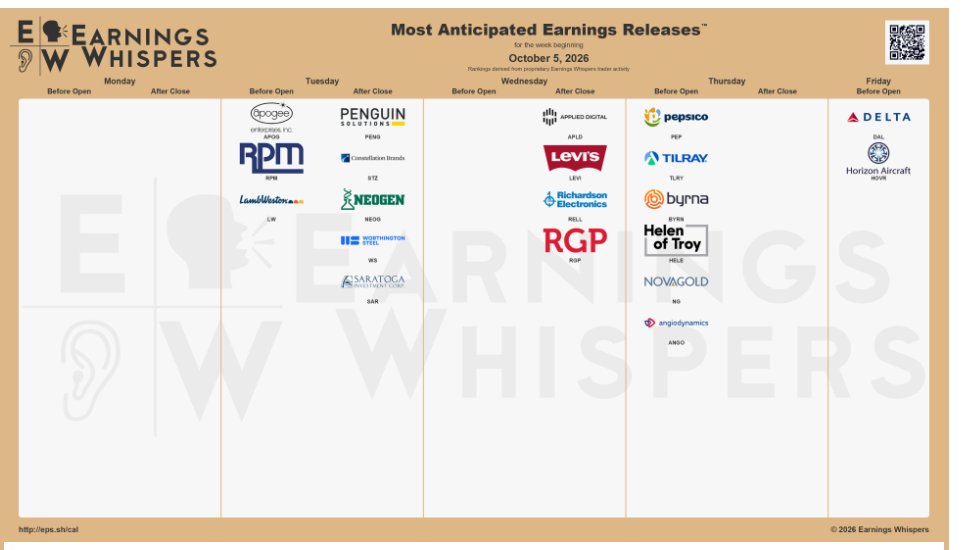 Posted in Weekly Summary | No Comments »
Friday, October 2nd, 2026
If I had to sum up my practical skills, I would use one word: survival. And operating a hedge fund utilized my training in survival to the fullest. George Soros
1. Trump Rejects Push for International Pact to Manage Risks of AI — Donald Trump dismissed calls for an international agreement to put guardrails around the development of artificial intelligence, brushing off concerns about the dangers of frontier models going rogue. World leaders converged on New York for the UN’s annual gathering at a moment of escalating anxiety about AI after researchers at the most advanced developers warned that the technology could wipe out humanity without proper controls.OpenAI, which opened the AI era with the release of ChatGPT in 2022, on Monday called for internationally agreed standards to ensure that AI can be developed safely.
2. US Mortgage Rates Surge Above 7% to a More Than Two-Year High — The contract rate on a 30-year fixed mortgage rose 15 basis points to 7.12% in the week ended Sept. 18, according to Mortgage Bankers Association data released Wednesday. That was the highest since May 2024. The five-year adjustable-rate mortgage, however, fell 13 basis points to 6.1%. With borrowing costs climbing, fewer Americans are applying for home financing. The MBA purchase index, a measure of loan applications, fell 0.8% to a four-week low. The group’s refinance index dropped 2.6% to the lowest level since February 2025. Breaking through the 7% barrier could dampen demand further.
3. KB Home Cuts Margin Outlook as Housing Conditions Worsen — The homebuilder said Tuesday it now expects annual gross profit margin to be 16.0% to 16.2%, down from its earlier guidance of 16.1% to 16.5%. It now expects housing revenue to be $4.9 billion to $5.1 billion, compared with its earlier range of $4.9 billion to $5.3 billion. Its projection for annual home deliveries remained the same, at 10,500 to 11,000 homes. The lower margin guidance is due to the fact that the current fourth quarter is looking less promising than executives originally thought, Hollinger said. Management now expects a smaller contribution from higher margin communities on the West Coast, primarily due to worse conditions in Southern California.
strong>The week ahead — Economic data from Econoday.com:
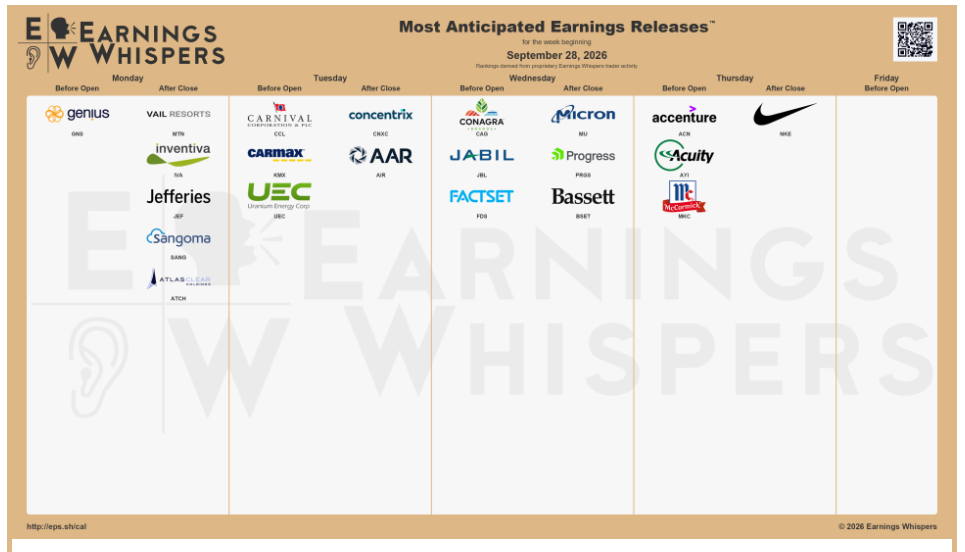 Posted in Weekly Summary | No Comments »
 Posted in