Week of Aug 22 Weekly Recap & The Week Ahead
Wednesday, August 26th, 2026In the 20th century, the United States endured two world wars and other traumatic and expensive military conflicts; the Depression; a dozen or so recessions and financial panics; oil shocks; a flu epidemic; and the resignation of a disgraced president. Yet the Dow rose from 66 to 11,497 — Warren Buffett
1. Trump Takes Iran Hard Line as Hormuz Tensions Mark New Normal — The memorandum of understanding that the US and Iran signed in June in an effort to buy time to negotiate a lasting peace deal — as repeatedly violated as it had been during that 60-day window — has expired. There are no plans to extend it. The United Arab Emirates on Tuesday said it was cutting off trade, commercial exchanges and financial transactions with Iran until further notice “in light of regional escalations that undermine regional and international peace and security.”
2. U.S. Imposes 50% Tariffs on Some Canadian Goods After Last-Ditch Talks Fail — Trade talks between the U.S. and Canada broke down on Friday, officials from both countries said, paving the way for the U.S. to impose 50% tariffs on about $20 billion worth of Canadian goods early on Saturday and risking escalation into an all-out trade war. The Trump administration first threatened the latest round of tariffs last month, saying they would be imposed in response to Canada’s provincial bans on American alcohol, protections for its domestic dairy industry and quotas and tariffs on some U.S. vehicles. Many of Canada’s recent trade actions against the U.S. were put in place in retaliation for earlier levies imposed by Trump, including his sector-specific levies of up to 50% on automobiles, steel, aluminum and forest products. Though most Canadian exports have avoided those duties because they complied with the U.S.-Mexico-Canada Agreement, the new round of tariffs doesn’t exempt such products.
3. Fed Minutes Reveal Broader Support for Rate Increases — The decision to hold the benchmark rate steady between 3.5% and 3.75% drew three dissents from Fed presidents who thought a rate increase was warranted. While there are 12 voting members of the Federal Open Market Committee, a total of 19 officials, including seven bank presidents without a vote, participate in the meetings. The minutes suggested that some officials without a vote would have also supported raising rates. At a press conference after the July 28-29 meeting, Chairman Kevin Warsh deflected criticism that holding rates meant the Fed was doing nothing. He pointed to the rise in market interest rates since the June meeting, in both nominal and inflation-adjusted terms, as evidence that financial conditions had tightened without the Fed acting.
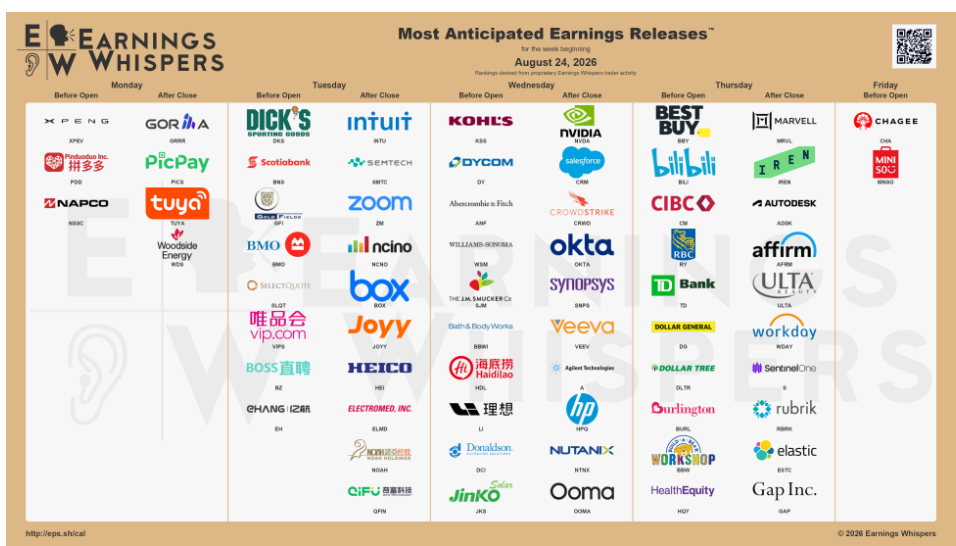
strong>The week ahead — Economic data from Econoday.com:
 Posted in
Week of Aug 15 Weekly Recap & The Week Ahead
Thursday, August 20th, 2026“I’m only rich because I know when I’m wrong… I basically have survived by recognizing my mistakes.” — George Soros
1. July Home Sales Fell After Higher Mortgage Rates Scared Off Buyers — Sales of existing homes declined 1.7% in July over the previous month to a seasonally adjusted annual rate of 4.06 million, the National Association of Realtors said. Mortgage rates briefly fell below 6% in February, but jumped with the beginning of the Iran war, and have continued to creep up as hopes for a clean end to the conflict have faded.
The 30-year fixed-rate mortgage averaged 6.69% last week, the fifth consecutive week of increases, after averaging 6.43% at the start of July, according to Freddie Mac.
Many homeowners benefiting from low rates from years ago have opted to stay put to maintain their rates, which has dragged down available inventory. NAR said unsold inventory in July fell 1.9% from June to 1.54 million units.
2. Inflation Was 3.4% in July, Down Slightly From the Previous Month — Stop-and-start peace negotiations in the Middle East brought a respite for gasoline prices. And so-called core prices, which exclude the volatile food and energy categories, rose by 0.2% in July from the previous month, a relatively modest increase offering hope that broader price pressures could be abating. Core prices rose by 2.5% over the past 12 months, down from 2.6% in the year through June. The relatively modest increase in underlying inflation may relieve some immediate pressure on the Fed to raise interest rates in September.
3. US Wholesale Inflation Cools — The producer price index rose 4.7% from July 2025 after a 5.5% annual increase in June, according to Bureau of Labor Statistics data out Thursday. On a month-over-month basis, the PPI was unchanged. Excluding food and energy, producer prices climbed 4.2% from a year ago and 0.2% compared with June.The PPI report follows consumer price data showing moderating inflation, adding to evidence that the initial war-driven energy shock is continuing to fade. It will also give Fed officials more room to weigh lingering inflation pressures against a recent slowdown in hiring.
4. Weak Retail-Sales Number Adds to Softening Economic Data — The value of retail purchases, which isn’t adjusted for inflation, decreased 0.6%, the most since May 2025, according to data published Friday by the Census Bureau. Excluding autos and gasoline, sales fell 0.2%. The report suggests consumers took a breather last month after a stronger first half of 2026, though some analysts also warned the numbers could be affected by spending pulled forward after Amazon.com Inc. moved its Prime Day sales event to June this year from July the year before. Five of 13 categories in the report posted declines, led by a 2.2% drop in sales at nonstore retailers such as Amazon. Sales at motor vehicles and parts dealers fell 1.8%. Meanwhile receipts at restaurants and bars, the only service-sector category in the retail report, rose 0.5%.
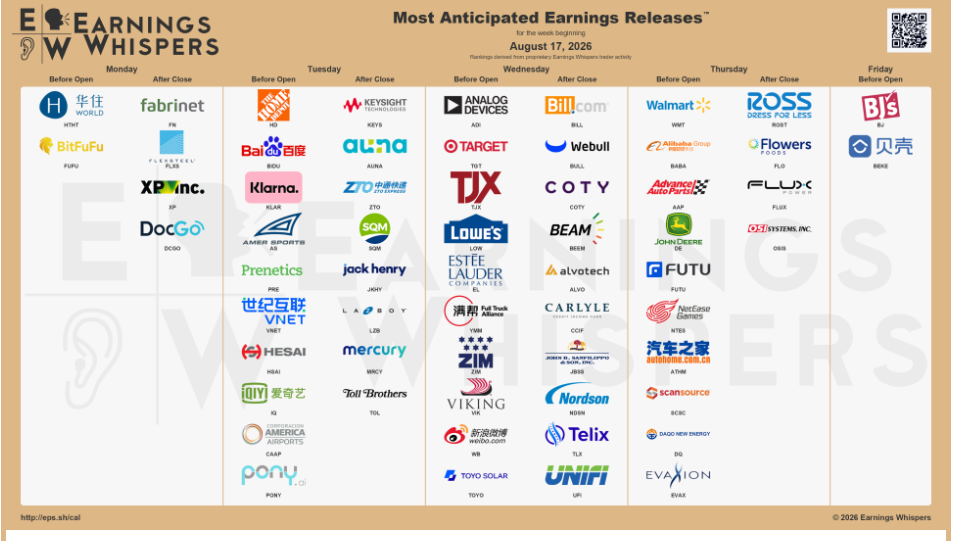
strong>The week ahead — Economic data from Econoday.com:
 Posted in
Week of Aug 6 Weekly Recap & The Week Ahead
Wednesday, August 12th, 2026“Time is the friend of the wonderful business, the enemy of the mediocre.” — Warren Buffett
1. Warsh Floats Cut in Number of Fed Rate-Setting Meetings — Federal Reserve Chairman Kevin Warsh this week floated to colleagues the prospect of meeting less often, which would mark a substantial shift in its operations, according to people familiar with the matter. Warsh this week presided over his second meeting of the 12-person Federal Open Market Committee, which convenes in Washington eight times a year to determine where to set interest rates. The idea of fewer meetings was presented as a subject for discussion rather than a formal proposal, and a brief discussion centered on whether there would be benefits from meeting six times a year, these people said.
2. U.S. Trade Deficit Contracted in June — U.S. imports totaled $388 billion in June, down 1.8% from May, while exports were $314.7 billion, down 0.9% from May. That yielded a trade deficit of $73.3 billion versus $77.6 billion in May. Analysts polled by The Wall Street Journal were expecting a $72.9 billion monthly deficit. Frequently changing tariff policy that began last year has caused volatile movements in U.S. trade flows. In February, the Supreme Court overruled Trump’s use of the International Emergency Economic Powers Act to enact broad global tariffs, but has turned to other authorities as he continues to attempt to limit imports into the U.S.
3. U.S. Economy Unexpectedly Lost 23,000 Jobs in July — The Labor Department’s July jobs report showed that the economy lost 23,000 jobs last month, a big shortfall versus the gain of 83,000 that economists surveyed by The Wall Street Journal had expected. Revisions to May and June payrolls numbers showed that the economy added 103,000 fewer jobs in those two months. More Americans stepped back from the labor market entirely, according to the Labor Department’s separate monthly survey of households. As a result, the unemployment rate eased to 4.1%, from 4.2% in June, even though fewer people were working. In a bright spot likely reflecting the boom in data centers, the construction sector added 22,000 jobs last month. Manufacturing gained 5,000. But leisure and hospitality employers cut 40,000 workers—after cutting even more in June—while retailers shed more than 19,000 employees. Private-sector education and healthcare jobs grew by 25,000, a relatively poor result for what has been a big source of new jobs over the past year.
4. Trump to Impose 15% Tariff, Set Minimum Prices on Solar Panels and Components — President Trump signed a proclamation Thursday that will set a 15% tariff on imports of the solar-energy materials and equipment. Companies that commit to building manufacturing facilities in the U.S. can apply for exemptions from the levies, which take effect on Dec. 4, according to the proclamation.
Cylinders of polysilicon called ingots are sliced to form wafers, which are combined to create solar cells and then arranged together to form modules that are placed on racks to generate electricity.
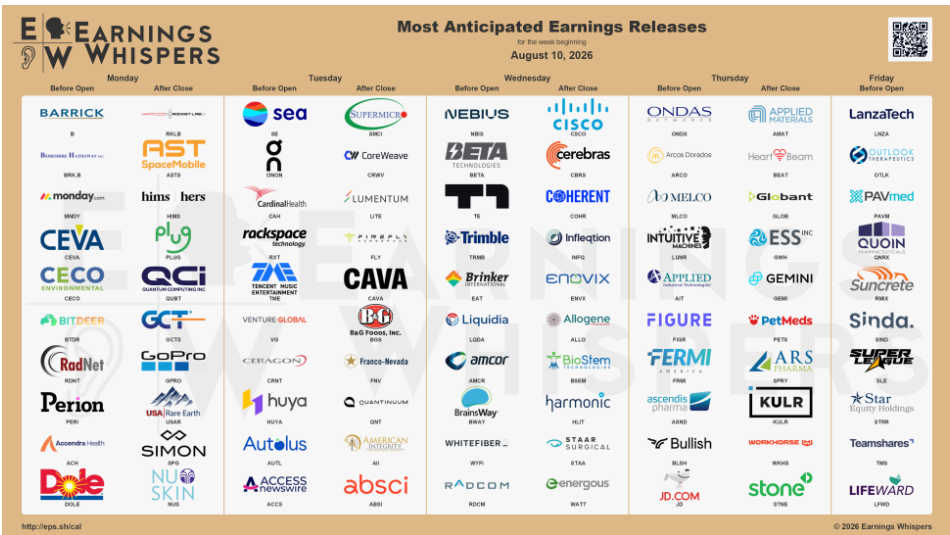
The week ahead — Economic data from Econoday.com:
 Posted in
Week of July 31 Weekly Recap & The Week Ahead
Wednesday, August 5th, 2026“Market fluctuations are your friend, not enemy” ― Warren Buffett
1. Trump Threatens New Tariffs on EU Over Tech Fines — the EU this week announced it would fine Alphabet’s Google $1 billion for breaching digital competition rules—the latest in a series of penalties for American tech firms in recent years. In response, President Trump said on Friday that he would direct his government to open a tariff investigation that could result in new levies on the EU.The investigation will be run by the U.S. Trade Representative’s office under Section 301 of the Trade Act of 1974, which allows the president to impose tariffs on countries that discriminate against U.S. companies. Trump used the same provision to put tariffs ranging from 10% to 12.5% on U.S. trading partners this week over forced-labor concerns—replacing temporary tariffs put in place after the Supreme Court invalidated many of his tariffs in February. A lawsuit was filed Friday by two small businesses challenging the new forced-labor tariffs.
2. Korean Stocks Plunge 16% in Two-Day Burst of Retail Selling — Despair and frustration spread across the South Korean retail-investing community as stocks cratered again Wednesday, extending the decline in the nation’s key equity index this month to a record 33%. The Kospi Index slid as much as 13% in a hectic morning session, triggering a circuit breaker for a second straight day, as disappointing earnings from SK Hynix Inc. worsened already‑jittery sentiment around the artificial intelligence buildout. Even though the gauge later trimmed declines, it still closed down 6%, resulting in a drop of 16% in just two days.
3. Fed Holds Rates, Three Officials Dissent Favoring a Hike — The Federal Open Market Committee voted 9-3 to hold the benchmark federal funds rate in a range of 3.5% to 3.75%. Dallas Fed President Lorie Logan, Cleveland’s Beth Hammack and Minneapolis Fed chief Neel Kashkari dissented in favor of raising rates by a quarter percentage point. The vote marked the fifth straight time officials have opted to leave rates unchanged. But the dissents suggest it could become more challenging for Warsh, who took the helm in May, to continue holding if inflation fears grow.
4. U.S. Economic Growth Slowed to 1.5% in Second Quarter — Inflation-adjusted gross domestic product increased an annualized 1.5% in the three months through June, according to an advance estimate issued Thursday by the Bureau of Economic Analysis. That marked a deceleration from the start of the year in part due to a surge in imports.
Consumer spending, which comprises about two-thirds of economic activity, rose at a stronger-than-expected 3.2% rate. Business investment continued to boom amid a rush to invest in artificial intelligence. Separate data out Thursday showed inflation-adjusted consumer spending climbed a robust 0.4% in June, matching the strongest since July 2025. The Federal Reserve’s preferred measure of inflation — the personal consumption expenditures price index — fell 0.1% last month. Excluding food and energy, the gauge rose less than forecast.
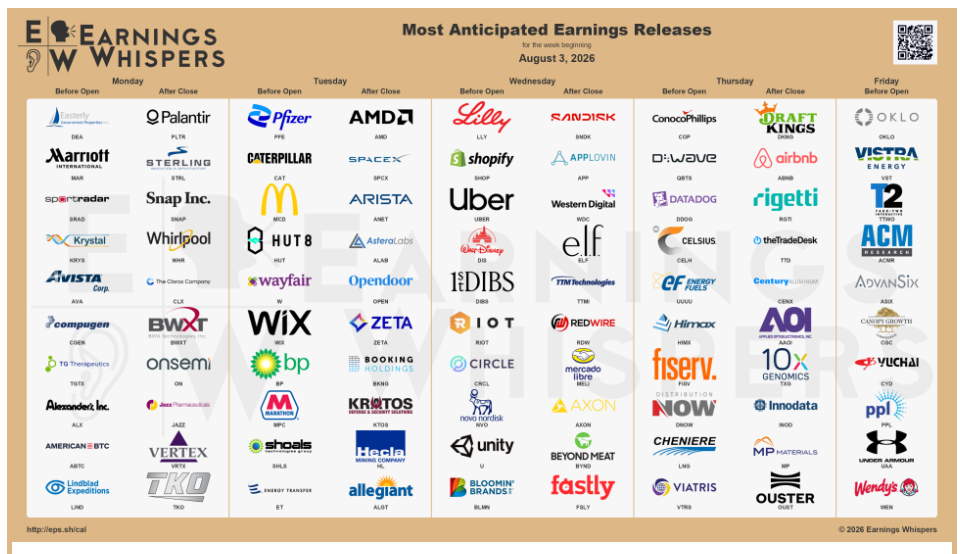
The week ahead — Economic data from Econoday.com:
 Posted in
Week of July 24 Weekly Recap & The Week Ahead
Monday, August 3rd, 2026“Amateurs think about how much money they can make. Professionals think about how much money they could lose.” — Jack Schwager
1. Trump Threatens More Attacks on Iran After Houthis Join War — The Iran-backed Houthis earlier claimed attacks on two Saudi Arabian oil tankers, the group’s first for several months and opening a new front in the US-Iran conflict that has already disrupted global energy supplies and rattled bond markets. The developments helped push oil prices up further, with Brent crude jumping more than 6% on Thursday to $100 a barrel, a level it’s not touched in almost two months. Since July 10, around when the latest US-Iran flare-up began, it’s gained more than 30%.
2. Bonds Sell Off as Oil Prices Hit $100 a Barrel — Brent crude futures jumped 6%—more than $25 higher than where they stood in early July. That’s pushing up government bond yields around the world, with the 10-year Treasury yield at its highest level in more than a year amid fears that price pressures could heat up again. Tehran-backed Houthi militants claimed attacks on two Saudi tankers in the Red Sea, threatening another important route for oil flows and stoking fears that the U.S.-Iran conflict could escalate further.
3. Trump Rebuilds Tariffs With Forced-Labor Duties on 60 Economies — The US will collect duties of between 10% and 12.5% on imports from most major trading partners, its biggest move yet to reconstruct President Donald Trump’s tariff wall that was pierced by the Supreme Court.
The new levies follow an investigation into the alleged failure of around 60 economies to prevent forced labor in their supply chains to the detriment of American workers. Goods from some 10 trading partners deemed to have adopted forced-labor restrictions will be subject to 10% tariffs, including Mexico, the UK, Canada and India. Duties on items from the European Union and Taiwan will be at least 10% and products from Japan, Switzerland and South Korea will be taxed at at least 12.5% in a way that complies with the trade agreements they reached with the US, according to a Federal Register notice published Thursday. Products from dozens of others will face a 12.5% charge.
The new duties take effect Friday at 12:01 a.m. New York time, according to the notice. The levies won’t apply to certain goods already loaded onto vessels before that time.
4. Mortgage Rates Hit Highest Levels in Nearly a Year — The 30-year fixed rate averaged 6.58% this week, up from 6.55% the week prior, according to Freddie Mac, the highest level to date this year. Mortgage rates are closely tied to the 10-year Treasury yield, which hit an 18-month high Thursday due to rising oil prices. Mortgage rates briefly fell below 6% in February, sparking hope for a rebound in home sales following years of stagnation. But the beginning of the Iran war drove rates upward and they have remained volatile since.
The surge in mortgage rates comes at the worst possible time. The real-estate industry had been hoping this year’s spring selling season, typically the busiest period of the year, would shake the frozen market loose. Instead, it was largely a bust, with buyers spooked by higher rates and uncertain about the path of the economy and job market.
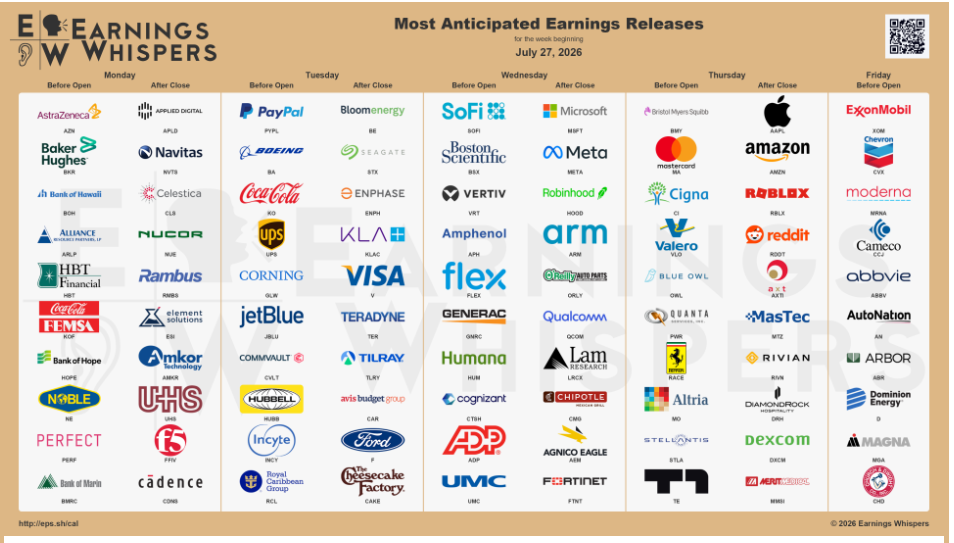
The week ahead — Economic data from Econoday.com:
 Posted in