Week of July 17 Weekly Recap & The Week Ahead
Thursday, July 23rd, 2026Do More of What Works and Less of What Does Not
1. US CPI Falls for the First Time Since 2020, Core Gauge Flat — The consumer price index fell 0.4% from May, dragged down by the biggest decline in gasoline prices since 2022, according to Bureau of Labor Statistics data out Tuesday. Excluding food and energy, the index was flat from the prior month. The report suggests a slide in prices at the pump in June offered consumers some relief as the worst of the Iran war energy shock started to fade. Fed officials will likely welcome the data ahead of the US central bank’s upcoming meeting at the end of the month, though a new upturn in oil prices amid renewed hostilities between the US and Iran risks prolonging the inflationary fallout from the conflict.
2. US Producer Prices Come in Tame as Pipeline Pressures Abate — The producer price index excluding food and energy increased 4.7% from a year earlier, according to Bureau of Labor Statistics data out Wednesday, below the median estimate in a Bloomberg survey. Overall PPI inflation slowed in large part due to a 12% drop in gasoline prices. The report showed broad-based cooling in several key categories that had been boosted in recent months by the fallout from the war. That likely gives the Federal Reserve more room to postpone an interest-rate increase — especially after a separate report Tuesday showed consumer prices were also tame in June. However, with the Middle East conflict heating up again, the reprieve may prove short-lived.
3. US Retail Sales Rise Modestly as Consumers Spend Less on Gas — The value of retail purchases rose 0.2% in June after a revised 1% advance in May, Census Bureau data showed Thursday. The figures are not adjusted for inflation. Outside of gasoline stations, sales increased 0.7%. Seven of 13 retail categories posted gains. Gasoline-station receipts fell 5.3%, the sharpest decline since 2022, as average national pump prices dropped roughly 50 cents a gallon in June. Receipts at nonstore retailers jumped 1.9%, the biggest increase in nearly a year, likely boosted by Amazon.com Inc.’s Prime Day event.
4. China’s Economy Grows at Weakest Pace Since 2022 — China’s gross domestic product expanded 4.3% in April to June from a year ago, according to official data released Wednesday, down from 5.0% in the first quarter of the year. This marks the slowest growth since the end of 2022, when the country was grappling with the economic fallout of the Covid-19 pandemic. Earlier this week, Beijing reported that exports rose 27% from a year earlier in June, largely fueled by demand from the AI sector, with outbound shipments of semiconductors up more than 120%.
This week’s data underscores the lopsided nature of the Chinese economy. Chinese exporters are booming in everything from chips to electric vehicles and industrial batteries. The country’s tech companies are churning out winning AI models in a high-stakes race with the U.S. But, at the same time, much of the domestic economy is a mess. A crash in the property sector has drained family savings and made many unwilling to spend. Young people increasingly struggle to find jobs. Deflation is eroding company profits.
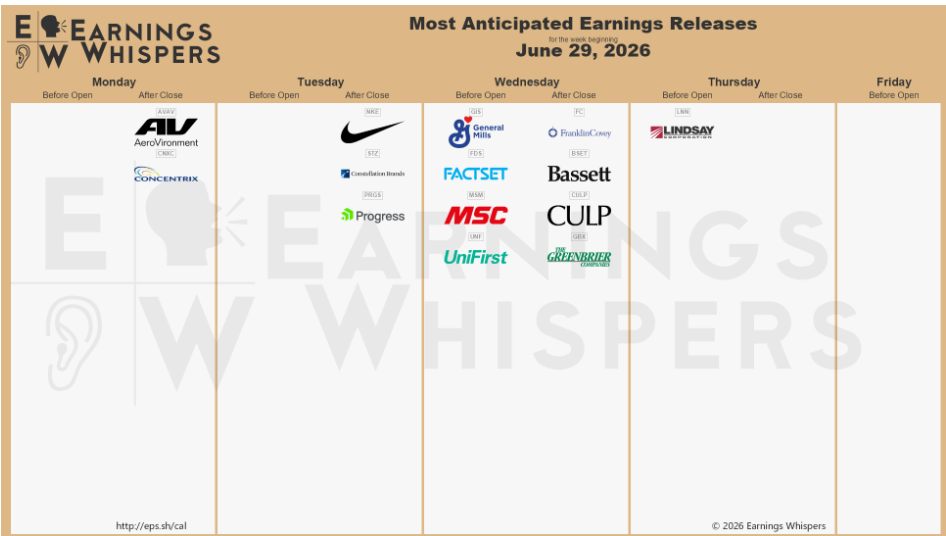
The week ahead — Economic data from Econoday.com:
 Posted in
Week of July 11 Weekly Recap & The Week Ahead
Thursday, July 16th, 2026‘The optimists are the ones who make everything happen. Pessimists just try to live in the past.’ — Tim Draper
1. Spring Home-Selling Season Ends on a Bad Note — Sales of existing homes slid 2.4% in June over the previous month to a seasonally adjusted annual rate of 4.09 million, the National Association of Realtors said Thursday. The number fell well short of expectations: Economists surveyed by The Wall Street Journal had forecast an increase of 0.7%. The housing market has been mired in a yearslong slump, with the rise in mortgage rates in 2022 putting an end to a pandemic-era buying spree. Mortgage rates briefly fell below 6% at the beginning of 2026, sparking hope for a housing resurgence. But after the war in Iran began, rates surged and have remained volatile since. Last week, 30-year fixed mortgage rates averaged 6.43%, according to Freddie Mac.
2. U.S. Trade Deficit Widened in May as Imports of AI Components Rose — The trade gap in goods and services widened by 42.2% in May from the prior month to a seasonally adjusted $77.6 billion, the Commerce Department said Tuesday. That marked the highest level since the deficit neared $133 billion in March last year, when companies were racing to import goods ahead of President Trump’s new tariff rollouts. Exports fell 3.2% in May, led by a large decline in sales of gold to overseas buyers. Big swings in international flows of the precious metal have added to volatility in trade data for months. Imports picked up, rising 3.3% on the month, aided by strong demand for goods related to the AI build-out, including semiconductors and computer accessories. Shipments of pharmaceutical products, cellphones and vehicles from abroad also increased.
3. U.S., Iran Trade Fire in Largest Escalation Since Peace Deal == The U.S. pounded targets that included missile and drone sites near the Strait of Hormuz, while Iran fired on Kuwait and Bahrain, which host U.S. military bases, according to a senior U.S. official. On Thursday, Jordan said its air defenses had intercepted eight Iranian missiles. Explosions were reported in Bandar Abbas and Sirik, located along the coast framing the waterway, according to Iranian media. The U.S. attacks were broader in scope than Tuesday’s and included air-defense systems, coastal surveillance assets, naval capabilities and logistics infrastructure, according to Centcom.
4. Iran Is Rushing Its Own Ships Through a Snarled Strait of Hormuz — Iran has been rushing oil and goods in and out of its ports since a preliminary peace deal signed in June lifted a U.S. blockade and dialed back enforcement actions against Tehran’s so-called shadow fleet—vessels that surreptitiously helped it evade American sanctions. Over the past three days, even as renewed fighting has begun to limit traffic generally, more than a third of the 101 vessels that transited the strait used a lane that hugs the Iranian coast, according to Kpler, a company that uses satellite imagery and vessels’ positional data to track commercial-ship movements. Most ships using the Iranian route bring goods into the country or take its oil out to world markets.
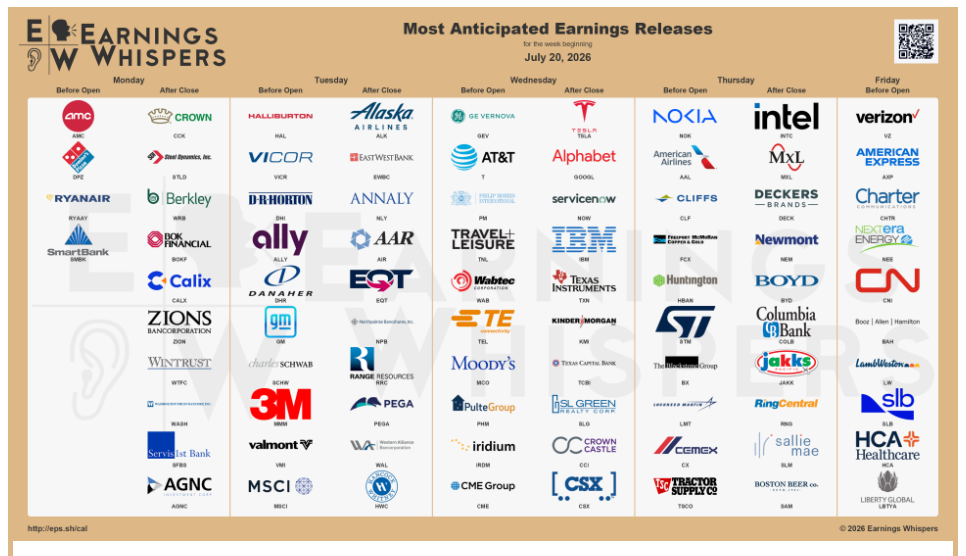
The week ahead — Economic data from Econoday.com:
 Posted in
Week of July 4 ’26 Weekly Recap & The Week Ahead
Thursday, July 9th, 2026“Market fluctuations are your friend, not enemy”
― Warren Buffett
1. US Job Openings Tick Up in Sign of Steady Labor Demand — Available positions ticked up to 7.59 million last month, slightly above the revised April level, according to Bureau of Labor Statistics data out Tuesday. The median estimate in a Bloomberg survey of economists called for 7.3 million openings. Construction and leisure and hospitality saw the biggest increases in openings. Vacancies in professional and business services, which accounted for almost all of the April rise by sector, were little changed in May. Openings in the financial activities sector, which has become the biggest drag on job growth this year, fell for a second month.
2. U.S. Plunges Trade Pact With Canada and Mexico Into Doubt – The U.S. decision came as no surprise. President Trump has effectively ripped up parts of the U.S.-Mexico-Canada trade agreement that he signed in his first administration, imposing tariffs on a range of goods. He has mused about terminating the agreement altogether. The pact remains in effect, but now the U.S. refusal to renew means American trade representatives will have to meet every year for a decade with Mexican and Canadian officials to continually review the deal. Negotiations can continue in the meantime. The pact underpins nearly $2 trillion in annual trade. Last year, combined U.S. exports to Mexico and Canada surpassed $670 billion, according to U.S. statistics. In comparison, U.S. exports to China last year amounted to about $106 billion.
3. US Hiring Slows Sharply, Curbing Recent Job-Market Momentum — Nonfarm payrolls increased 57,000 last month after downward revisions to the prior two months took some of the shine off recent blockbuster reports, Bureau of Labor Statistics data Thursday showed. The unemployment rate fell to 4.2% as labor force participation plunged. The pullback was led by the biggest decline in leisure and hospitality payrolls since 2020 — “reflecting weaker than usual seasonal hiring,” according to the BLS — following a strong increase in May. Ahead of the report, some economists were expecting the FIFA World Cup, which kicked off last month, to boost payrolls in the sector.
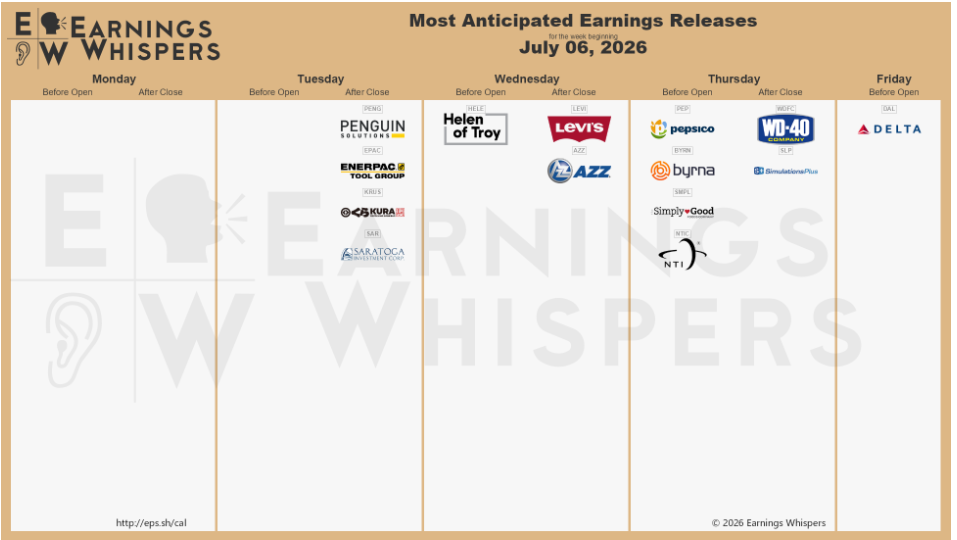
The week ahead — Economic data from Econoday.com:
 Posted in
Week of June 26 ’26 Weekly Recap & The Week Ahead
Thursday, July 2nd, 2026“Don’t be a hero. Don’t have an ego… The second you do, you are dead.” —Paul Tudor Jones.
1. Senate Passes Resolution Directing Trump to End Hostilities With Iran — The resolution passed by the Senate Tuesday afternoon, in a 50-48 vote, directs the president to remove U.S. armed forces from hostilities against Iran unless explicitly authorized by Congress, other than to defend America, an ally or partner from “imminent attack.” The resolution, previously passed by the House, is nonbinding but marks the first time both chambers of Congress have passed the same measure to curb Trump’s power to wage the war against Iran. Republicans had thwarted similar Iran war-powers resolutions in recent months, voting to block them eight times since February. But there have been signs that GOP support is fading for the Trump administration’s conduct of the war in Iran, and growing concerns about tenuous peace negotiations.
2. US New-Home Sales Unexpectedly Fall Amid High Mortgage Rates — Purchases of new single-family homes decreased by 7.3% to an annual rate of 580,000 last month, according to government figures published Wednesday. That trailed all economist estimates in a Bloomberg survey. The median sales price edged higher to $424,900, little changed from a year earlier. Prices have generally softened since 2023 as builders have focused on smaller homes and cut prices to improve affordability. Mortgage rates are hovering near nine-month highs at about 6.6%, and inflation’s resurgence is proving to be another challenge for would-be homebuyers.
3. US Consumer Spending Picks Up as Inflation Hits Three-Year High — The personal consumption expenditures price index rose 4.1% from a year earlier, the most since April 2023, Bureau of Economic Analysis data out Thursday showed. Excluding food and energy, prices were up 3.4% from a year earlier. Inflation-adjusted consumer spending rose 0.3% last month after stalling in April. Higher-than-usual tax refunds have helped bolster consumers in recent months, while a reaccelerating labor market and rising stock prices are also supporting spending. Even so, workers across sectors have seen pay gains fail to keep up with inflation, which has many saving less or turning to credit cards to maintain consumption habits.
4. S&P Keeps US Sovereign Rating At AA+ With Stable Outlook — S&P Global Ratings affirmed the US’s credit rating at AA+, one level below the top rank, citing a resilient economy and high but stable fiscal deficits. S&P expects US net general debt to approach 100% of GDP “given structurally rising nondiscretionary interest and aging-related expenditure.” The analysts also noted that the US’s political parties are far apart and bipartisan cooperation to lower deficits and deal with shrink the budget, “remains elusive.” All three major ratings agencies have the US pegged one level below Triple-A with stable outlooks, but S&P said its assessment of the US is below some of its peers. The dimmer view takes into account political polarization “with comparatively sharper swings in policies, particularly under a unified government,” S&P said. “It also reflects the lesser ability of the US political class to redress deterioration of the sovereign’s fiscal profile.”
The week ahead — Economic data from Econoday.com: