Week of Aug 29 Weekly Recap & The Week Ahead
“Buy the Dip & Sell the Rip” — trader
1. Carney Matches Trump Tariffs With 50% Tax on US Furniture, Steel — Canada will double its existing counter-tariffs on US steel and aluminum products to 50%. American-made furniture, clothing and apparel will also have new 50% tariffs applied, as will video-game consoles, smartphones and other electronics.
Overall, the retaliatory levies will affect about $20 billion worth of annual US imports, roughly matching the dollar value of the tariffs Trump put on Canadian products on Saturday under a never-before-used provision of the 1930 Tariff Act. That’s equal to about 6% of Canada’s goods imports from the US last year. Other US goods such as appliances, cheese, fish, seafood, and certain steel and aluminum derivative products will have new 25% tariffs applied. A range of US-made machinery, industrial tools and farm equipment will have 15% tariffs applied. The new duties are set to take effect Sept. 8.
2. US New-Home Sales Decline to Lowest Level Since January — Contract signings on new single-family homes decreased 10.5% last month to a 607,000 annual rate, according to government figures released Tuesday. Economists surveyed by Bloomberg expected a 620,000 annualized sales pace, based on the median estimate. Sales have fallen in three of the last four months, adding to evidence of a housing market burdened by elevated finance costs and prices. While builders have had some success bolstering demand with free upgrades, mortgage rate buydowns and price reductions, the entry-level market remains affordability-constrained.
3. Fed’s preferred inflation gauge shows core prices rose 3.3% annually in July — The personal consumption expenditures price index, which the Fed uses as its preferred forecasting tool, increased a seasonally adjusted 0.2% for the month, putting the annual inflation rate at 3.7%, the Commerce Department reported Wednesday. Both were 0.1 percentage point above the Dow Jones consensus. But stripping out volatile food and energy costs, core PCE posted respective gains of 0.2% and 3.3%, in line with forecasts. While the Fed considers both measures, policymakers generally see core inflation as the better measure of longer-term trends. The report comes with Fed officials weighing their next policy move as inflation, despite generally soft monthly readings this summer, is still well above the central bank’s 2% goal.
4. Warsh Says Fed May Not Be Done Fighting Inflation — In a sweeping speech, his first since becoming chairman of the central bank in May, Warsh reiterated that policymakers will return inflation to their 2% goal, which he said is a firm and fixed target. Warsh added that financial conditions are not currently restrictive and interest rates are the Fed’s “predominant tool” for achieving its mandate, though he stopped short of signaling he would support an interest-rate hike when Fed officials gather in September. Yields for two-year Treasuries rose by as much as nine basis points to 4.32%, while 30-year yields slipped two basis points to 5.17% — moves that signal an expectation that the Fed may need to raise short-term rates. The implied probability of a rate hike in September rose to above 50%, up from around 36% before the speech, based on federal funds futures.
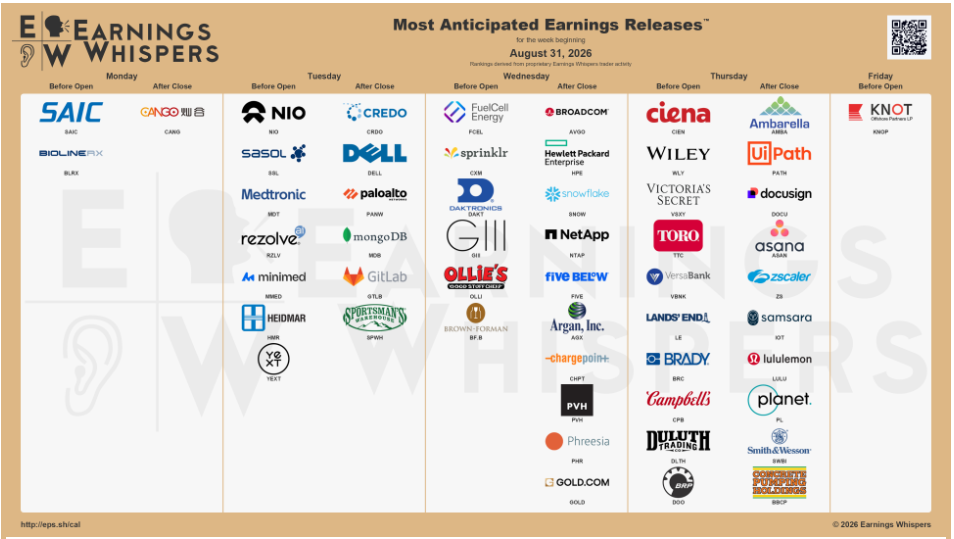
strong>The week ahead — Economic data from Econoday.com:
 This entry was posted
on Thursday, September 3rd, 2026 at 4:50 pm and is filed under Weekly Summary.
You can follow any responses to this entry through the RSS 2.0 feed.
You can leave a response, or trackback from your own site.