“Don’t try to buy at the bottom and sell at the top. It can’t be done except by liars.” — Bernard Baruch
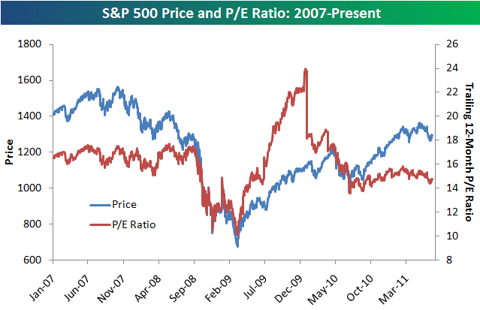
1. Regulators to increase embeds at banks — as part of efforts to prevent another financial crisis, the New York Fed and the Office of the Comptroller of the Currency are increasing the number of examiners who work at the offices of the banks they regulate. 2. Plane orders worth $20B announced in just one day — plane makers disclosed bookings for over 200 aircraft with a total value of more than $20B on the first day of the Paris Air Show. Airbus (EADSY.PK) led the charge, announcing several orders for its fuel-efficient A320neo jet, a competitor to Boeing’s (BA) 737. 3. FTC probes oil trading — the FTC is investigating whether oil companies, refiners and traders have engaged in anticompetitive practices or manipulated crude oil prices. The inquiry follows soaring refining margins and reports that refiners were using less of their capacity than they did last year, as well as other developments. 4. FOMC cuts 2011 GDP growth to 2.7%-2.9% from a 3.1%-3.3% — Ben Bernanke said the Fed doesn’t “have a precise read on why this slower pace of growth is persisting,” adding that weak housing and problems in the banking system might be “more persistent than we thought.” At the meeting, the FOMC kept rates at 0%-0.25% and said it would maintain this level for an ‘extended period.’ The Fed also confirmed it would end its bond-buying program on schedule, sending the dollar higher. 5. S&P 500 and sector P/E ratio charts — recent downturn for the S&P 500 has caused its P/E ratio (trailing 12-month) to drop from nearly 16 to 14.74. Below chart courtesy from the Bespoke Investment Group. 6. EU to provide Greece with funds — the EU and IMF have pledged to provide Greece with a €12B tranche of its bailout to stop it from defaulting in July after refusing to allow the country to soften its austerity measures. Greek Prime Minister George Papandreou now needs to get the program passed through parliament on Thursday next week. EU heads of government, who have been meeting in Brussels, are also nearing approval of a new rescue package to take Athens until the end of 2014. 7. Trading in Italian banks halted — trading in Italian bank stocks was suspended briefly following steep drops after Moody’s yesterday put them on negative outlook. 8. House passes patent bill — the House yesterday approved a bill that favors inventors who file their patent applications first as opposed to the current system that operates on a first-to-invent basis. The change will bring the U.S. into line with Europe and Japan. 9. IEA to release oil reserves — the 28-nation Int’l Energy Agency will release 60 mil. barrels from strategic reserves over 30 days, to cut prices and lift flagging growth just as fiscal and monetary stimulus end.
“The most realistic distinction between the investor and the speculator is found in their attitude toward stock-market movements. The speculator’s primary interest lies in anticipating and profiting from market fluctuations. The investor’s primary interest lies in acquiring and holding suitable securities at suitable prices. Market movements are important to him in a practical sense, because they alternately create low price levels at which he would be wise to buy and high price levels at which he certainly should refrain from buying and probably would be wise to sell.” – Benjamin Graham.
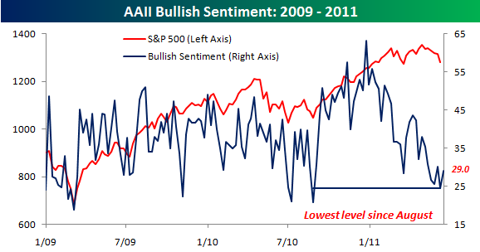
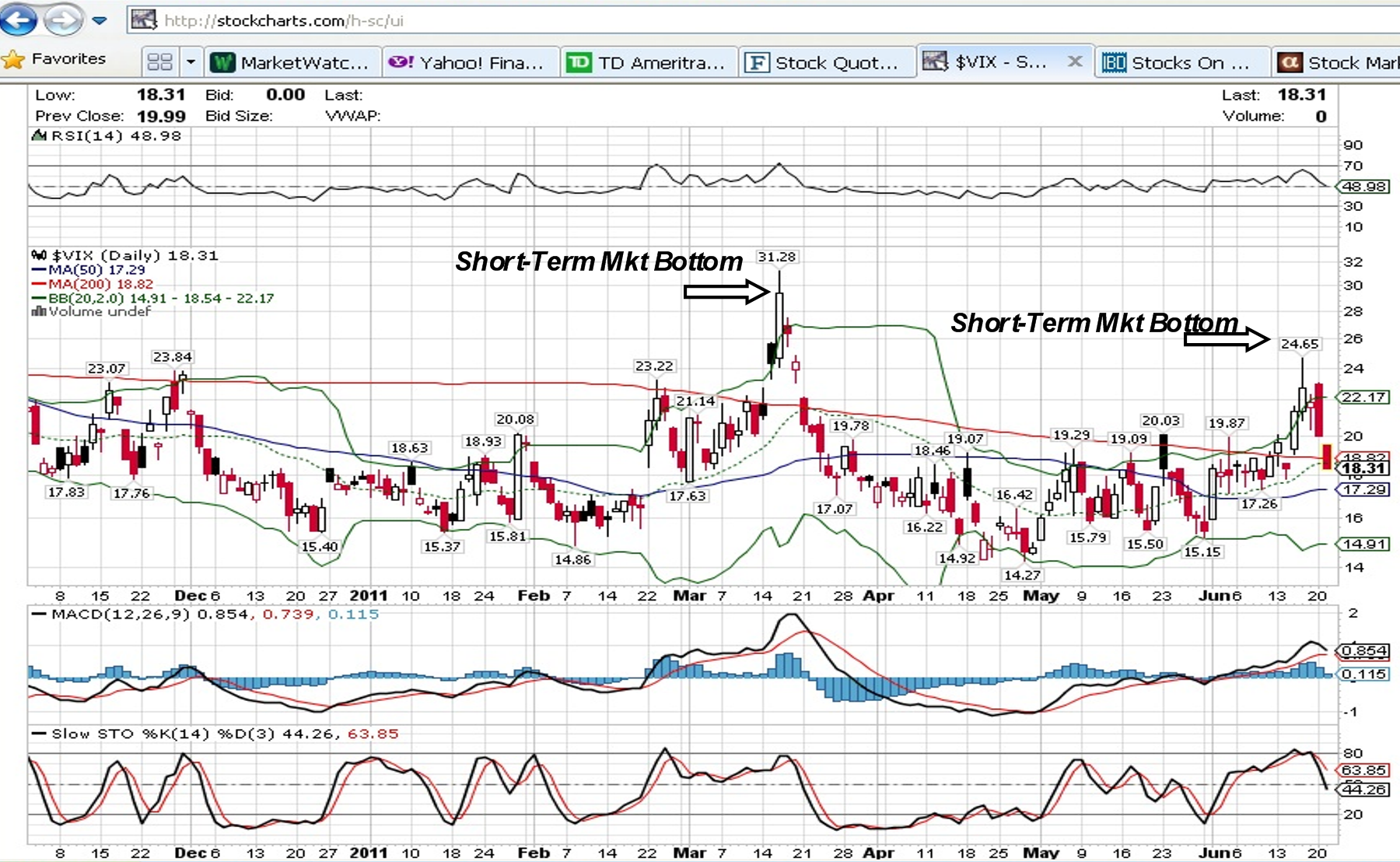
1. China’s consumer inflation hits 5.5% — Chinese consumer inflation accelerated to a three-year high in May, in line with expectations and bolstering the case for tighter credit conditions to help contain prices. 2. BOJ keeps rate at zero, expands lending facility — the Bank of Japan has kept its key rate at 0%-0.1% and slightly raised its outlook. “Japan’s economy continues to face downward pressure, mainly on the production side due to the effects of the earthquake disaster, but is showing some signs of picking up,” 3. Banks get another month to fix foreclosure practices — regulators have given leading mortgage servicers a further 30 days to submit plans for revamping their business practices, in particular loan modifications and foreclosures. The banks, which include Bank of America (BAC), Wells Fargo (WFC), JPMorgan (JPM) and Citigroup (C), also need to identify and compensate borrowers who may have suffered financial harm due to improper repossessions. 4. Fed mulls adopting inflation goal — Fed officials are in talks about setting an explicit inflation target, beyond the theoretical debates the FOMC has held on the issue for over a decade, sources said. Ben Bernanke has long supported such a strategy, and it is practiced by central banks around the world, including in the U.K. and Canada. 5. India hikes interest rates by quarter point — the Reserve Bank of India on Thursday hiked interest rates for the tenth time in 15 months, lifting its key repo rate by a quarter point to 7.50% as it noted inflation pressures persisted even amid recent signs of cooling in the economy. 6. SEC may charge ratings agencies — the SEC may bring civil fraud charges against credit-rating companies for their role in the financial crisis, sources said. The regulator is investigating S&P (MHP) and Moody’s (MCO), and is focusing on whether the agencies committed fraud by not doing the research necessary to adequately rate the subprime mortgages and other loans that underpinned mortgage-bond deals. 7. Biggest banks set for higher capital requirements — the world’s largest banks are facing an extra capital requirement of 2.5% of their assets that would be on top of the ‘Basel III’ minimum of 7% set by regulators last year. Sources said the banks include Citigroup (C), JPMorgan (JPM), Bank of America (BAC), HSBC (HBC) and Barclays (BCS). 8. Latest sentiment figures from the American Association of Individual Investors (AAII), Bullish Sentiment shows a modest uptick; However, less than a third of investors are currently in the bullish camp (29%), which is less than half the levels we saw towards the end of 2010. Chart courtesy from the Bespoke Investment Group. 9. Market short-Term oversold — chart below displays the VIX (fear indicator). VIX measures of the implied volatility of S&P 500 index options.
“The problem with socialism is that eventually you run out of other people’s money [to spend].” — Margaret Thatcher
1. Greece’s Q1 GDP grew at a slower than expected 0.2%, after shrinking for four consecutive quarters. On a year-over-year basis GDP growth declined 5.5%. Investment plunged 19.2%. 2. Goldman the subject of yet another probe — the SEC is investigating whether Goldman Sachs (GS) and other major banks may have broken bribery laws in dealings with Libya’s sovereign-wealth fund, sources said. Officials are scrutinizing a $50M fee Goldman offered to pay the fund as part of a proposal to help the latter recoup losses of 98% on $1.3B that it invested with the bank. 3. Debt talks to continue as Fitch warns of downgrade — Congressional leaders and White House officials met last Wed. to continue talks on raising the U.S.’s $14.3T borrowing limit and cutting the deficit, a day after Fitch became the third ratings agency to threaten to downgrade the government’s credit status if the ceiling isn’t lifted. Republicans and Democrats have until August 2 to reach a deal or risk the U.S. defaulting. 4. Fed now largest holder of U.S. Treasurys — following its multiple quantitative easing operations, the Fed surpassed China as the largest holder of U.S. Treasurys at the end of the first quarter. By the time QEII ends this month, the Fed will hold 16% of U.S. paper vs. 12% for China. 5. AAII Sentiment Survey: Bearish Sentiment Surges to 47.7% — this is the lowest level of optimism recorded since August 26, 2010. Bullish sentiment has now been below its historical average for eight consecutive weeks. 6. Notable video from Jim Rogers– courtesy from MarketWatch.
“When I have to depend upon HOPE in a trade, I get out of it” — Jessie Livermore
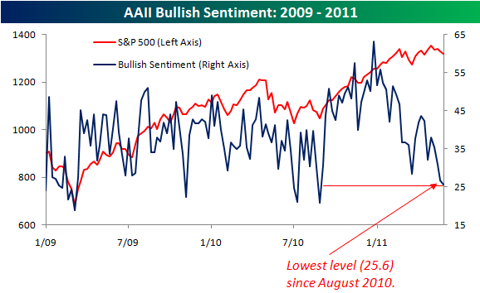
1. S&P lowers Italy’s credit-rating outlook — Standard & Poor’s Ratings Services late last week lowered its outlook on Italy’s A-plus sovereign credit rating from stable to negative, citing potential political gridlock that could derail the government’s plan to balance its budget by 2014. 2. Greek PM rules out restructuring — Greek Prime Minister George Papandreou was due to hold a cabinet meeting today about a new four-year fiscal plan to reduce the country’s €340B ($484B) of sovereign debt after yesterday ruling out a restructuring of that debt. 3. Moody’s considering downgrades for U.K. banks — Moody’s is placing 14 U.K. banks on review for downgrades, including Lloyds (LYG) and Royal Bank of Scotland (RBS), due to the authorities indicating that they will be less likely to bail out the banks in the future. The rating agency also changed Barclays’ (BCS) outlook to negative and maintained the same prognosis for HSBC (HBC). 4. Pressure on banks from probes intensifies — despite their protestations of innocence, the scrutiny on banks by the authorities continues to increase. The SEC is examining whether Bank of New York Mellon (BK) and State Street (STT) fairly charged pension-fund clients for currency trading, a source said. The probe follows investigations by the Justice Department and three state attorney generals. Meanwhile, other sources said New York AG Eric Schneiderman has extended his probe into mortgage practices at leading banks to include Royal Bank of Scotland (RBS), UBS (UBS), JPMorgan Chase (JPM) and Deutsche Bank (DB), bringing to seven the number of firms under scrutiny. 5. First-quarter GDP growth remains at 1.8% — In the first quarter, the U.S. economy expanded at the same 1.8% clip that was initially forecast, the Commerce Department said in its second estimate of quarterly gross domestic product released Thursday. The second estimate comes in well below expectations of 2.2%. 6. Foreclosure sales tick higher — sales of homes in foreclosure rose to 28% of all home sales in Q1, nearly six-times as much as in a typical healthy housing market. “It’s an astronomically high number,” RealtyTrac’s Rick Sharga said, though it is down from a peak of 37.4% in 2009. 7. Latest sentiment figures from the American Association of Individual Investors (AAII), bullish sentiment declined from 26.7% to 25.6% — chart courtesy from the Bespoke Investment Group.
“New Indicator:CFO Magazine gave Excellence awards to Worldcom’s Scott Sullivan (1998), Enron’s Andrew Fastow (1999), and to Tyco’s Mark Swartz (2000). All were subsequently indicted” — R. Lowenstein
1. Strauss-Kahn arrest clouds Greek bailout talks — Dominique Strauss-Kahn, head of the IMF, was arraigned in Manhattan attempted rape charges. 2. U.S. hits $14.3 trillion debt limit — the government maxed out its borrowing ability, raising fears of a US default. To stave off a cash shortage, Treasury Sec’y Timothy Geithner diverted money to be invested in two big gov’t pensions for use elsewhere. He warned the US faces default by Aug 2 2011 if the debt ceiling isn’t raised. 3. Strauss-Kahn steps down as head of IMF — Dominique Strauss-Kahn has resigned as managing director of the IMF following his arrest on sex-assault charges in the U.S. John Lipsky, the organization’s first deputy managing director, remains as the acting head. 4. Japan slides back into recession — Japan’s GDP fell 0.9% in Q1 2011 from the previous quarter as the earthquake, tsunami and nuclear crisis in March hurt business and consumer spending as well as supply chains. The fall was greater than a forecast drop of 0.5% and represented a 3.7% annualized decline. With GDP contracting 0.8% in Q4 2010 from the previous period, Japan officially entered recession in Q1. 5. European Central Bank threatens to pull the plug on Greek lending — The European Central Bank has threatened to stop lending to banks using Greek government bonds as collateral if Athens changes the terms of the debt, a move which could bring down the country’s banking system.
“With enough inside information and a million dollars, you can go broke in a year.” – Warren Buffet
1. Standard & Poor’s downgrades Greece’s rating — Standard & Poor’s Ratings Services downgraded Greece’s credit rating, dealing another blow to the debt-laden European nation. S&P lowered its long- and short-term ratings on Greece to B and C, respectively, from BB- and B previously. The ratings remain on credit watch with negative implications. 2. China hikes reserve requirement ratio for banks — The People’s Bank of China lifted the ratio of funds domestic banks must set aside as reserves on May 12, the fifth such hike this year amid persistent inflation concerns. 3. Finland approves Portugal aid plan — Finland’s caretaker government has won support from the opposition Social Democratic Party that enables it to approve the €78B ($112.4B) EU-IMF bailout for Portugal. 4. Deficit on course to exceed $1T again — a 45% year-on-year increase in tax revenues in April couldn’t prevent a deficit of $40.5B for the month, putting annual net spending on track to pass $1T for the third year in a row. The deficit is set to reach $1.4T this year, up from $1.29T in 2010. 5. House to propose bill to replace Fannie and Freddie — a bipartisan-sponsored bill set to debut in the House today would replace Fannie Mae and Freddie Mac with at least five private companies that would issue mortgage-backed securities with explicit federal guarantees.
“Commodity takes the stairs up and the elevator down” — anonymous
1. President Obama announced that the United States has killed Osama bin Laden, the leader of al Qaeda. 2. India steps up rate-hike pace to curb inflation — The Reserve Bank of India on Tuesday hiked interest rates by a larger-than-expected 50 basis points, saying that containing inflation has become more important than short-term growth. 3. Australia keeps interest rates on hold — The Reserve Bank of Australia Tuesday kept its key cash rate on hold 4.75%, a level it has been at since November. 4. U.S. gets three more weeks to avoid default — the Treasury will begin to take ‘extraordinary measures’ on Friday that, along with better-than-expected tax revenues, will extend by three weeks the date at which the U.S. will hit its $14.29T debt ceiling. 5. Portugal secures €78B bailout — Portugal has reached a deal with the EU and IMF for a €78B ($116B) three-year bailout that sets a target of reducing the budget deficit to 3% of GDP by 2013 from 9.1% last year.
“It wasn’t raining when Noah built the ark” — Warren Buffett
1. S&P cuts Japanese auto outlook to negative — Standard & Poor’s Ratings Services cut its outlooks on six Japanese auto companies, including Toyota Motor Corp. (7203.TO, TM) and Honda Motor Co. (HMC, 7267.TO), to negative due to production cuts following the March earthquake and tsunami.
The move indicates the increased likelihood of a downgrade for the automakers and suppliers, who have struggled with parts shortages since last month’s disaster. A host of companies in the electronics, industrial and other sectors have face supply-chain problems in the wake of the catastrophe. 2. Misrata, Libya under rebel control — the battle for Libya continues to shake the Middle East as Gaddafi forces bombarded rebel troops along a ferociously contested strip of Misrata Sunday. 3. Greek deficit exceeds forecasts — Greece’s budget deficit in 2010 was 10.5% of GDP, significantly higher than estimated by either the Greek government or the EU. The latter had calculated a figure of 9.6% for 2010 and forecast the deficit would be 7.6% at the end of this year. 4. S&P slashes Japan outlook — S&P cut its outlook on Japan to Negative from Stable, and affirmed the country’s AA- rating, warning that the cost of last month’s earthquake will further hurt weak public finances unless divided politicians agree to raise taxes. Japan’s public debt, already double the size of its $5T economy, could increase even more to pay for reconstruction costs – estimated by S&P at ¥20-50T ($245B-$613B) vs. the government’s ¥16-25T estimate. 5. Bernanke navigates first ever conference — Ben Bernanke avoided any serious gaffes at the first ever post-FOMC press conference by a Fed Chairman. Bernanke said rates would stay at 0-0.25% for another “couple of meetings” at least. He also expects the end of QE2 in June to have little impact on markets. 6. EU opens CDS probe into 16 banks — the European Commission has opened two antitrust investigations into the market for credit default swaps. The probe includes 16 major U.S. and European banks, including JPMorgan (JPM), Barclays (BCS), HSBC (HBC) Citigroup (C) and Goldman Sachs (GS).
“Change is the law of life. And those who look only to the past or present are certain to miss the future.” — J.F. Kennedy
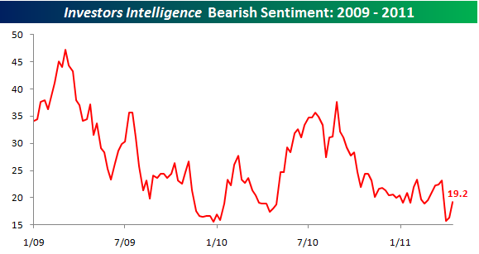
1. S&P cuts U.S. rating outlook to negative — Standard & Poor’s cut its ratings outlook on the U.S. to negative from stable, sending a lightning bolt through the deficit-reduction debate in Washington and sending stock markets sharply lower. 2. Finnish election results threaten EU bailouts — Finnish voters have ousted their government and handed major gains to the True Finns anti-bailout party, placing a major doubt on Europe’s rescue funds for debt-ridden countries. 3. Bearish Sentiment Up for the Second Week in a Row — according the the latest poll by AAII, courtesy of the Bespoke Investment Group, bearish sentiment from Investors Intelligence rose for the second week in a row. At a level of 19.2%, however, current levels remain low by historical standards.
“While markets often make double bottoms, three pushes to a high is the most common topping pattern.” — J. Bollinger
1. Mortgage servicers to pay foreclosure victims — the 14 largest mortgage servicers have come to an agreement with banking regulators and other authorities to pay back homeowners for losses they suffered from foreclosures or loans that were mishandled following the housing collapse. Bank of America (BAC), JPMorgan Chase (JPM), Wells Fargo (WFC) and Citigroup (C) are among the servicers affected. 2. Senate probe alleges Goldman mortgage deception — A Senate subcommittee has accused Goldman Sachs of selling poor quality mortgage securities it bet against and is pushing the Justice Department to investigate Goldman CEO Lloyd Blankfein’s testimony before Congress. 3. China GDP +9.7%, CPI +5.4% — Chinese inflation continued to strengthen in March as CPI accelerated to 5.4%, above expectations and the fastest pace since 2008. Q1 2011 GDP also beat forecasts in rising 9.7%, but this was slower than the 9.8% recorded for Q4 2010. 4. SEC close to deal with banks over role in crisis — the SEC is in negotiations with JPMorgan Chase (JPM) and other major banks to settle fraud allegations related to mortgage-bond deals that helped cause the financial crisis, according to officials. 5. Moody’s cuts Ireland’s ratings to Baa3 — Moody’s has cut Ireland’s sovereign rating by two notches to Baa3 and maintained a negative outlook. 6. Congress passes ‘$38B’ budget deal — the House and the Senate yesterday approved a $38B budget deal for the rest of the fiscal year. The House passed the bill by 260-167 and the Senate by 81-19.
The information provided by The EGS Blog is based on sources believed to be reliable, but it is not guaranteed to be accurate.
There is no guarantee that the recommendations of The EGS Blog will be profitable or will not be subject to losses.
The information provided by The EGS Blog is not a recommendation or a solicitation that any particular investor should purchase or sell any particular security in any amount, or at all. The investments discussed or recommended herein may be unsuitable for investors depending on their specific investment objectives and financial position. At any time EGS LLC and its principals may maintain positions that are contrary to positions announced within the subscription service. In no event will The EGS Blog be liable to you or anyone else for any incidental, consequential, special, or indirect damage (including but not limited to lost profits or trading losses).
PAST PERFORMANCE IS NO GUARANTEE OF FUTURE RESULTS