In the stock market those who expect history to repeat itself exactly are doomed to failure — Yale Hirsch
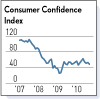
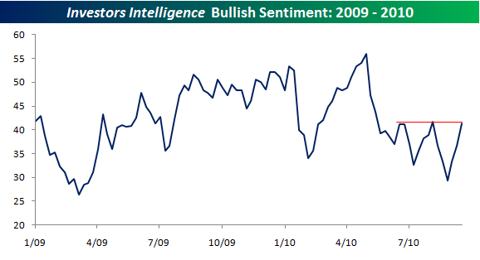
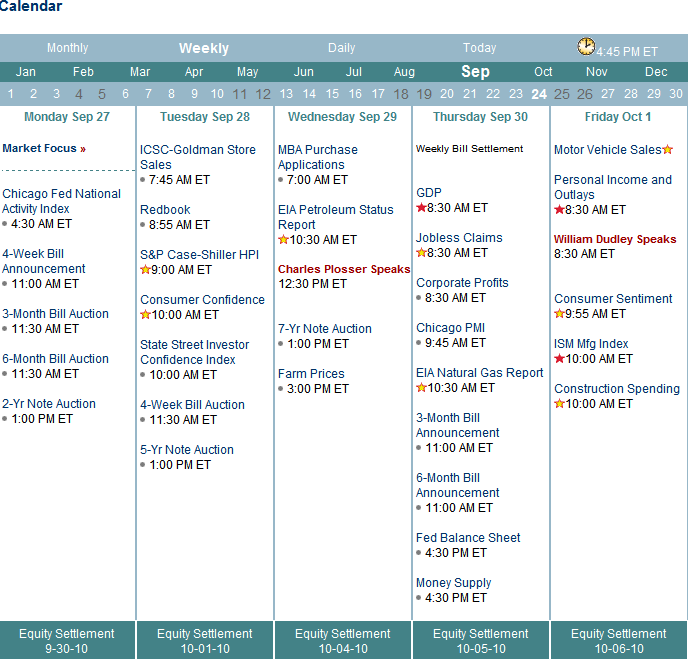
1. Confidence ebbed recently among both corporate heads and consumers — 2. 2Q GDP growth slows to 1.7% — compared with 3.7% in the first quarter; A slight upward revision to its prior second-quarter estimate. 3. Moody’s downgrades Spanish debt to Aa1 from Aaa; 4. House passes bill targeting China’s yuan policy — The House easily passed legislation to penalize China’s foreign exchange practices, sending a powerful signal to Beijing to boost the value of its currency but risking a backlash that could harm U.S. companies and consumers. 5. U.S. Futures Rise Ahead Of Multiple Economic Reports — German Jobless Rate Just 7.5% As Much Of Europe Struggles — Germany’s unemployment in September fell to its lowest level since November 1992, the government said Thursday, but questions still swirl over whether Europe’s industrial engine can pull the region out of lingering gloom. Ireland on Thursday said it was readying a bailout of its No. 2 bank and would shore up two others, pushing its deficit to 32% of GDP this year. 6. Investor Intelligence’s survey found bullish advisers rose to 43.3% while bears fell to 27.8%
In investing, the return you want should depend on whether you want to eat well or sleep well — J. Kenfield Moreley
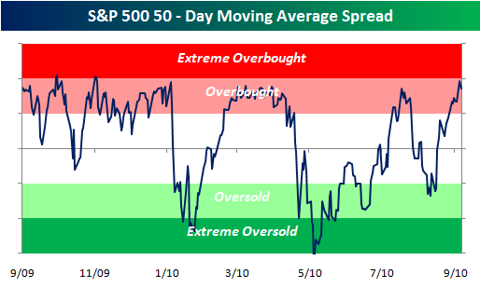
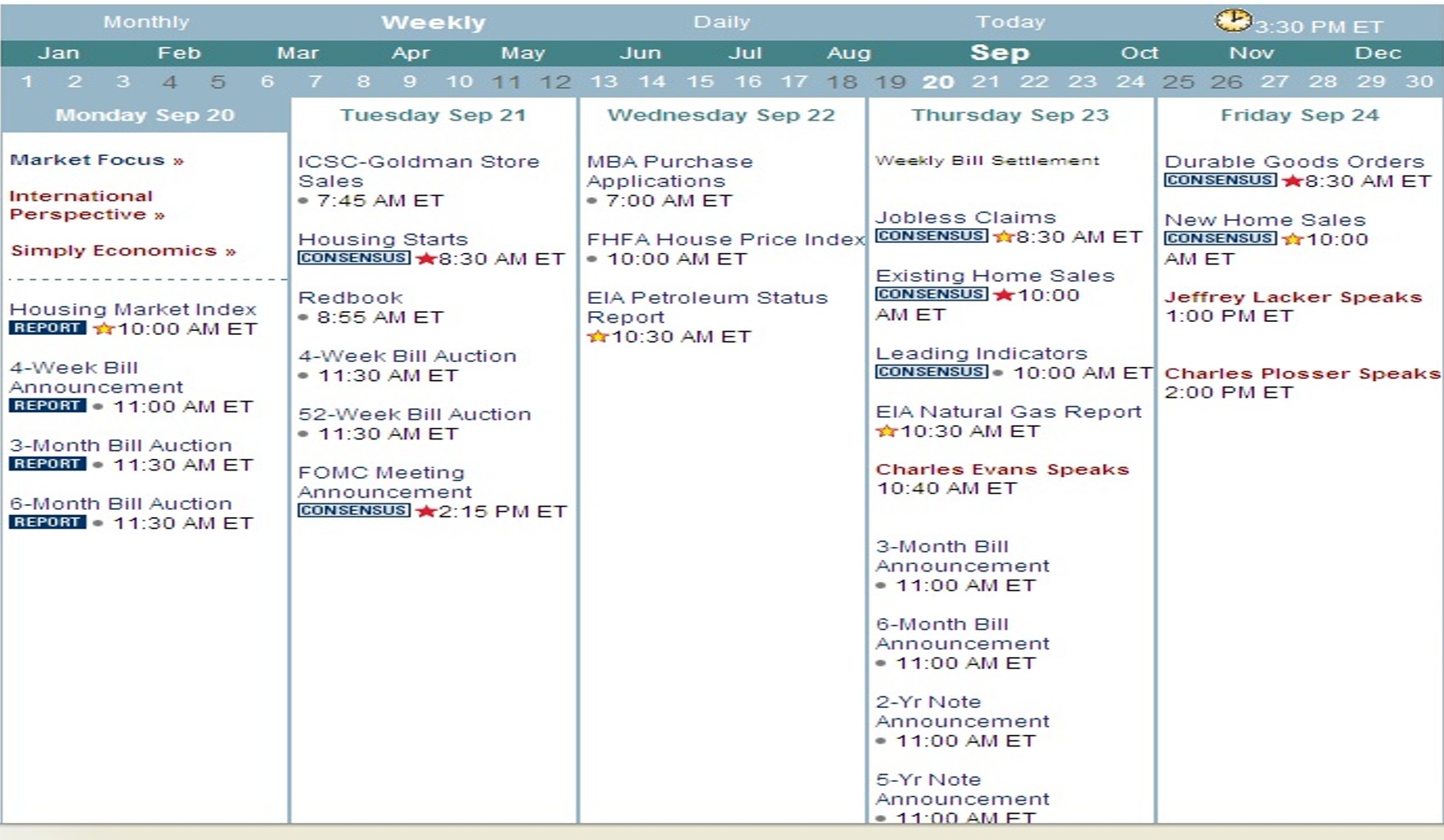
1. Fed hints at QE 2.0 — The Fed reiterated its commitment to near-zero interest rates yesterday, as expected, but opened the door to the possibility of more QE in the near future. 2. BOJ official hints at further easing — Bank of Japan policy board member Ryuzo Miyao suggested today that the BOJ will continue to loosen its purse strings, saying the central bank would take “timely and appropriate” action if downside risks to the Japanese economy materialize. 3. S&P500 Overbought — interesting chart from the Bespoke Investment Group depicting the S&P500 50-DMA spread measured in standard deviations. The chart shows the S&P500 is currently trading at an overbought levels similar to where it was in late April and early August. 4. Bullish Sentiment Highest Since Early August — According to the Investors Intelligence weekly sentiment survey, bullish sentiment (41.4%) among advisors is currently at its highest level since early August. 5. According to the Dow Theory — primary trend of market is UP — Currently, the DOW is at 10,739 and the high for the Transport 4,540; Both indexes are up from their respective Aug 9th closing high of DOW 10,698.75 and Transport at 4,516.35. 6. Durable Goods — gains in machinery, computers and fabricated-metal products, as well as an upward revision to July’s durable-goods data. Also, a barometer of capital spending by businesses rose; orders for non-defense capital goods, excluding aircraft, increased by 4.1%. 7. Gold — Gold futures climbed above $1,300 an ounce; New high for the year. 8. David Tepper — HedgeFund Biggie Video on CNBC.
The average man desires to be told specifically which particular stock to buy or sell. He wants to get something for nothing. He does not wish to work — William LeFevre
1. Basel III — Regulators who met in Basel agreed to raise the level of banks’ common equity to at least 7% of assets, up from 2%. But the rules give banks time to bulk up: The capital requirements won’t take full effect until Jan. 1, 2019. 2. China’s Economy Resumes Acceleration — Industrial production, a major gauge of overall activity in China’s manufacturing-driven economy, was up 13.9% from a year earlier in August, accelerating from 13.4% growth in July. 3. Japanese PM Naoto Kan re-elected president of the Democratic Party of Japan — Yen surged to highest level in 3-month; Mr. Kan defeated veteran power broker Ichiro Ozawa by a wide margin. 4. Yen plummets on Japanese intervention — The yen tumbled from a 15-year high against the dollar after Japanese monetary authorities intervened in international currency markets for the first time since 2004.
Financial markets will find and exploit hidden flaws, particularly in untested new innovations — and do so at a time that will inflict the most damage to the most people — Raymond F. DeVoe
The major indices settled with modest gains following a holiday-shortened week of light corporate news and economic reports.
1. Trade Deficit — the Commerce Department reported the nation’s trade deficit narrowed as imports fell and exports climbed to near two-year highs.
2. The Bank of England announced no change in interest rate — holding its key lending rate at a record low 0.5% and maintaining its bond-buying program at 200 billion pounds ($309 billion).
3. China’s August imports were up 35.2% year-on-year to $119.27 billion, against a 25% increase expected by economists surveyed by Dow Jones Newswires. Exports climbed 34.4% to $139.3 billion, against an expected 35% increase.
4. H-P Bribe Probe Widens — U.S. Investigators Are Looking at Multiple Transactions, some outside Russia; Hewlett-Packard Co. disclosed Thursday that a probe by the U.S. Department of Justice and the Securities and Exchange Commission of possible bribes the company paid in Russia is now wider than previously reported.
Stock prices tend to discount what has been unanimously reported by the mass media — L. Ehrenkrantz
1. IMF rolls out precautionary credit line — the goal is to provide these countries with financial help before they reach a crisis point. The IMF is creating a new credit line that is expected to serve as a precautionary “insurance policy” for developing countries with sound fundamentals that may not meet the more stringent requirements of the IMF’s 2009 flexible credit line.
2. India’s economy rockets ahead — India’s economy expanded at the fastest pace in over two years, growing 8.8% in Q2 from a year earlier.
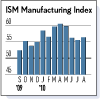
3. Factories’ Strength In U.S. And China Reassures Investors — U.S. manufacturing growth unexpectedly accelerated in August and the jobs gauge hit a 26-year high, an industry report said Wednesday, complementing bullish data from Asia that bode well for the global economic recovery.
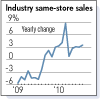
4. Retail Sales — Retailers rang up solid August sales Thursday, beating views for the first time since March as deep discounts spurred shoppers to step up back-to-school buying.
5. Rare glimpse into China’s forex reserves — A report in the China Securities Journal, an official newspaper, cited unnamed reserve managers who said the holdings are the largest stockpile in the world at $2.45T, roughly in line with global averages. 65% allocated to dollars, 26% to euros, 5% to pounds and 3% to yen.
6. Russia Wheat ban extended, fears of a global food crisis — Russian Prime Minister Putin extended his country’s grain-export ban through at least Nov. 2011, after announcing last month that Russia would suspend grain exports until the end of this year.
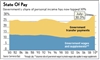
7. Gov’t Income Supports Surging — A record 30 cents of every dollar in personal income comes directly from government, Commerce Department data show.
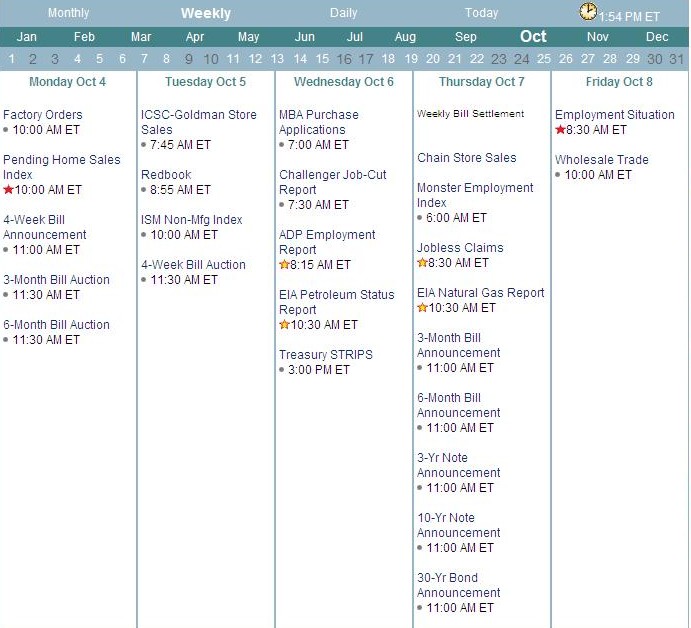
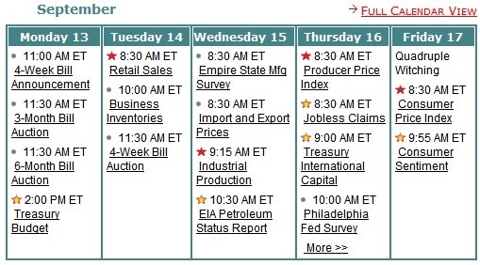
Economic Calendar for next week:
1. 9/8 — Beige Book and July Consumer Installment Credit;
2. 9/9 — trade deficit;
3. 9/10 — July wholesale;
Embedded is an interesting Video from WealthTrack — Bruce Berkowitz, portfolio manager of the Fairholme Fund (best Domestic Stock Fund Manager of the Year in 2009)
Whenever a well-known bearish analyst is interviewed in the financial press, it usually coincides with an important near-term market bottom — Clif Droke
1. 2Q GDP — U.S. economic growth slowed to 1.6% in the second quarter.
2. Magazine Cover — on Aug 22, the New York Times published what may as well have been entitled “The Death of Equities II.”
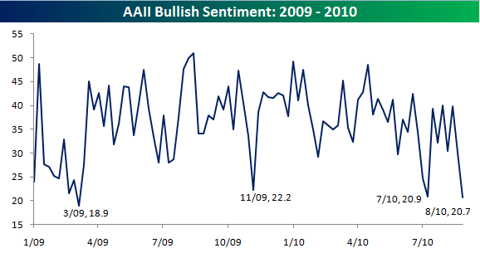
3. Bullish Sentiment at Lowest Level Since March 2009 — according to AAII, Bullish sentiment fell 9.4 percentage points to 20.7% in the latest AAII Sentiment Survey. This is the lowest that expectations for stock prices to rise over the next six months have been since March 5, 2009. The historical average is 39%.
4. FOMC Chairman Bernanke stated the Fed Ready With Stimulus — economic recovery has weakened more than expected and the Fed is ready to take further steps if needed to spur slowing growth.
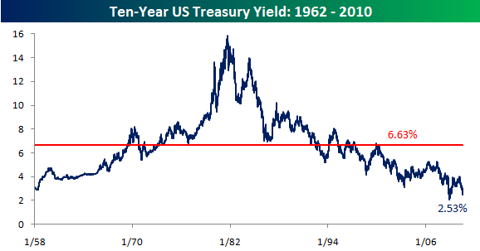
5. Is the Bond Market a Bubble ? — an interesting chart from the Bespoke Investment Group depicting the historical yield on the 10-year US Treasury going back over 50 years;
6. Yen rises to multi-year highs — the yen reached its highest level against the dollar in fifteen years, and the highest level against the euro in nearly nine years this week;
Get inside information from the president and you will probably lose half your money. If you get it from the chairman of the board, you will lose all your money — Jim Roger
The major indexes (S&P500, Dow Jones & Nasdaq) closed below the 50-SMA and 200-SMA.
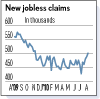
1. New Jobless Claims Hit 9-Month High; Factory Activity Falls — New claims for jobless benefits rose by 12,000 in the week ending Aug. 14 to 500,000, the fourth gain in the last five weeks and the highest since last November; Mid-Atlantic manufacturing activity shrank in August;
2. Germany lifts forecast — Germany raised the growth outlook for its economy to +3% for the year, up from a previous estimate of +1.9%.
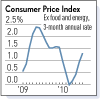
3. Consumer and wholesale prices rose in July, their first gains since March, the Labor Department said over the past week.
4. Rep. Barney Frank says bankrupt government mortgage giants Fannie Mae and Freddie Mac “should be abolished.”
5. Congressional Budget Office estimated The federal budget deficit will surpass $1.3 trillion in 2010 and is expected to be the second largest shortfall in the past 65 years.
6. ECB mulls exit timing — The ECB will likely consider in Q1 2011 the timing for withdrawing its emergency lending measures.
The week ahead — economic data:
1. 8/24 — Existing Home Sales
2. 8/25 — Adv Durable Goods; New Home Sales
3. 8/26 — Initial Jobless Claims;
4. 8/27 — Q2 GDP;
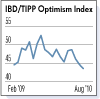
1. Consumer confidence fell in early August to the lowest level since October 2008, a month after the collapse of Lehman Bros. sent the economy tumbling into a severe recession and financial crisis, according to the IBD/TIPP Economic Optimism Index out Tuesday
2. The Federal Open Market Committee announced that it would reinvest principal payments from mortgage assets into longer-term Treasurys.
3. States get $26B in aid — Obama signed into law a $26B plan that Democrats said will help cash-strapped state governments preserve the jobs of thousands of teachers, police and firefighters.
4. U.K. growth moderating — The U.K.’s economic recovery is likely to continue at a slower pace than previously expected, said the Bank of England in its quarterly Inflation Report, peaking at a 3% annual pace instead of at 3.6%.
5. China ‘s domestic growth slows — July Industrial production rose to 13.4% in July vs. 13.7 last year; Retail sales also slowed and consumer inflation rose.
6. Retail sales weak — data is yet another indication that the economy has slowed significantly and the recovery could fail if job growth doesn’t pick up. Sales at clothing stores were one of the weakest areas, falling 0.7%.
7. German economy posts stellar growth — Germany’s GDP grew an adjusted 2.2% in the second quarter vs. Q1, marking the strongest growth in 20 years on the back of healthy contributions from exports and investment;
Here is an interesting video from CNBC regarding the manic state of the market.
The whole problem of the world is that fools and fanatics are always so certain of themselves, but wiser people so full of doubts — Bertrand Russell
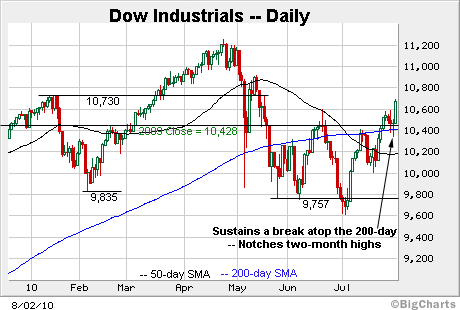
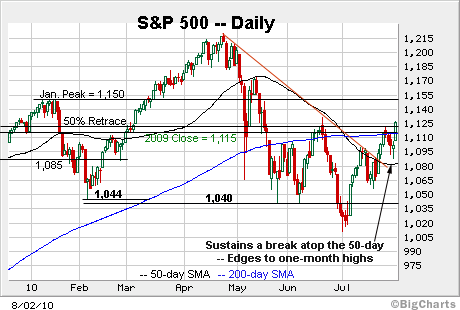
As noted on Aug 3 ‘s missive, the major indexes (S&P500, Dow Jones & Nasdaq) break above the 200-sma on lower volume.
1. Wheat hits new 23-month high — Russia bans wheat export due to draught;
2. Lack of job growth — Nonfarm payrolls drop 131,000 in July; Estimate 100,000;
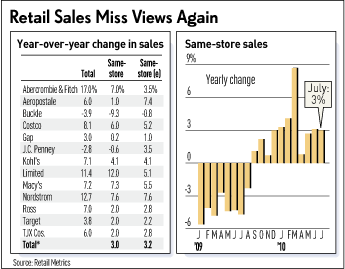
3. Retailers’ July Sales miss forecasts for the 4th straight month — 53% of retailers missed targets;
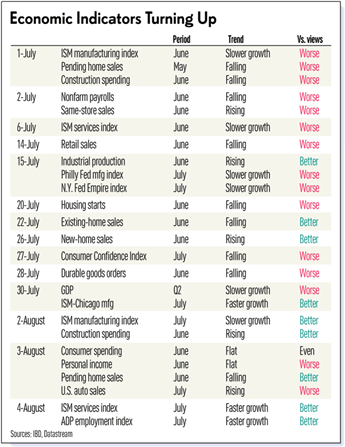
4. Economic reports shift from gloom to improving trend — private hiring and service-sector activity picked up in July. Recent shift toward more upbeat economic news.
5. BP pumps cement down well — permanently plug the blown-out well.
6. ECB kept rate at 1% and BOE kept rates at 0.5%
One statistical trend that is positive for the rest of 2010 is the Presidential Election Year Cycle (PEYC). Based on the historical record going back to the late 1800’s to present, the average dow return for year-3 of the PEYC is 15.5% versus year-1 return is 8.8%; year-2 is 0.4% and year-4 is 4.1%; A noted investment advisor, Jeremy Grantham, stated “Do not think for a second that a very stimulated market will go down in Year-3 just because it’s overpriced…So far, it has had 19 tries to do down since 1932 and has never pulled it off…”
The major indexes (S&P500, Dow Jones & Nasdaq) break above the 200-sma on lower volume.
So far, half way through earnings season, roughly 78% of the S&P 500’s companies have beaten their earnings estimates. Two out of three companies have beaten sales estimates.
Raymond James strategiest, Jeff Saut noted “The July Jump has had another endearing feature in that the three consecutive 100-point “up days” in the D-J Industrial Average (DJIA/10465.94) catapulted the Dow above its June closing high of 10450.64 last Monday. Simultaneously, the D-J Transportation Average (DJTA/4422.94) closed above its June high of 4433.60, thus registering a Dow Theory “buy signal,” at least as I interpret Dow Theory. Ladies and gentlemen, a same day confirmation from both averages is a rare event and suggests a fairly powerful “up move” is underway. That said, Dow Theory signals often come after a significant rally (or decline) has already taken place and hence has expended a lot of energy.
Also worth noting is that a number of other Dow Theorists opine an upside signal has not yet been registered. They need a close above the Dow’s April 23rd price of 11204.28, with a confirmation by the Transports above its May 3rd closing high of 4806.01, for a Dow Theory “buy signal” to be rendered. Alas, “listening” to the market is an art, not a science, and Dow Theory is interpreted differently by many practitioners. Nevertheless, by my pencil a “buy signal” has been registered and I am a buyer on weakness with fairly close stop-loss points to manage the risk.
Also noted by Lowry ‘s research “In summary, as the major price indexes have moved sideways since the May 25th low, market conditions have showed clear signs of strengthening, not weakening. While overbought readings on short-term indicators suggest the potential for a near-term pullback, any decline should act only as a temporary setback in the rally from the July 2nd low and is unlikely to represent the next leg of a more prolonged move lower.”
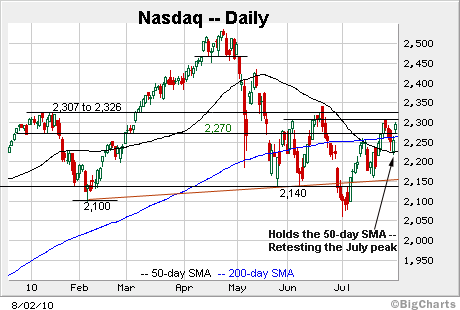
Below are the charts of the S&P500, Dow Jones & Nasdaq.
The information provided by The EGS Blog is based on sources believed to be reliable, but it is not guaranteed to be accurate.
There is no guarantee that the recommendations of The EGS Blog will be profitable or will not be subject to losses.
The information provided by The EGS Blog is not a recommendation or a solicitation that any particular investor should purchase or sell any particular security in any amount, or at all. The investments discussed or recommended herein may be unsuitable for investors depending on their specific investment objectives and financial position. At any time EGS LLC and its principals may maintain positions that are contrary to positions announced within the subscription service. In no event will The EGS Blog be liable to you or anyone else for any incidental, consequential, special, or indirect damage (including but not limited to lost profits or trading losses).
PAST PERFORMANCE IS NO GUARANTEE OF FUTURE RESULTS