January 21st, 2014
“Men who can be right and sit tight are uncommon” — Jesse Livermore
1. Google Moves into Home Automation — Google announced a $3.2 billion deal to buy smart thermostat and smoke alarm-maker Nest Labs Inc, led by the “godfather” of the iPod. The Nest acquisition gives Google a stepping stone into an important new market at a time when consumer appliances and Internet services are increasingly merging.
2. World Bank bullish about global prospects — the World Bank expects global economic growth to accelerate to 3.2% in 2014 from 2.4% in 2013, led by advanced economies that seem “to be finally turning the corner” following the financial crisis. In its Global Economic Prospects report, the bank also forecast that the U.S. will expand 2.8% this year vs 1.8% last year.
3. Alaska to provide $5.75B for LNG export project — Bloomberg, Alaska plans to jump-start a $45B natural gas export project by pitching in more than 10% of the cost and joining Exxon Mobil (XOM), BP (BP), ConocoPhillips (COP) and TransCanada (TRP) as an equity partner. The agreement between the state and the four companies outlines a framework in which Alaska would take as much as a 25 percent stake in a proposed gas processing plant, an 800-mile (1,287-kilometer) pipeline from Alaska’s North Slope and a liquefaction facility in the Kenai Peninsula. NatGas tanker Navigator Holdings (NVGS) and GasLog (GLOG) are two of the leaders in LNG shipper.
4. House approves $1.1 trillion measure to fund government through Sept 30, 2014 — Reuters, the U.S. House of Representatives overwhelmingly approved a $1.1 trillion spending bill. As a next step, Congress will need to turn its attention to the $16.7T debt limit.
5. Luxury in China loses luster as the wealthy flee — Bloomberg, wealthy Chinese are likely to buy fewer luxury goods again in 2014 after the steepest cut-back on spending in at least five years. Overall spending by wealthy Chinese fell by 15 percent in 2013, the third consecutive year of decline. The shrinking ranks of wealthy residents in China has also reduced luxury spending. One in three so-called high net worth individuals have already left, or are planning to leave, the country, the report showed, mostly to seek better opportunities for their children’s education.
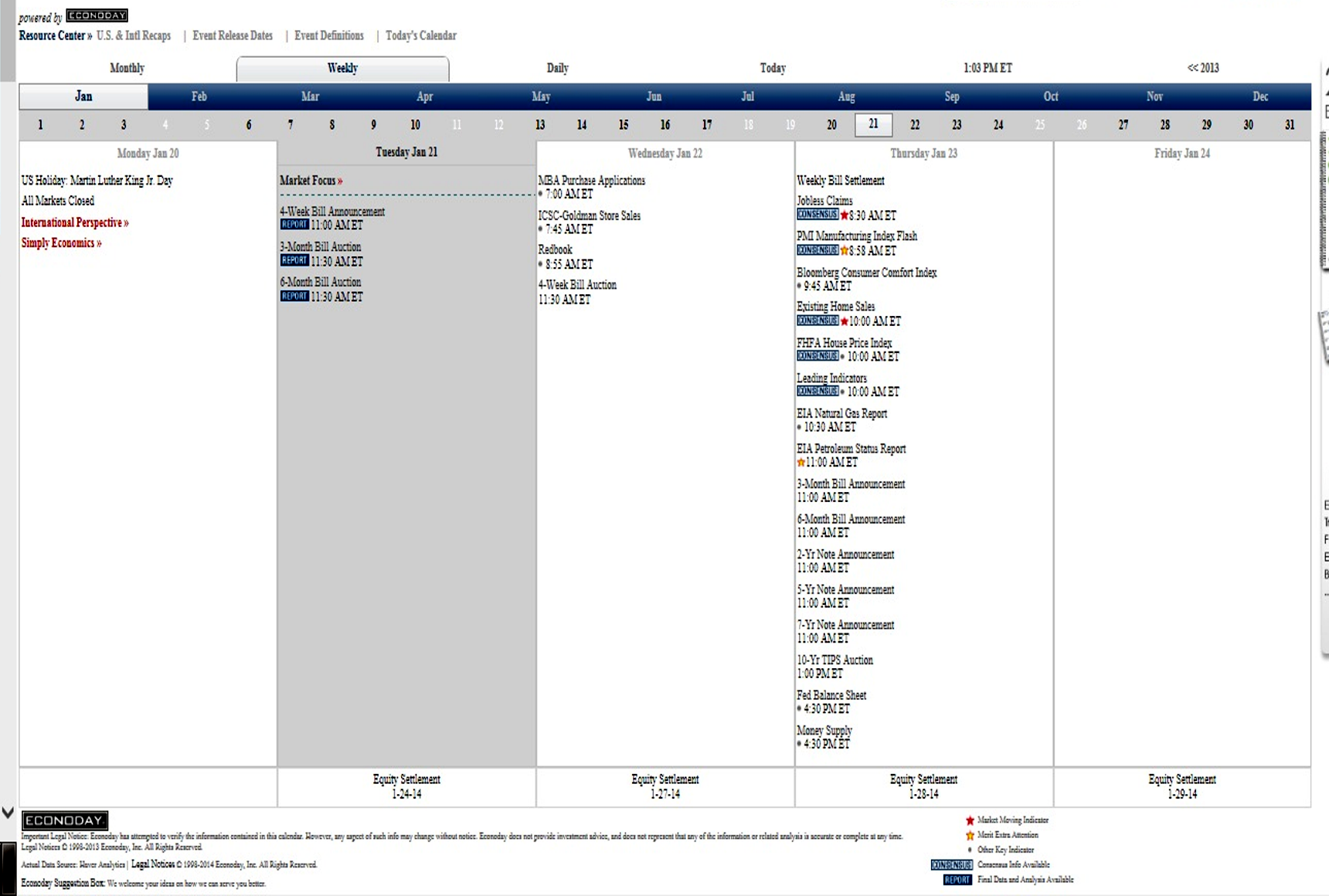
The week ahead — Economic data from Econoday.com:
Posted in Weekly Summary | No Comments »
January 14th, 2014
“Nothing is perfect. Life is messy. Relationships are complex. Outcomes are uncertain. People are irrational.” – Hugh Mackay
1. Senate confirms Yellen to lead the Federal Reserve — the Senate approved the nomination of Janet Yellen to become the first woman to head the Federal Reserve. The chamber voted 56-26 in favor.
2. Another train carrying oil derails and catches fire in New Brunswick, Canada — A Canadian National Railway train carrying propane and crude oil derailed and caught fire in northwest New Brunswick, Canada in the latest in a string of train accidents that have put the surging crude-by-rail business under heavy scrutiny. A series of disastrous derailments has reignited the push for tougher regulation.
3. Chinese CPI drops more than expected — China’s inflation fell to 2.5% on year in December from 3% in November and came in below forecasts of 2.7%. The PPI dropped for the 22nd month in a row – the longest streak since the 1990s – with a decline of 1.4%.
4. FOMC minutes – QE benefit declining over time — according the latest minutes from the Federal Reserve, the majority of Fed policy makers argued that the marginal efficacy of QE was declining over time at the FOMC’s last meeting in December. Few members want a larger-than-announced taper.
5. China ‘overtakes’ US as world’s largest goods trader — BBC, China appears to have become the world’s largest trading country last year after the value of its imports and exports increased 7.6% to $4.16T. The U.S., which has held the crown until now, hasn’t released its 2013 figures yet, but its trade in January-November totaled $3.5T. In December, China’s export growth slowed to 4.3% from 12.7%; However, there have been concerns in recent months over the speculation that some Chinese exporters may be overstating their shipments in an attempt to bypass restrictions on bringing funds into the country.
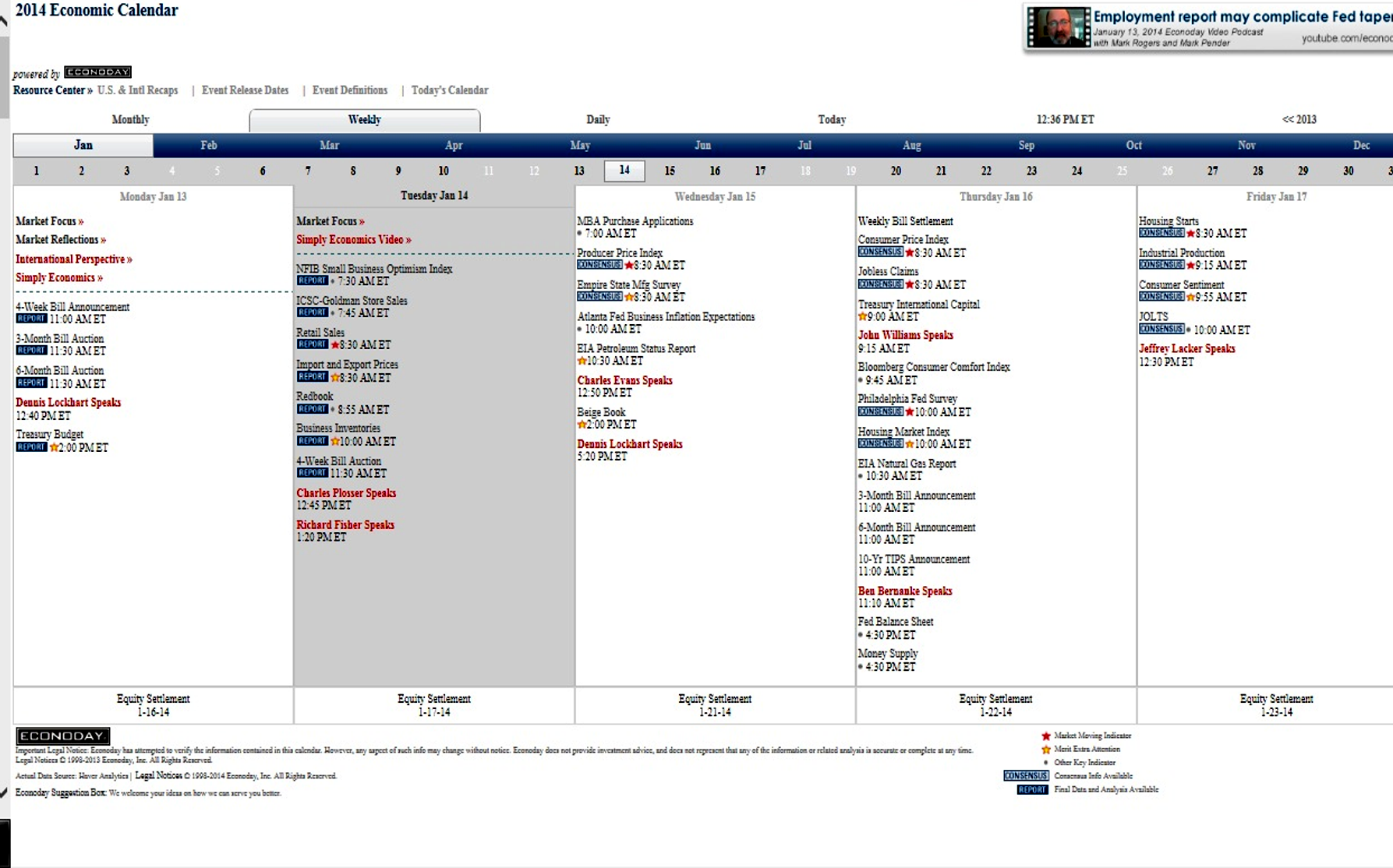
The week ahead — Economic data from Econoday.com:
Tags: New Year 2014
Posted in Weekly Summary | No Comments »
January 6th, 2014
“There’s only one growth strategy: work hard.” – William Hague
1. Masses of healthcare enrollments incomplete — As of last week, only around half of those who had signed up for healthcare coverage offered by over 100 insurers in 17 states under Obamacare had paid for their plans. Uncertainly now focus on whether insurers can process those payments and issue membership when the coverage takes effect in January 2014 .
2. China’s factory activity continues slows — the latest two surveys have indicated that China’s manufacturing sector slowed in December, with the official PMI falling to 51 from 51.4 in November and the HSBC print slipping to 50.5 from 50.8. New export orders disappointed in both readings, while employment contracted further in the official index. “Domestic and overseas demand was weaker than expected,” says economist Li Heng.
3. Improvement in Spanish (EWP) jobs situation better than expected — Spanish jobless claims dropped by 107,600 to 4.7M in December, the second-largest fall ever recorded after the June figure plummeted by over 127,000. The decline in December was far greater than the drop of 2,500 in November and consensus for -24,300. The improvement in unemployment adds to evidence that Spain is slowly digging itself out of its massive recession.
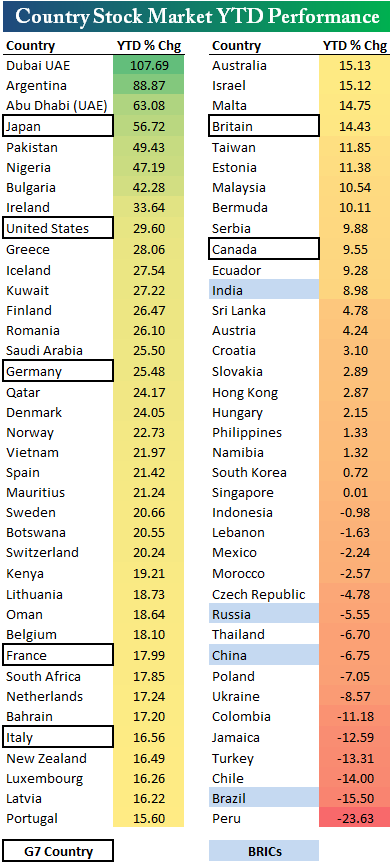
4. Final 2013 Country Stock Market Performance — courtesy of BIG, below is a look at the final stock market performance numbers for 76 countries around the world (% chg in local currencies).
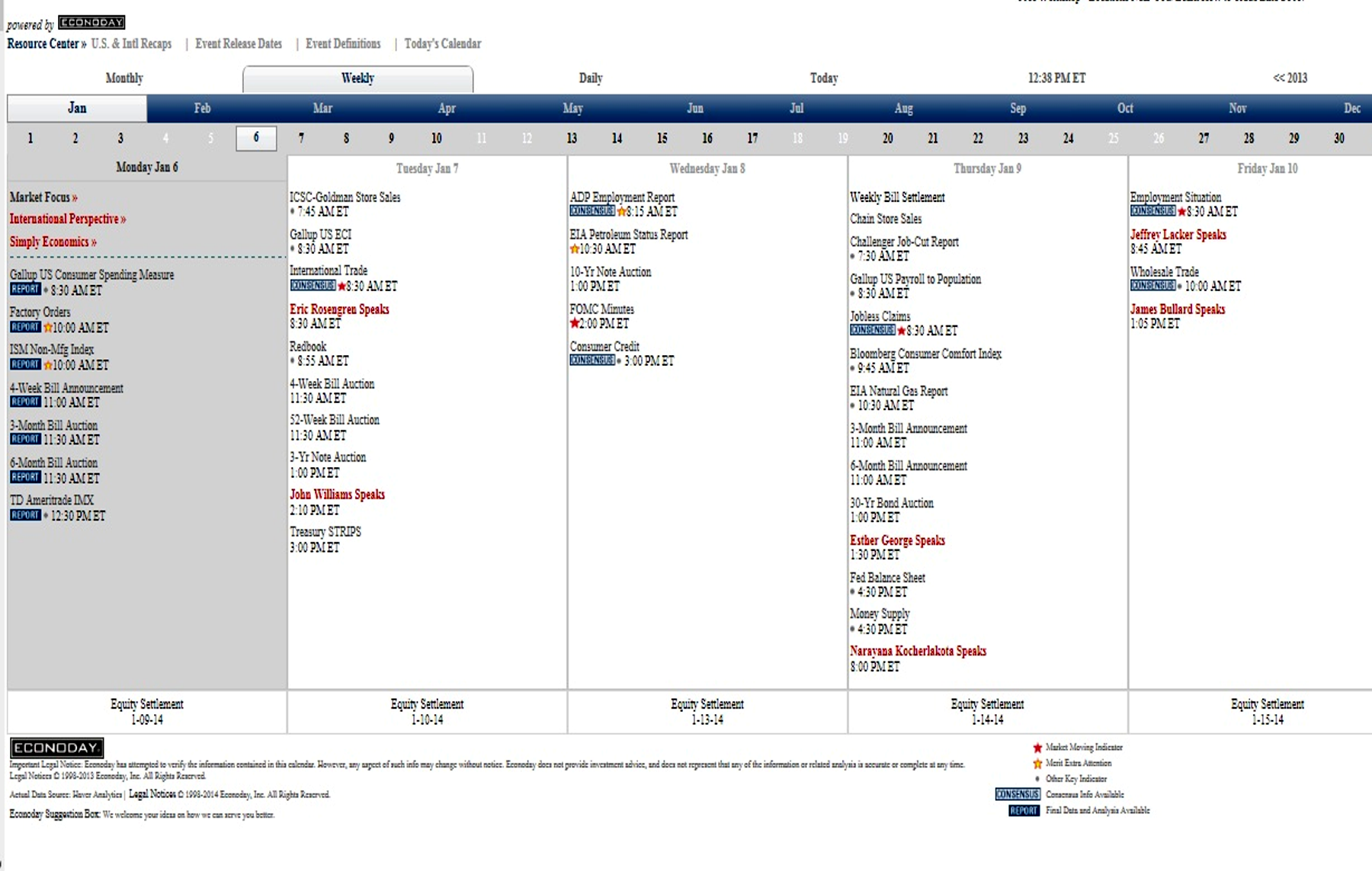
The week ahead — Economic data from Econoday.com:
Posted in Weekly Summary | No Comments »
December 31st, 2013
”Money cannot consistently be made trading every day or every week during the year” — Jesse Livermore
HAPPY NEW YEAR & WISHING YOU A PROSPEROUS 2014
1. Japan (DXJ) unveils ¥95.88T budget — Japan’s government has adopted a record ¥95.88T ($921B) budget for the fiscal year starting in April. 2014 budget will include increased spending on social security, defense and public works. However, the government is also trying to limit further growth of its massive debt, and it will reduce the issuance of new revenue bonds to ¥41.25T from ¥42.9T this year.
2. Obamacare deadline postponed by one day — the White House has extended by 24 hours for the deadline for signing up Obamacare. So far, over 1M people had logged onto the problem HealthCare.gov Web site which caused system sluggishness and long waiting times.
3. China Estimates 2013 Growth at 7.6% as Challenges Seen Ahead — Bloomberg, China reportedly estimates that growth slowed for the third successive year in 2013, dropping to 7.6% from 7.7% in 2012 but coming in above the government’s goal of 7.5%. Economists expect that China will expand 7.6% this year and 7.4% in 2014. The GDP release came as China’s central bank sought to ease a liquidity crunch in the market for loans between banks, as financial markets were roiled by the second spike in borrowing costs this year.
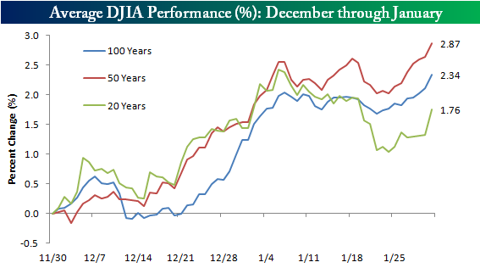
4. Santa Claus Rally Begins — courtesy of BIG, analysis below showing the typical seasonal pattern for the DJIA. If history is any guide, the rally is just starting and should continue until the first week of 2014. In the past, the Dow has advanced roughly 2% from now until the first week of January.
5. Unemployment Benefits end for long-term jobless — WashingtonPost, an estimated 1.3M people are set to lose extended unemployment benefits when funding for those benefits runs out. Since 2008, the federal government has provided money to those who are without a job for longer than 26 weeks and for up to 99 weeks. Concerned about people falling into poverty, Democrats plan to try to reinstate the provisions in the New Year; however, Republicans are opposed, arguing that the extended payments encourage unemployment.
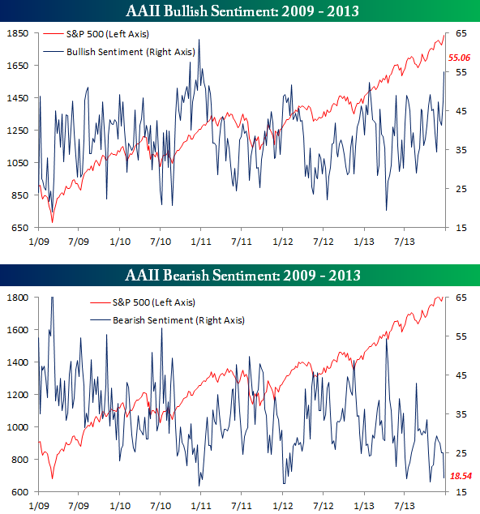
6. Individual Bullish Sentiment Back Above 50% — courtesy of BIG, According to the American Association of Individual Investors(AAII), bullish sentiment increased 7.6% this week from 47.46% up to 55.06%. The last time bullish sentiment was above the 50% mark was back in late January. The last time bullish sentiment was as high as it is now was nearly three years ago on January 6th, 2011.
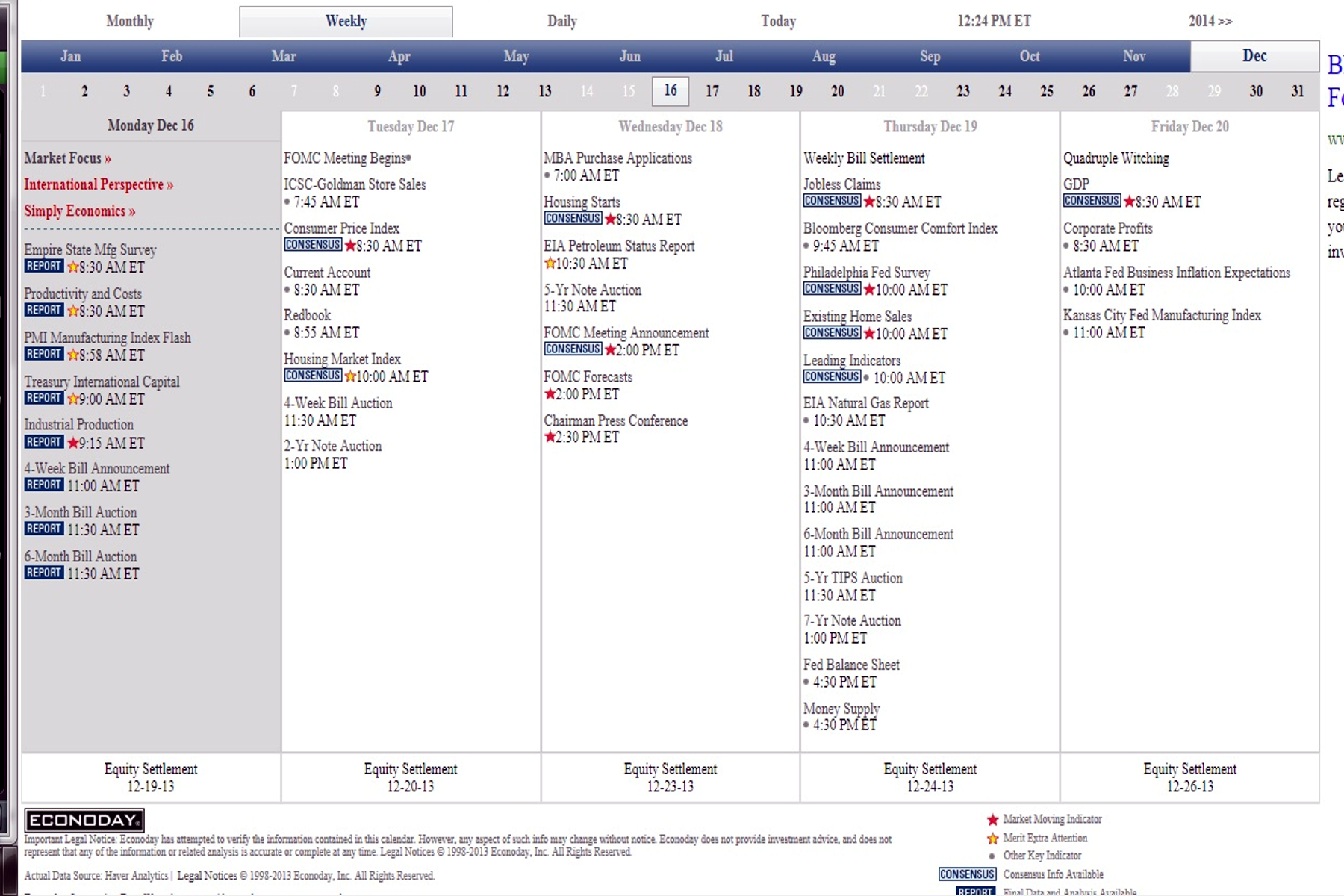
The week ahead — Economic data from Econoday.com:
Posted in Weekly Summary | No Comments »
December 23rd, 2013
“Don’t Fight the Fed” — Unknown
1. Fed Reveals its plan to start small steps to unwind stimulus — the Central Bank will reduce its big monthly bond buys by $10 bil starting in January 2014. The policy makers will consider increasing that pace if employment and inflation targets are reached quickly. However, interest rates will remain at or near zero for an extended time, likely into 2015 and after bond buys go to zero.
2. Facebook set to launch video ads — Facebook (FB) announced the launch of video advertisements and will start introducing them into users’ newsfeeds. It’s not clear how much the commercials will cost, although a figure of $2M a day to reach all Facebook members aged 18-54 has been bandied about.
3. Senate passes budget bill — President Obama set to sign a two-year $1.01T budget bill into law after the Senate passed the legislation yesterday by 64-36. However, the Senate and House Appropriations committees are negotiating about how to spend the money. The major sticking point will be the funding for Obamacare.
4. China (FXI) acts to avert credit crunch — The People’s Bank of China has made an emergency injection of liquidity into the country’s financial system after money market rates started to spike. Market rates rose because banks need it for year-end regulatory requirements. The seven-day repo rate climbed 72 bps to 7.02% after jumping 153 bps late last week.
5. S&P downgrades EU’s AAA credit rating — Standard & Poor’s cut its long-term credit rating on the European Union to AA+ from AAA, citing concerns about budget talks as reason for the move. “In our view, EU budgetary negotiations have become more contentious, signaling what we consider to be rising risks to the support of the EU from some member states,” said S&P in a statement.
6. Mining equipment makers set to capitalize on Aussie project. Caterpillar (CAT), Joy Global (JOY) and other U.S. mining equipment manufacturers may reap over $500M in fresh sales after the Export-Import Bank approved nearly $700M in government-backed financing for the A$10B Roy Hill iron ore mining project in Australia. The decision marks a victory for the struggling companies, whose sales have plunged during the past year, and a defeat for miners such as Cliffs Natural Resources (CLF), which had argued the loan would hurt their interests.
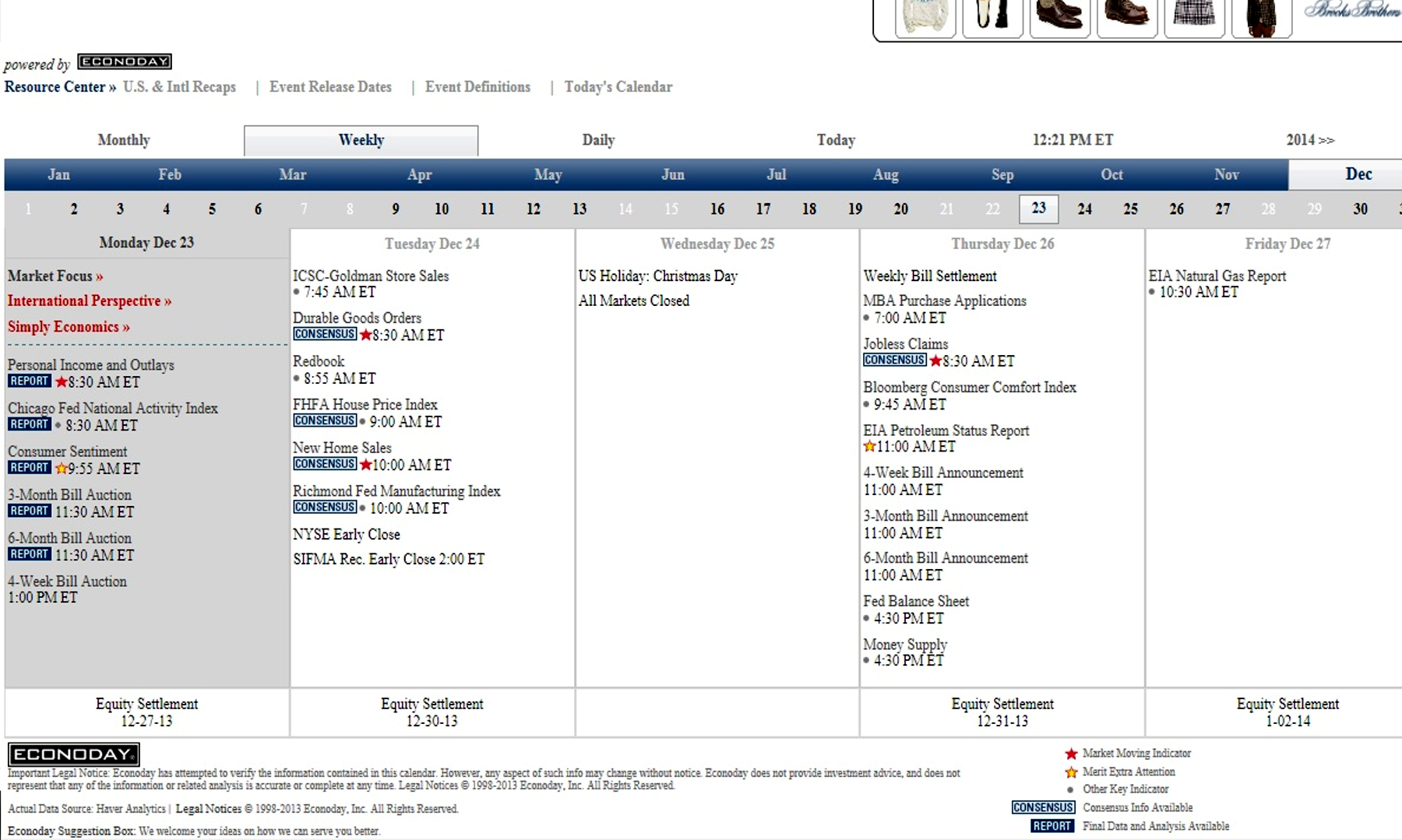
The week ahead — Economic data from Econoday.com:
Posted in Weekly Summary | No Comments »
December 16th, 2013
“You only find out who is swimming naked when the tide goes out,” wrote Warren Buffett.
1. Chinese exports power higher, inflation remains relatively tame — China’s exports climbed a greater-than-expected 12.7% on year in November and helped the country’s trade surplus increase 8.7% to $33.8B, the highest level since January 2009. Inflation also nudged down to 3% from 3.2% as a rise in food prices eased. The trade figures indicate that the global economy is beginning to tick along swimmingly, while the softening inflation could give China’s central bank room to refrain from further tightening.
2. Treasury exits rest of GM stake and makes loss of $10.5B — the government has sold the remainder of its 31.1M shares in GM (GM) for $9.2B, which will end restrictions on executive pay and could pave the way for dividends and buybacks. The government recovered $39B out of the $49.5B it invested in the automaker, ending the bailout of GM with a loss of $10.5B.
3. House, Senate leaders agreed to budget deal to prevent Government Shutdown the House and Senate negotiators have reached a budget agreement that sets spending levels for the next two years and replaces some of the automatic budget cuts in the sequester. If the full House and Senate back the proposals, which include modest spending reductions, a government shutdown next month will be averted.
4. Anadarko faces bill of up to $14B over Tronox spin-off — Anadarko Petroleum (APC) shares plummeted 11.6% premarket after Manhattan Bankruptcy judge Allan Gropper ruled that the company would have to pay $5-14B in environmental cleanup and health claims. The case relates to the 2005 spin-off by Kerr-McGee (now a unit of Anadarko) of its chemicals business as Tronox, which fell into bankruptcy in 2009 due to old environmental liabilities. Just three months after the spin-off, Anadarko offered to acquire Kerr-McGee’s oil and natural gas assets for $18B.
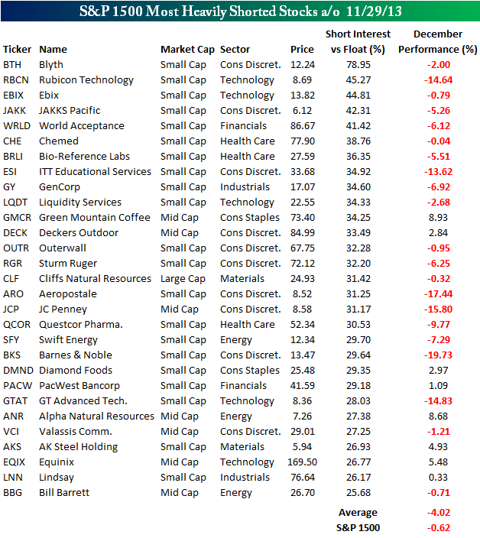
5. S&P 1500 Most Heavily Shorted Stocks — the list below highlights the 29 stocks in the S&P 1500 that have more than 25% of their free-floating shares sold short. The 29 names listed, 21 (72%) are small-cap stocks including the 10 most heavily shorted stocks on the list. The remaining eight names, seven are mid caps and Cliffs Natural (CLF) is the only large cap stock.
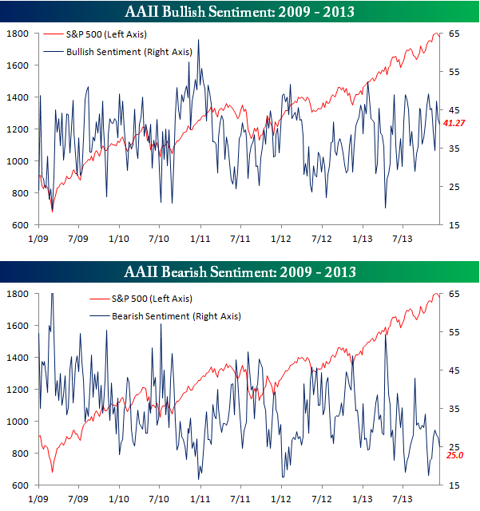
6. AAII Bullish Sentiment Falls — according to last week’s survey from the American Association of Individual Investors (AAII), bullish sentiment saw a slight decline from 42.64% down to 41.27%. This represents the second straight weekly decline in bullish sentiment and the fifth drop in the last seven weeks. Bearish sentiment also decreased this week, falling from 27.55% down to 25.00%.
The week ahead — Economic data from Econoday.com:
Posted in Weekly Summary | No Comments »
December 9th, 2013
..”Wall Street is the only place that people ride to in a Rolls Royce to get advice from those who take the subway” — Warren Buffett
1. Thanksgiving weekend sales slip — the National Retail Federation has estimated that consumers spent an estimated $57.4B over the Thanksgiving weekend, down 2.7% from last year. However, the number of shoppers increased to 141M people from 139M. The fall in spending, which came after retailers warned of a difficult holiday season, was due to the aggressive bargains on offer. Still, online sales climbed 17.3% on Thanksgiving and Black Friday, ComScore estimates.
2. Growth in eurozone factory activity accelerates slightly — Eurozone manufacturing PMI edged up to 51.6 in November from 51.3 in October, with Germany, Italy, Holland, Austria and Ireland performing well but with France remaining a concern. Markit noted “The data suggest that output is rising at a quarterly rate of only around 0.6% in the fourth quarter so far,” .
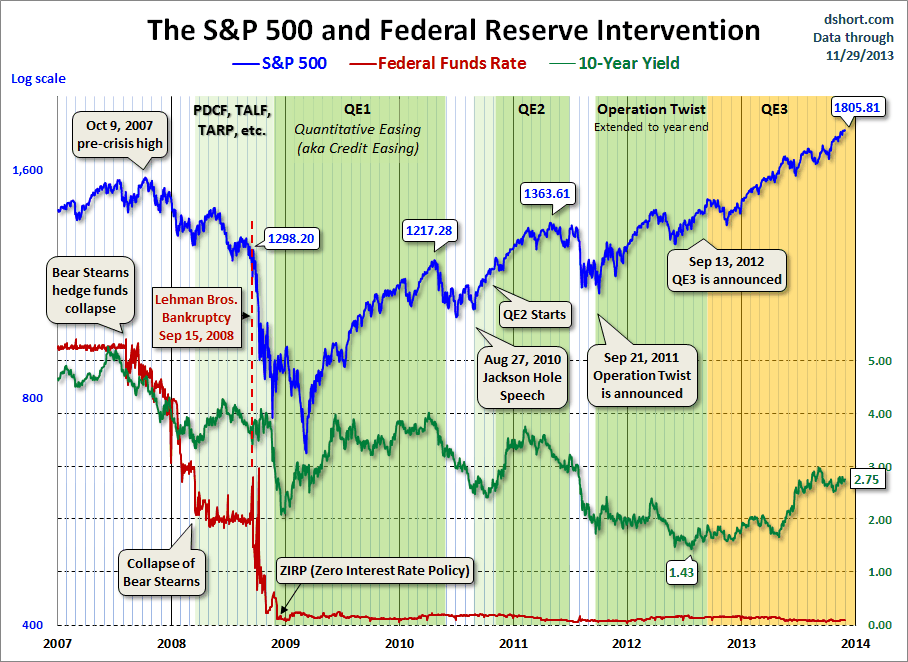
3. S&P500 and Federal Reserve QEs — below is the chart that displays the Fed’s intervention via QE and the S&P500 performance.
4. Illinois Legislature Approves Retiree Benefit Cuts in Troubled Pension System — NYTimes, Illinois’ Senate and House have approved a revamp of the state’s retirement system, one of the most underfunded in the country with a gap of almost $100B. The plan is designed to fully fund Illinois’ five pension systems by 2044 by saving an estimated $160B over 30 years with cuts and other measures. Unions strongly oppose the proposals and intend to go to court to try to block them.
5. Japan Unveils More Stimulus — the 5 tril yen ($54 bil) package includes construction projects for the 2020 Tokyo Olympics, post-tsunami rebuilding efforts and revitalization of aging infrastructure. It follows the 10.3 tril yen stimulus earlier this year and is meant to help further offset the effect of a sales tax hike set to kick in next year.
6. AAII Bullish Sentiment — According to the weekly survey from the American Association of Individual Investors (AAII), bullish sentiment increased 12.91 percentage points, rising to 47.3%. 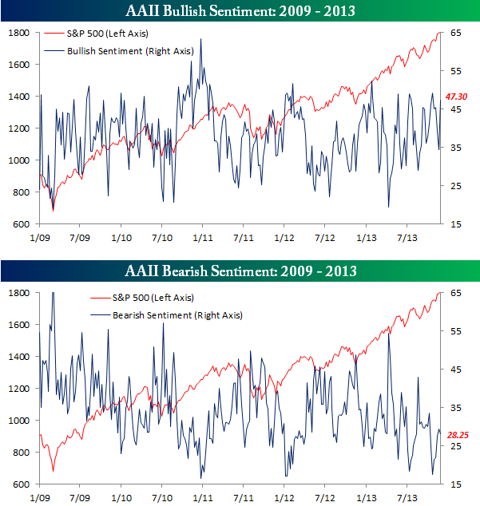
7. China bank ban leads to Bitcoin selloff — the People’s Bank of China has banned banks from trading in Bitcoin (BITCOIN), explaining that the virtual currency doesn’t have “real meaning,” nor the same legal status as a formal currency. The move is also probably tied to Beijing’s desire to regulate the yuan, although private individuals remain free to trade Bitcoins.
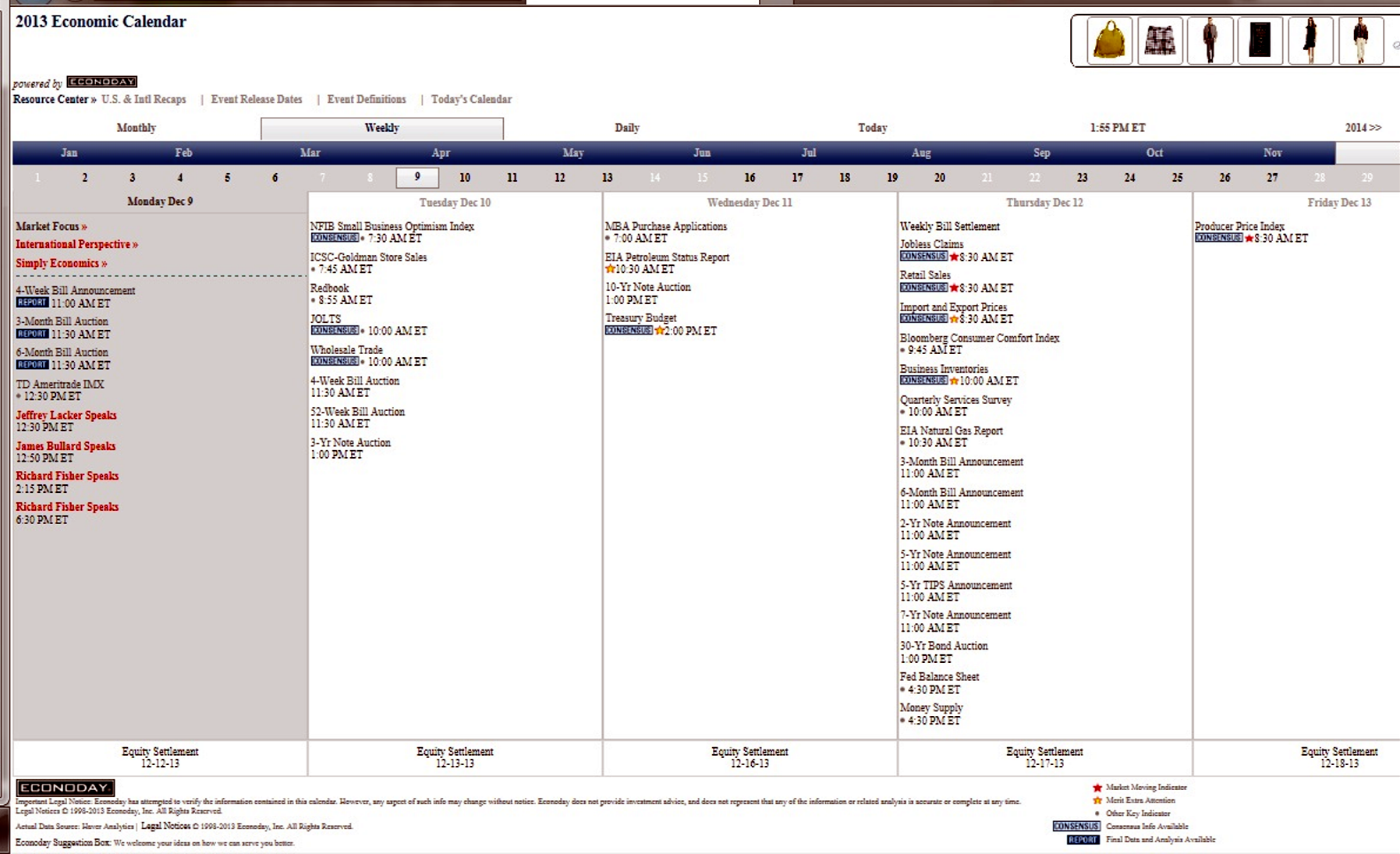
The week ahead — Economic data from Econoday.com:
Posted in Weekly Summary | No Comments »
December 2nd, 2013
“Mr. Market likes to make fool as many people as possible at the worst time” — EGS
1. U.K. Financial Conduct Authority scrutinizing Gold Fix from five banks — Bloomberg, since 1919, five banks meet to set the price of gold. The U.K. Financial Conduct Authority is now scrutinizing how prices are set in the $20 trillion gold market as dealers and economists say knowledge gleaned on those calls could give some traders an unfair advantage when buying and selling the precious metal.
2. Black Friday ‘Discounts’ Dirty Secret — WSJ, Retailers and suppliers first work out the lowest price they can sell a product at and still make the profit they want, and then they jack up the “suggested retail price” so that the retailer can later offer a big discount.
3. Rise in Chinese bond yields sparks concern — Chinese government-bond yields have remained high after hitting a nine-year peak last week, when the rate on 10-year debt reached 4.72%. Today, the yield closed flat at 4.71%. The spike has come as the government tightens monetary policy in order to try to rein in soaring lending, and it has led to higher interest rates in the broader economy.
4. S&P cuts Netherlands rating; Cyprus and Spain seen more positive — Standard & Poor’s lowered its credit rating for the Netherlands to AA plus from AAA, while lifting its outlook for the struggling economies of Spain and Cyprus. S&P also positively revised its credit ratings outlook for Spain – to stable from negative – stating that the country’s external position was improving as growth gradually resumed.
5. Tensions rise over East China Sea islands — the heat over the islands dispute in the East China Sea has been turned up further, with China sending fighter jets and an early warning aircraft into an area that the country last week designated as an Air Defense Identification Zone. China’s action follows the U.S., Japan and South Korea sending military planes into the region without telling Beijing first, in defiance of the latter’s directives that they should provide notification and its threats of military action if they don’t, which it has now downplayed.
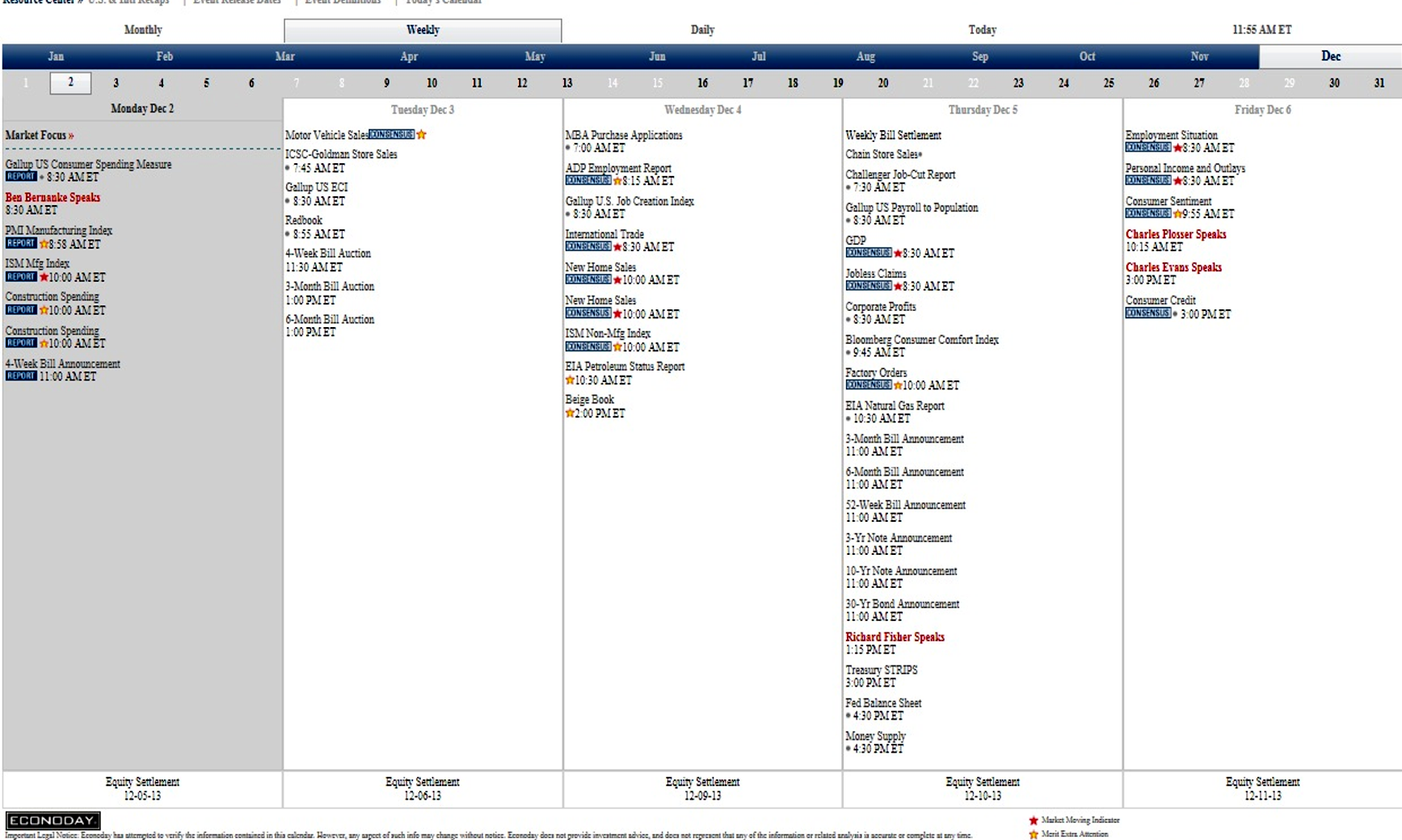
The week ahead — Economic data from Econoday.com:
Posted in Weekly Summary | No Comments »
November 25th, 2013
“Markets are constantly in a state of uncertainty and flux and money is made by discounting the obvious and betting on the unexpected.” — George Soros
1. EPA Curbs Ethanol Mandate — the Environmental Protection Agency proposed trimming corn-based ethanol use in fuels as fuel demand levels off. The draft rule would cut ethanol content to a bit less than 10% of fuels, 16% lower than currently. Refiners will have to buy fewer pricey ethanol credits. Some companies to benefit from this change — Valero(VLO), Tesoro(TSO), Phillips66(PSX).
2. China issues new reform details — Marketwatch, the recent third plenum of the party’s 18th issued a 20,000-word document detailing decisions finalized at the closed-door meeting. Key items include state-owned enterprises (SOE) to contribute more of their profits to the government and allow more couples to have a second child.
3. Japanese export growth accelerates — Japanese exports rose at their fastest pace in three years in October, jumping 18.6% on year vs 11.5% in September and beating consensus. Exports also grew 4.4% in volume terms, suggesting that Japan is not just relying on the weak yen to boost trade. Imports jumped 26.1% – again driven higher by soaring fuel costs – helping the trade deficit rise to ¥1.09T ($11B) from ¥932.1B a month earlier.
4. FOMC Meeting Minutes: Taper in Coming Month — the minutes from the Central Bank minutes from the Oct 29-30 meeting shows Policymakers said they might cut their $85 bil-a-month bond buying program even if the job market isn’t strong. Fed officials also discussed telling markets that they wouldn’t raise rates until unemployment falls below 6.5% from the stated goal.
5. Bank of Japan keeps ultra-loose policy unchanged — the Bank of Japan has left its key interest rate at 0.1%, and maintained its program of expanding the monetary base at an annual rate of ¥60-70T ($611-713B) a year.
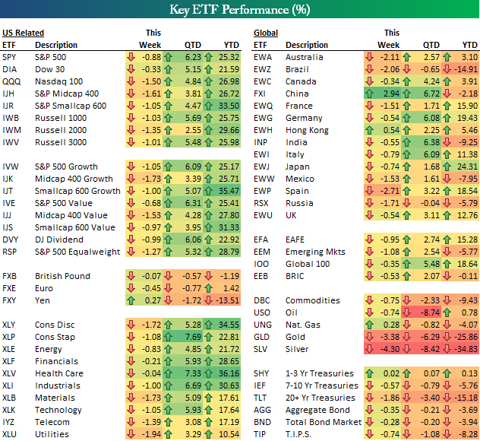
6. Latest Key ETFs Performance — courtesy of BIG, below is the recent performance of various ETF asset classes.
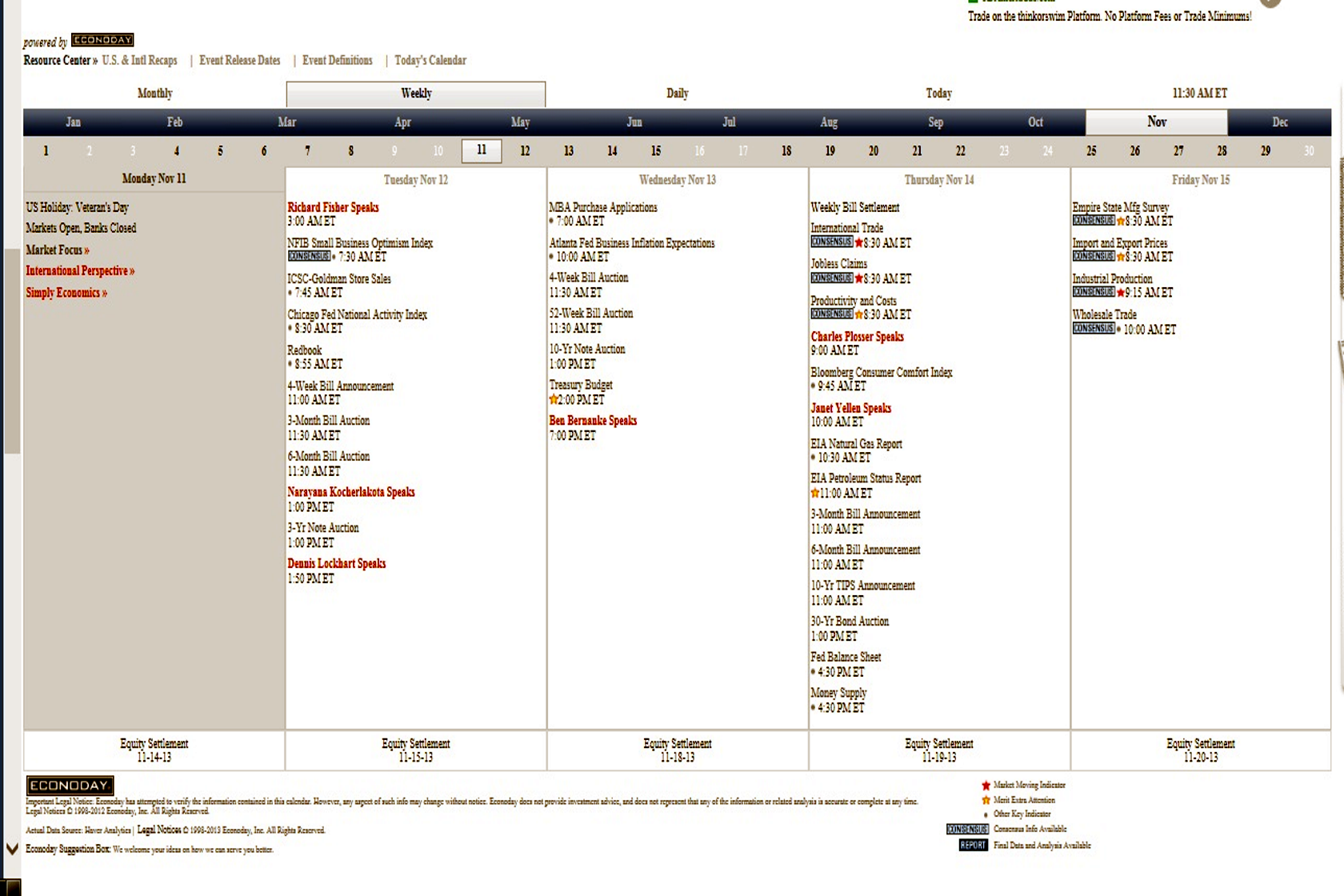
The week ahead — Economic data from Econoday.com:
Posted in Weekly Summary | No Comments »
November 18th, 2013
”Stock market bubbles don’t grow out of thin air. They have a solid basis in reality, but reality as distorted by a misconception” — George Soros
1. State-Run Obamacare Exchanges Reported 49,100 Enrollees versus initial target of 800,000 — Bloomberg, fewer than 50,000 people had reportedly managed to enroll in private insurance plans via the government’s problem-plagued HealthCare.gov Web site as of last week. The number represents less than 10% of the 500,000 people that had been projected. Twelve of the 14 states that are operating their own exchanges have signed up 49,000.
2. U.S. Investigates Currency Trades By Major Banks — nine of the largest banks in currency trading have announced they are facing inquiries by the United States Attorney General, Eric H. Holder Jr.,. AG Holder said in a rare interview discussing an active investigation. ”We’ve recognized that this is potentially an extremely consequential investigation.” Banks include Barclays, the Royal Bank of Scotland and Citigroup.
3. Obamacare fix puts insurers in a tough spot — President Obama will allow insurance companies to continue to offer existing policies in 2014 even if they fail to meet the standards set by the healthcare law. Obama’s U-turn follows pressure from the public and his own party after it emerged that his repeated pledge that people could keep their insurance plans if they wanted to contradicted the terms of the law.
4. Berkshire takes 40M-share stake in Exxon Mobil — Berkshire Hathaway (BRK.A, BRK.B) bought a 40.1M-share position in Exxon Mobil (XOM. Berkshire also added to existing stakes in Bank of New York Mellon (BK), DaVita HealthCare Partners (DVA), Suncor Energy (SU), U.S. Bancorp (USB) and VeriSign (VRSN); Berkshire lowered its holdings in ConocoPhillips (COP), DirecTV (DTV), GlaxoSmithKline (GSK) and Sanofi (SNY).
5. Japan Q3 GDP growth tops estimates — economic growth slowed in Japan during the July-September quarter, but at 1.9% (annualized), the economy still expanded faster than economists were expecting. Despite the headline beat, capex growth printed at just 0.2% for Q3, far below consensus estimates. Private consumption rose 0.1% while inventories chipped in 40 bps after pulling the overall figure 10 bps lower in Q2.
6. Janet Yellen, new FOMC Chairman leans dovish in prepared remarks — she stated ”We have made good progress, but we have farther to go to regain the ground lost in the crisis and the recession,” Janet Yellen told the Senate Banking Committee in her confirmation hearing that to continue supporting Bernanke accommodative policies.
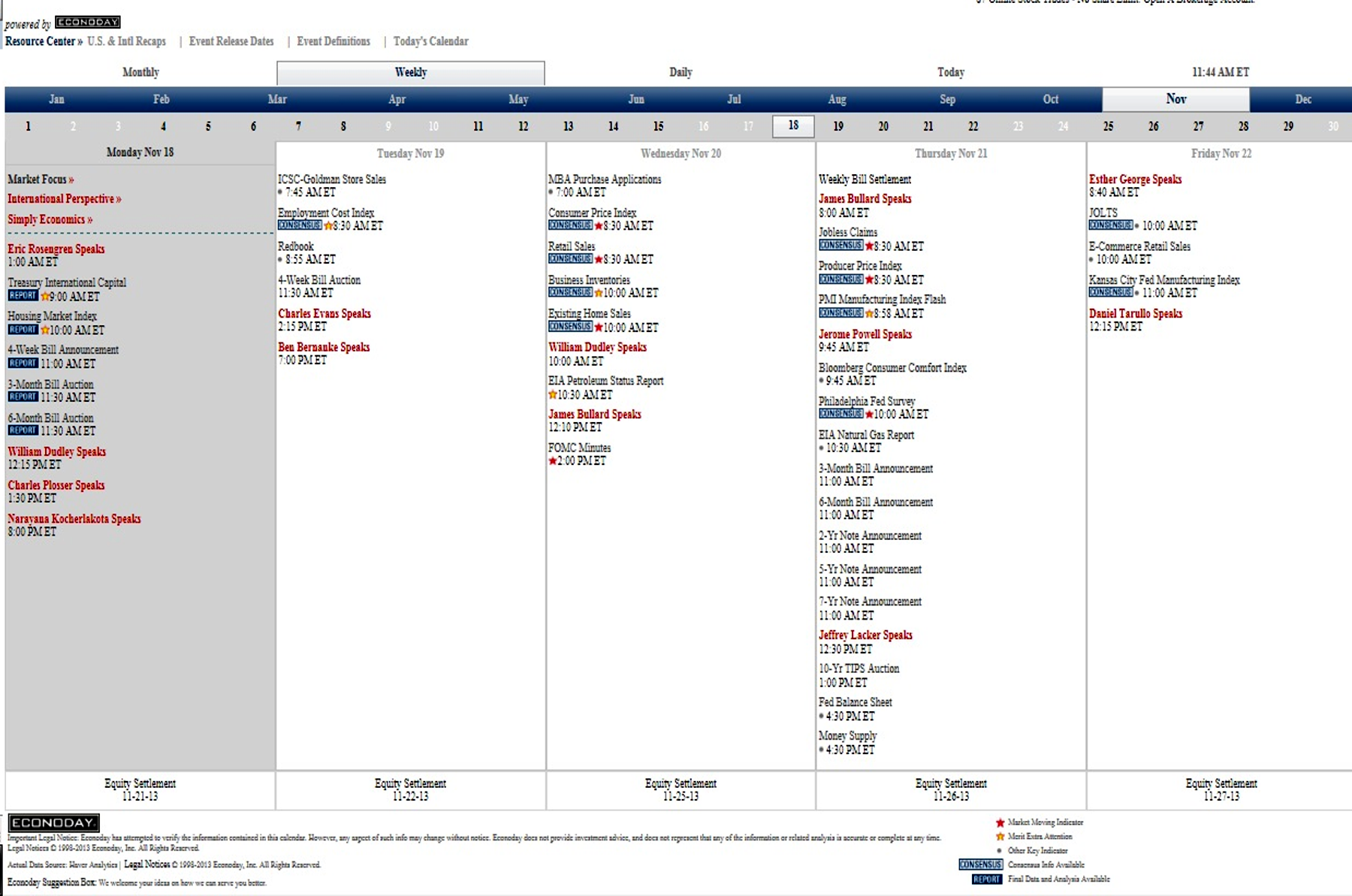
The week ahead — Economic data from Econoday.com:
Posted in Weekly Summary | No Comments »