October 26th, 2015
“The main purpose of the stock market is to make fools of as many men as possible.” ― Bernard M. Baruch
1. China GDP Grew 6.9%, Slowest Pace Since 2009 — China’s economy grew 6.9% in the third quarter from a year ago, beating forecasts for 6.8% growth, but decelerating to its slowest pace since the global financial crisis. The results add to doubts the country can meet its year-end GDP target of about 7%, and raises pressure on Beijing to roll out more stimulus measures following a summer stock market plunge and devaluation of the yuan.
2. ECB. Holds Interest Rates Steady — the European Central Bank (ECB) also left unchanged its economic stimulus program, but said it would review its impact on the eurozone economy in December. Grounds for extending QE would include deflation risks, slowing growth in China and stock market volatility.
3. Deadline for the “Debt-Ceiling” Must Be Raised By Nov. 3 — Treasury Secretary Jacob Lew is concerned that “last-minute brinkmanship” in Congress could lead to a legislative “accident” in which lawmakers would fail to raise the debt ceiling before a Nov. 3 deadline. The standoff is bubbling through financial markets as investors limit their exposure to Treasury bills that mature in November, pushing yields to levels last seen two years ago, when Congress went through a similar episode.
4. Hedge Fund Losses Swell Continue Into September — per Hedge Fund Research, hedge funds suffered their largest quarterly loss in assets since the financial crisis during the three months that ended in September. The third-quarter saw the average fund lose 3.9% driven by slowing growth in China, sliding commodities prices and a likely U.S. Fed rate hike that sent stocks tumbling. Well known Hedgefunds such as Bill Ackman’s Pershing Square (OTCPK:PSHZF) has now fallen 12.6% for the year, while David Einhorn’s Greenlight Capital (NASDAQ:GLRE) is down 17% YTD.
5. China’s Central Bank Cuts Rates for 6th Time Since Nov — the People’s Bank of China (PBOC) cut rates for the 6th time in less than a year and relaxed reserve requirements yet again. Growth has flagged in the world’s No. 2 economy. China has pursued its most aggressive policy easing cycle this year since the 2008/09 global financial crisis, as policymakers seek to invigorate an economy beset by weak demand and excessive industrial capacity.
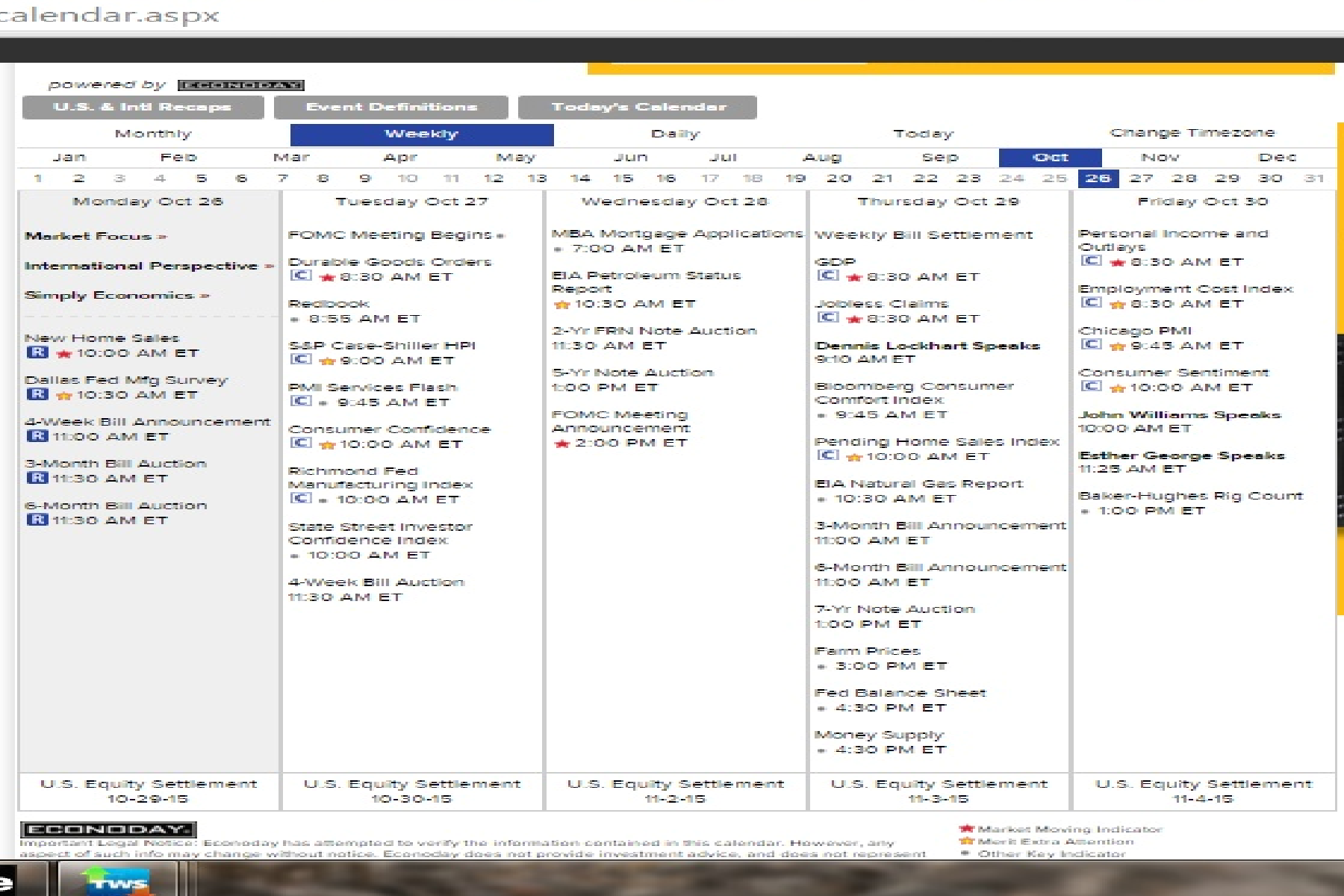
The week ahead — Economic data from Econoday.com:
Tags: China Cuts Rate, Debt Ceiling
Posted in Weekly Summary | No Comments »
October 19th, 2015
“Buy when others are despondently selling and sell when others are greedily buying” — Mark Mobius
1. China Trade Data Shows Further Weakness in — China’s trade slump has extended into September. Dollar-denominated imports plunged 20.4% Y/Y last month, while exports slipped 3.7%, translating into a trade surplus of $60.34B.
2. US Retail Sales Rose 0.1% in Sept Smaller than Expected — Retail sales excluding automobiles, gasoline, building materials and food services slipped 0.1 percent after a downwardly revised 0.2 percent gain in August. Cheaper gasoline weighed on service station receipts, but gains in purchases of automobiles and other goods pointed to solid domestic demand that could shield the economy from slowing global growth.
3. IPO Market Remains Under Pressure — following in the footsteps of Neiman Marcus (NMG), Albertsons (NYSE:ABS) has delayed its IPO due to Wal-Mart’s (NYSE:WMT) lower guidance weighed heavily on the U.S. market and pummeled retailers’ shares. Separately, payments processor First Data (NYSE:FDC) priced its initial public offering at $16/share, below its previously indicated range of $18-$20/share.
4. Square (SQ) (Mobile Card-Reader/Payment Service Provider) Files for IPO — Square has filed a public S-1. The mobile card-reader/payment service provider is listing on the NYSE under the symbol (SQ). Square generated $23.8B in gross payment volume in 2014 via 446M payments, and had over 2M sellers accepting five or more payments in the 12 months ending in June. 1H15 payment volume totaled $15.9B (+53%).
5. Fitch Downgrades Brazil to One Notch Above Junk — Fitch has cut Brazil’s credit rating to the brink of junk, warning the country could soon lose its coveted investment grade due to the “rising government debt burden, increased challenges to fiscal consolidation and a worsening economic growth backdrop.” The rating agency left a negative outlook on the new rating, suggesting it eventually could follow Standard & Poor’s recent downgrade to junk. Brazil’s economy is the 7th largest in the world at $2.4Tn – that’s above Italy, India, Russia, Canada, Australia and just under France ($2.8Tn) and the UK ($2.9Tn). S&P cuts Brazil credit rating dropped to BBB- by last month as well.
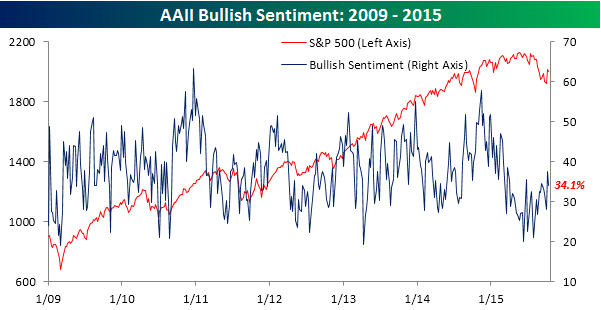
6. AAII Bullish Sentiment Dropped — According to the weekly sentiment survey from the American Association of Individual Investors (AAII), bullish sentiment dropped from 37.5% last week to 34.1%. This week also marks the 33rd straight week that bullish sentiment has been below 40%, which is also the longest streak on record. Oh well, maybe next week. Chart below via courtesy of BIG.
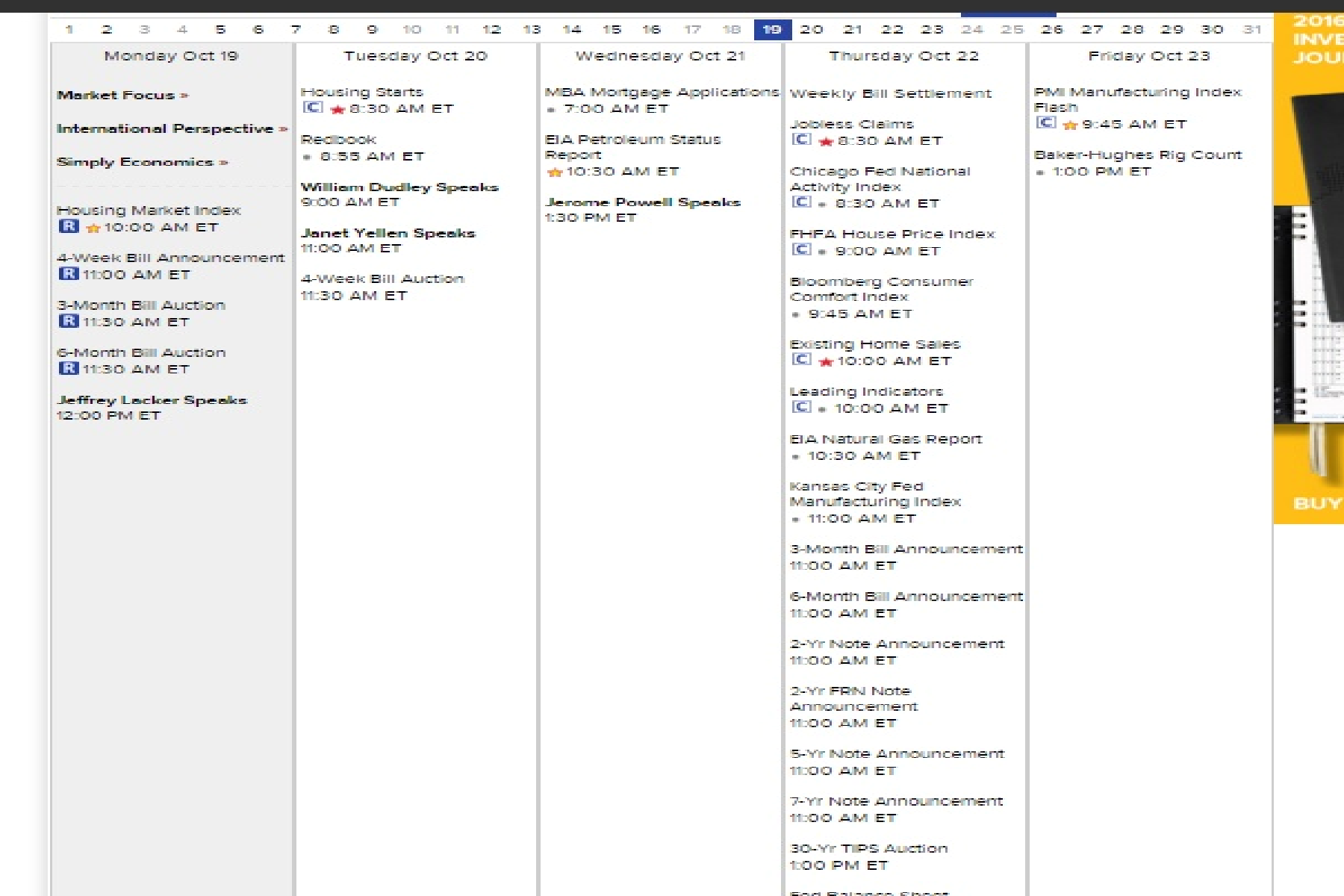
The week ahead — Economic data from Econoday.com:
Tags: AAII Bullish Sentiment, Payment Processor, Square
Posted in Weekly Summary | No Comments »
October 13th, 2015
“I made my money by selling too soon & never lost money by turning a profit” — Bernard Baruch
1. Trans-Pacific Partnership Agreed — after five years of talks, a dozen nations across the Pacific Basin clinched an agreement that would reduce tariffs in countries making up 40% of the global economy. Tough issues surrounding the Trans-Pacific Partnership, including auto trade, dairy exports and monopoly periods for next-generation drugs were agreed.
2. Facebook To Beam Internet From Space to Africa — Facebook (FB) plans to launch a satellite in partnership with France’s Eutelsat Communications (OTCPK:EUTLY) to bring connectivity to large parts of sub-Saharan Africa. The satellite, part of Facebook’s Internet.org platform, is under construction and will be launched in 2016.
3. German Exports Slowed The Most Since 2009 Recession — German exports slumped the most since the height of the 2009 recession in another sign Europe’s largest economy is losing momentum in Q3. Foreign sales slid 5.2% to €97.7B M/M and imports tumbled 3.1% to €78.2B, narrowing the trade surplus to €19.6B. The data follows sharp declines in industrial orders and output in August, suggesting waning demand from abroad may be leaving its mark on Germany.
4. VW America CEO Knew of Emissions Problem in 2014 — shock revelations over Volkswagen (OTCQX:VLKAY) emission scandal have already wiped more than 40% off Volkswagen’s market cap, but the direct and indirect costs are still being assessed as the company risks severe fines and possible damages from customers’ lawsuits. In testimony of his hearing with the House energy committee, U.S. head of Volkswagen (OTCQX:VLKAY) Michael Horn offered a “sincere apology” over the “deeply troubling” pollution scandal and admitted he was made aware of “a possible emissions non-compliance” as early as spring 2014. According to an estimate by Warburg Research, the automaker will ultimately face costs and lost revenue from its damaged image of more than €35B ($39B).
5. Fed Minutes Shows Fear of Weak China, Prices — from the Sept 16-17 meeting, Fed policy makers chose not to raise rates last month due to worries about China and other overseas economies possible impact on US exports and overall economy. The minutes also show how concerned members were about inflation remaining persistently low.
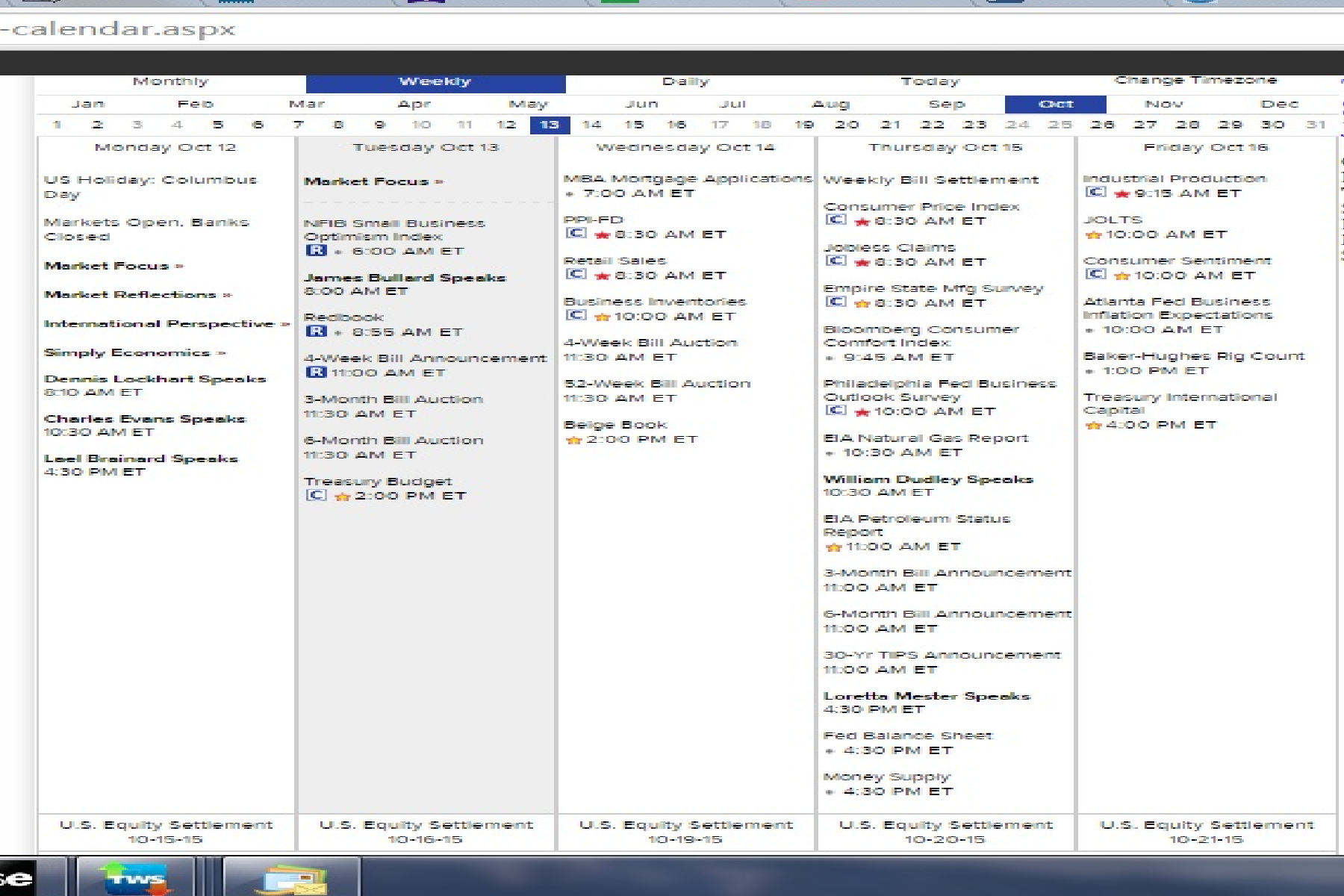
The week ahead — Economic data from Econoday.com:
Tags: Fed Minutes, TPP Agreement, VW Emission Scandal
Posted in Weekly Summary | No Comments »
September 25th, 2015
“when the facts change, you must change your mind” — unknown
1. Volkswagen Admitting Diesel Emissions Cheat — Volkswagen (OTCQX:VLKAY) admitted to cheating on U.S. air pollution tests for years, risking billions in potential fines and heavily shaking investor confidence. Shares in Frankfurt plunged as much as 22% on the news, the steepest intraday decline in almost seven years, wiping out $18B in market value and extending the stock’s slump for the year to 32%. “I personally am deeply sorry that we have broken the trust of our customers and the public,” Volkswagen (OTCQX:VLKAY) CEO Martin Winterkorn said in a statement.
2. Alibaba’s $105B Lockup Comes to An End — the lockup on 63% of Alibaba (BABA) shares ended on Sept 19, freeing up the company’s largest shareholders to start selling stock beginning today. With Yahoo (NASDAQ:YHOO) still working out what to do with its 15% stake amid tax uncertainties, investors battered by the e-commerce company’s $128.5B market slump are bracing for the worst, such as more shares hitting the market and driving prices even lower.
3. The Democratic Front-Runner, Hillary Clinton Drug Plan Would Cap Consumer Costs, Mandate R&D Spending — Several details of the new plan have emerged. The plan would put a $250 monthly cap on the amount chronic pain patients would have to pay for prescription medications, approving more generic/imported drugs, forcing pharmaceutical companies to reinvest their profits into R&D, and ending their ability to write off consumer advertising as a business expense.
4. China Factory PMI Falls Again — activity in China’s factory sector fell to the lowest level in over six years. The preliminary Caixin China manufacturing purchasing managers’ index dropped to 47.0 in September, compared to the 47.5 reading expected by economists. The index came in at 47.3 in August. The decline was led by a weak read for new orders and new export orders.
5. House Speaker John Boehner To Resign From Congress — House Speaker John Boehner will leave Congress next month, an aide said on Sept 25, in a stunning shakeup of Republican leadership in Washington. Boehner has been embroiled in a fight with the conservative wing of his party as the federal government hurtles toward a possible shutdown next week. Congress has passed no funding bills for the fiscal year that begins Oct. 1, and without a stopgap bill, the government would partially shut down. There had been talk by conservatives of replacing Boehner as speaker.
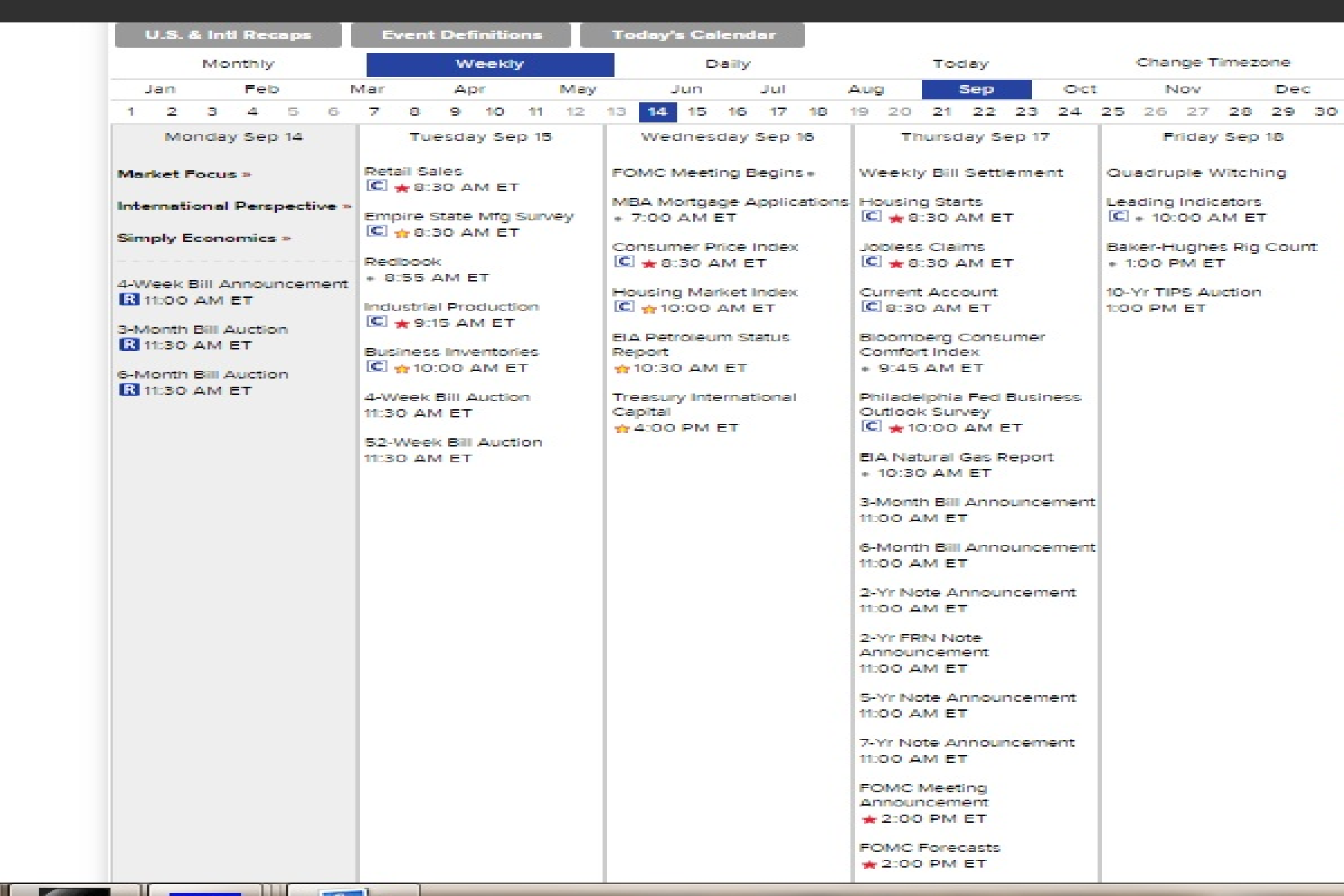
The week ahead — Economic data from Econoday.com:
Posted in Weekly Summary | No Comments »
September 21st, 2015
“The easiest thing to do is prepare. If you don’t, on behalf of the other market participants, we thank you.” — unknown
1. Retail Sales in U.S. Rise In August as Consumers Unshaken by Turmoil — Bloomberg, Retail sales in the U.S. climbed for a second straight month in August. The Commerce Department figures showed 0.2 percent increase in August followed a 0.7 percent gain in July that was larger than previously reported. Ten of 13 major retail categories showed increases last month, including auto dealers, restaurants and clothing stores.
2. S&P Cuts Japan Credit Rating as Abe Falls Short of Early Promise — Standard & Poor’s cut Japan’s long-term credit rating one level to A+, saying it sees little chance of the Abe government’s strategy turning around the poor outlook for economic growth and inflation over the next few years. Japan’s problems are mounting, with inflation near zero, the economy contracting last quarter and debt rising as the population ages. The International Monetary Fund estimates public debt will increase to about 247 percent of gross domestic product next year.
3. CPI Dropped In the Month of August — August Consumer Price Index fell 0.1% vs. July, its first drop since Jan as the labor dept. reported. Cheaper gas led the decline. Core CPI, which strips out food and energy, rose 1.8% vs. a year earlier for the 3rd straight month, below the Fed’s 2% target.
4. Federal Reserve Scrubs Sept. Rate Liftoff — citing “global economic and financial developments” – especially in China that could curb US growth and inflation, the Fed Reserve voted 9-1 not to raise interest rates for the first time in nearly a decode. Fed staff also cut GDP forecasts for 2016-17. Fed chief Janet Yellen said a rate hike could happen in Oct. or Dec.
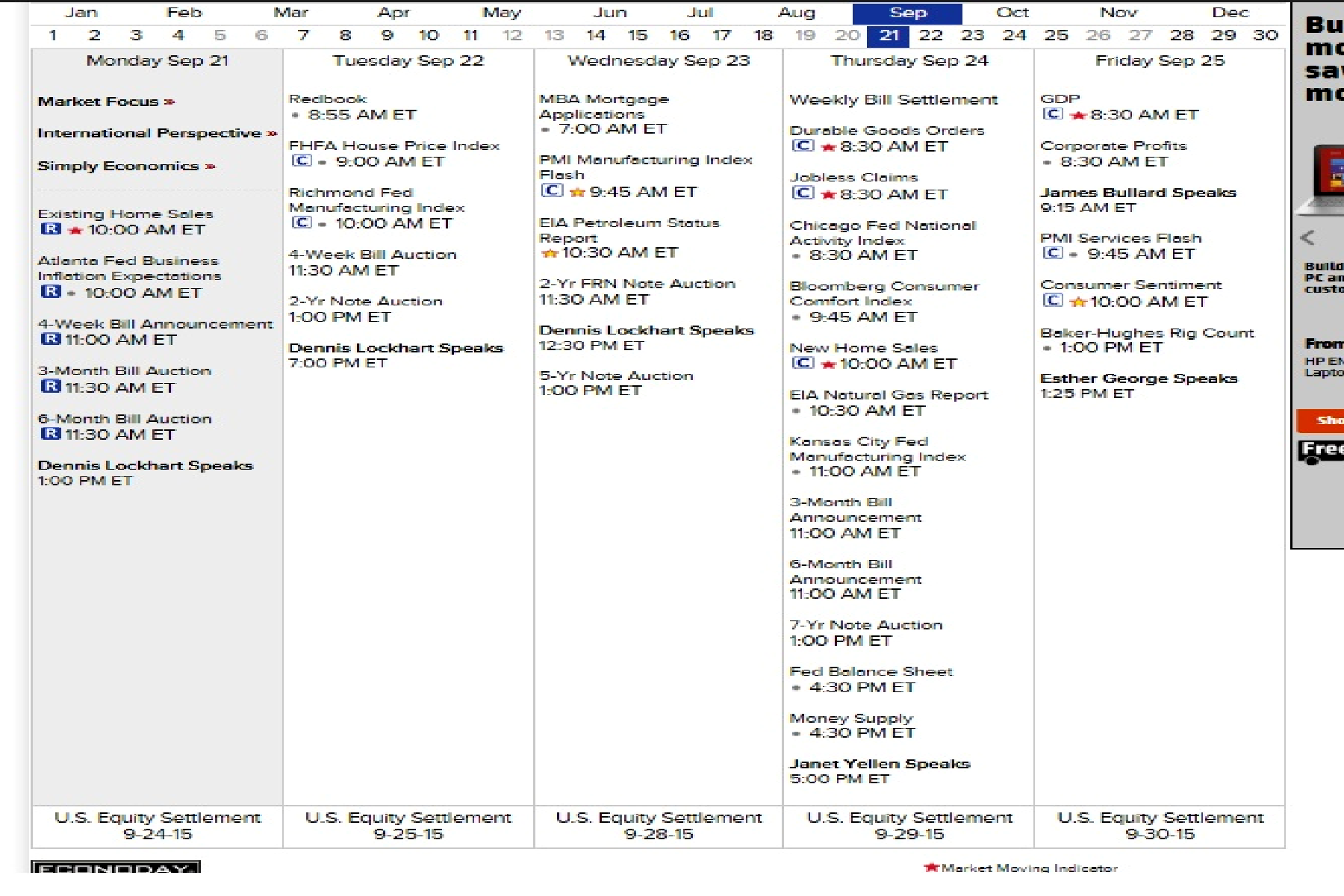
The week ahead — Economic data from Econoday.com:
Tags: CPI, FOMC Rate Hike
Posted in Weekly Summary | No Comments »
September 14th, 2015
“Obviously the thing to do was to be bullish in a bull market and bearish in a bear market… I came to learn that even when one is properly bearish at the very beginning of a bear market it is not well to begin selling in bulk until there is no danger of the engine back-firing.” – Jesse Livermore
1. Chinese Trade Continues to Slump — Chinese imports fell for the tenth month in a row, tumbling a greater than expected 13.8% in August vs consensus of -8.2% and a drop of 8.1% in July. Exports dived 5.5% vs -8.3% previously. The fall in imports reflects lower global commodity prices and sluggish internal demand.
2. Chinese Government Plans Further Stimulus — China’s finance ministry has unveiled yet more stimulus as it again bids to re-spark the country’s slowing economy, which was exemplified by poor trade figures yesterday. The government intends to cut taxes for small businesses and allocate further funds for infrastructure projects, with two railway projects worth almost 70B yuan ($11B) being approved.
3. Standard & Poor Cuts Brazil Credit Rating to Junk With a Negative Outlook — Standard & Poor downgraded Brazil to BB+, the highest speculative grade, highlights the failure of President Dilma Rousseff’s administration to shore up the government’s budget amid forecasts for the longest recession since the 1930s, inflation at a 12-year high and a collapse in prices for Brazil’s commodity exports. S&P’s negative outlook means it may reduce the grade further, even as Fitch Ratings and Moody’s Investors Service keep the country at investment grade for now.
4. Consumer Sentiment in U.S. Slumps to Lowest Level in a Year — Bloomberg, the University of Michigan’s preliminary index dropped to 85.7 from an August reading of 91.9, the largest one-month decline since the end of 2012. Households were less upbeat about future growth in employment and wages than a few months earlier, while 73 percent of respondents reported hearing news of negative economic developments. Attitudes in September toward purchases of automobiles and other big-ticket items remained strong, especially among higher-income households, the report showed.
The week ahead — Economic data from Econoday.com:
Tags: Brazil Downgraded, China Stimulus
Posted in Weekly Summary | No Comments »
September 1st, 2015
“. . . Look for hysteria to see if you shouldn’t go the opposite way, but don’t go the opposite way until you have fully examined it. Also, remember that the world is always changing. Be aware of change. Buy change. You should be willing to buy or sell anything. So many people say, ‘I could never buy that kind of stock.’ ‘I could never buy utilities.’ ‘I could never play commodities.’ You should be flexible and alert to investing in anything.” — Excerpt of an interview with Jimmy Rogers
1. Shell Halts Alaska Oil Exploration — after spending $7Bil, Shell halts Alaska oil exploration after disappointing well results. Shell targeting finds it thought could be 10 times greater than the amount of oil and gas produced thus far in the North Sea. Though there were signs of oil and gas in the Burger J well in Alaska’s Chukchi Sea, they weren’t enough to warrant further production, and the well will be plugged and abandoned.
2. House Demecrats Request Subpoena For Docs on Valeant (NYSE:VRX) Drug Pricing — House Democrats want to subpoena Valeant (NYSE:VRX) for documents related to its increases in drug pricing. Valeant (NYSE:VRX) hiked the prices of Nitropress and Isuprel 212% and 525% respectively the day it bought them. Jason Chaffetz, Chairman of House’s Committee on Oversight and Government Reform, 18 Democratic representative stated,”We believe it is critical to hold drug companies to account when they engage in a business of buying old neglected drugs and turning them into high-priced specialty drugs,”. Biotech stocks sold-off on the news.
3. Senate Passes U.S. Spending Bill Hours Before Shutdown Deadline — the Senate and the House passed a short-term spending bill that will extend federal funding until December 11 and avoid a government shutdown by Sept 30’s midnight deadline. The measure comes amid a row over the financing of the women’s group Planned Parenthood. Following the votes, Republican leaders plan to start talks with President Obama about a two-year budget, although it’s unclear whether any successor to outgoing House Speaker John Boehner would be interested in such a deal. President Barack Obama has signed into law a bill that extends federal funding until December 11.
4. Chinese Manufacturing Continues To Shrink — Chinese factory activity continued to contract in September, albeit at a slightly slower pace, two surveys show. The government NBS Manufacturing PMI edged up to 49.8 from 49.7 in August, while the Caixin manufacturing PMI rose to an expected 47.2 from 47.
5. Nordstrom (JWN) Sells Credit Card Porfolio For $2.2B, Sets Buyback and Announces Special Dividend — Nordstrom has wrapped up the sale of its credit card portfolio for $2.2B in a long-term deal with TD Bank (NYSE:TD), which will be the exclusive issuer of Nordstrom (NYSE:JWN) brand Visa and private label cards. Net proceeds of the sale are about $1.8B after $325M in debt reduction, as well as transaction costs. Nordstrom’s putting the cash to work via a $1B buyback program and a $900M special dividend or $4.85 per share.
6. Market Correction Similarity Between 1011 and 2015 — chart below shows a similarity of 2011 vs 2015. We need to see more ingredients follow before we can say that a bottom has been created. A bottom is defined as a function of price & time and a level from which a multi-week up trend can begin.
Note:
a. Correction Length –> 8 weeks
b. Low set is retested –> 2015 low SPX 1,867
c. Check MACD & ADX before going long
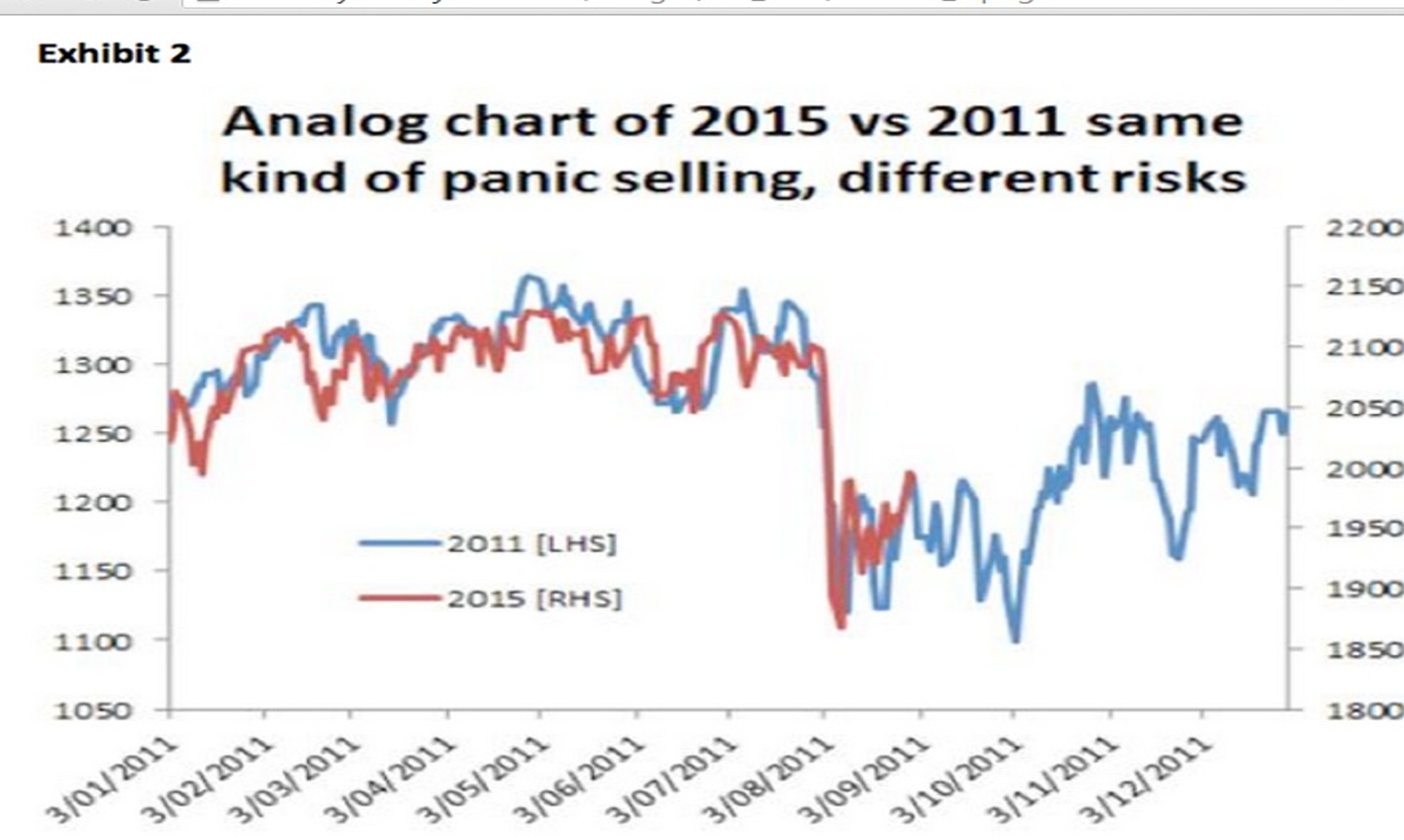
2011 vs 2015 Comparision
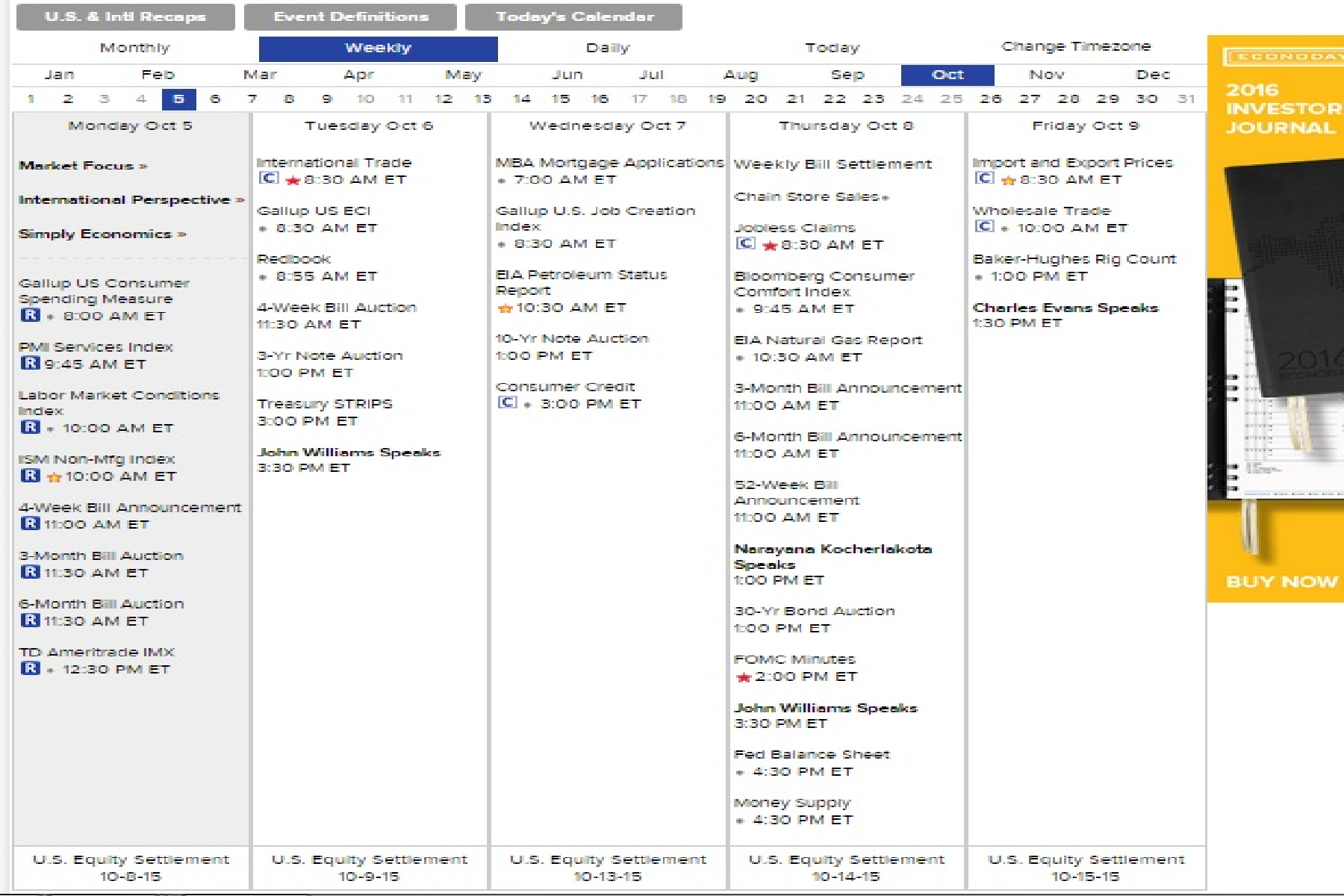
The week ahead — Economic data from Econoday.com:
Tags: 2011 vs 2015 Comparision, Government Shutdown, Special Dividend
Posted in Weekly Summary | No Comments »
August 31st, 2015
“If you have an approach that makes money, then money management can make the difference between success and failure… … I try to be conservative in my risk management. I want to make sure I’ll be around to play tomorrow. Risk control is essential.” – Monroe Trout
1. China OKs Pension Funds to Pour $97B Into Market — China gave approval for pension funds run by local governments to invest in the stock market. The measure was approved over the weekend by the State Council. State media in China estimate close to $97B will be eligible to be invested under the new rule.
2. Oil Falls to 2009 Crisis Prices — US crude futures settled down to $38.2 per barrel, the lowest since Feb 2009. The latest decline in crude followed the collapse in Chinese stocks, which was fed by widening concerns over slowing growth in the world’s largest oil importer. Other commodities including copper and soybeans also fell.
3. China Cut Interest Rate AND Reserve Ratio To Offset Capital Outflow — China’s central bank lowered both deposit and lending ratios by 25 basis points, taking the one-year benchmark rates to 1.75% and 4.60% respectively. The central bank also lowered commercial banks’ reserve ratio by 50 basis points. Large banks will still have to keep 18% of their deposits as reserves after this move. The PBoC last week pumped a net 150 billion yuan into the market via 7-day repurchase agreements and another 110 billion in 6-month loans into financial institutions. But these efforts were perceived insufficient and too short-term.
4. CVS Expands Telehealth Coveragee — CVS Health is jumping further into telehealth with a partnership that will expand patients’ remote access to doctors. Three leading telehealth companies – American Well, Teladoc and Doctor On Demand – will begin receiving referred CVS (NYSE:CVS) customers, as well as referring their own customers to 150 CVS walk-in clinics, in six states by the fourth quarter.
5. Investors Yank Cash From Almost Everything Just Like 2008 — Bloomberg, since July, American households — which account for almost all mutual fund investors — have pulled money both from mutual funds that invest in stocks and those that invest in bonds. It’s the first time since 2008 that both asset classes have recorded back-to-back monthly withdrawals, according to a report by Credit Suisse. Credit Suisse estimates $6.5 billion left equity funds in July as $8.4 billion was pulled from bond funds, citing weekly data from the Investment Company Institute as of Aug. 19. Those outflows were followed up in the first three weeks of August, when investors withdrew $1.6 billion from stocks and $8.1 billion from bonds.
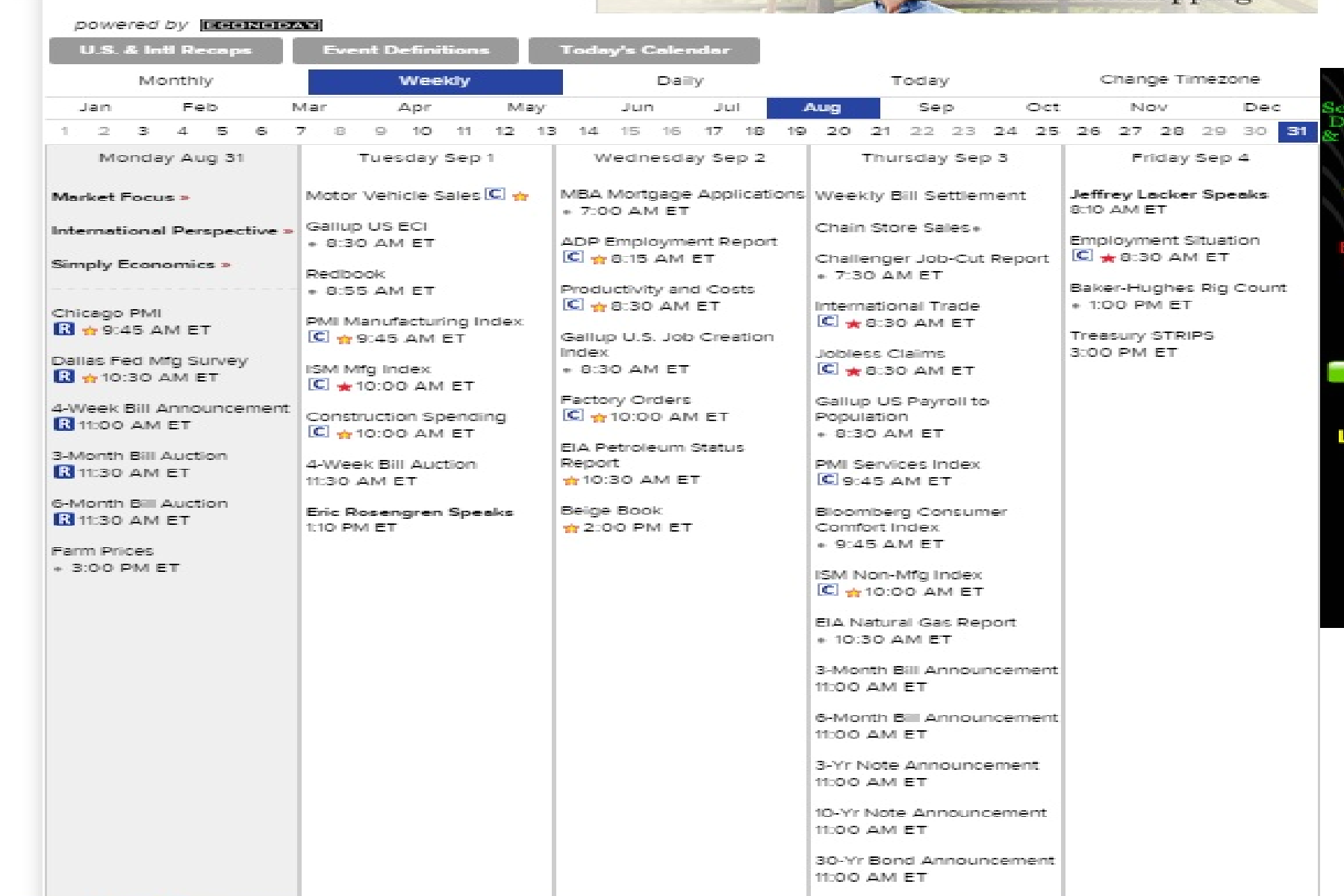
The week ahead — Economic data from Econoday.com:
Tags: China Bear Market, Oil Low, PBoC
Posted in Weekly Summary | No Comments »
August 25th, 2015
“The worse a situation becomes the less it takes to turn it around, the bigger the upside.” — George Soros
1. FDA Clears “Viagra For Women” — the first drug to treat low sexual desire in women has won approval from U.S. health regulators. Addyi (flibanserin), produced by privately-held Sprout Pharmaceuticals, will only be available through certified health care professionals and pharmacies due to its safety issues. The drug can result in potentially dangerous side effects such as low blood pressure and fainting, especially when taken with alcohol.
2. FOMC Meeting Minutes — according to the latest July meeting minutes, policymakers didn’t sound too convinced that its time for an initial rate hike but “noted that conditions were approaching that point”. Participants worried about China and currency swings before last week’s yuan devaluation.
3. Germany OKs Greek Bailout — Germany lawmakers approved a 3rd rescue deal, despite significant conservative opposition. That clears the way for Athens to receive money to make a 3.2 bil-euro debt payment to the European Central Bank. Greece PM Alexis Tsipras is weighting whether to hold a confidence vote or snap elections amid a rebellion within his left wing coalition.
4. Kazakhstan Devalued Currency — Kazakhstan’s tenge plunged a record 23% late last week, following a surprise announcement the government would allow the currency to float freely. The move continues a currency war being fought in the emerging markets. Vietnam devalued its currency for the third time this year after a similar move in China, while Russia is allowing the ruble to track the drop in crude.
5. Oil Poised for Eighth Weekly Decline — WTI crude is heading for its eighth straight weekly decline, the longest weekly losing streak in about thirty years. In late 1985, oil prices slumped to $10 from around $30 over five months, after OPEC raised output to counter an increase in production outside the group. Weaker global stock markets and data from China’s factory slowdown are particularly weighing on the commodity today, adding to worries about lower demand.
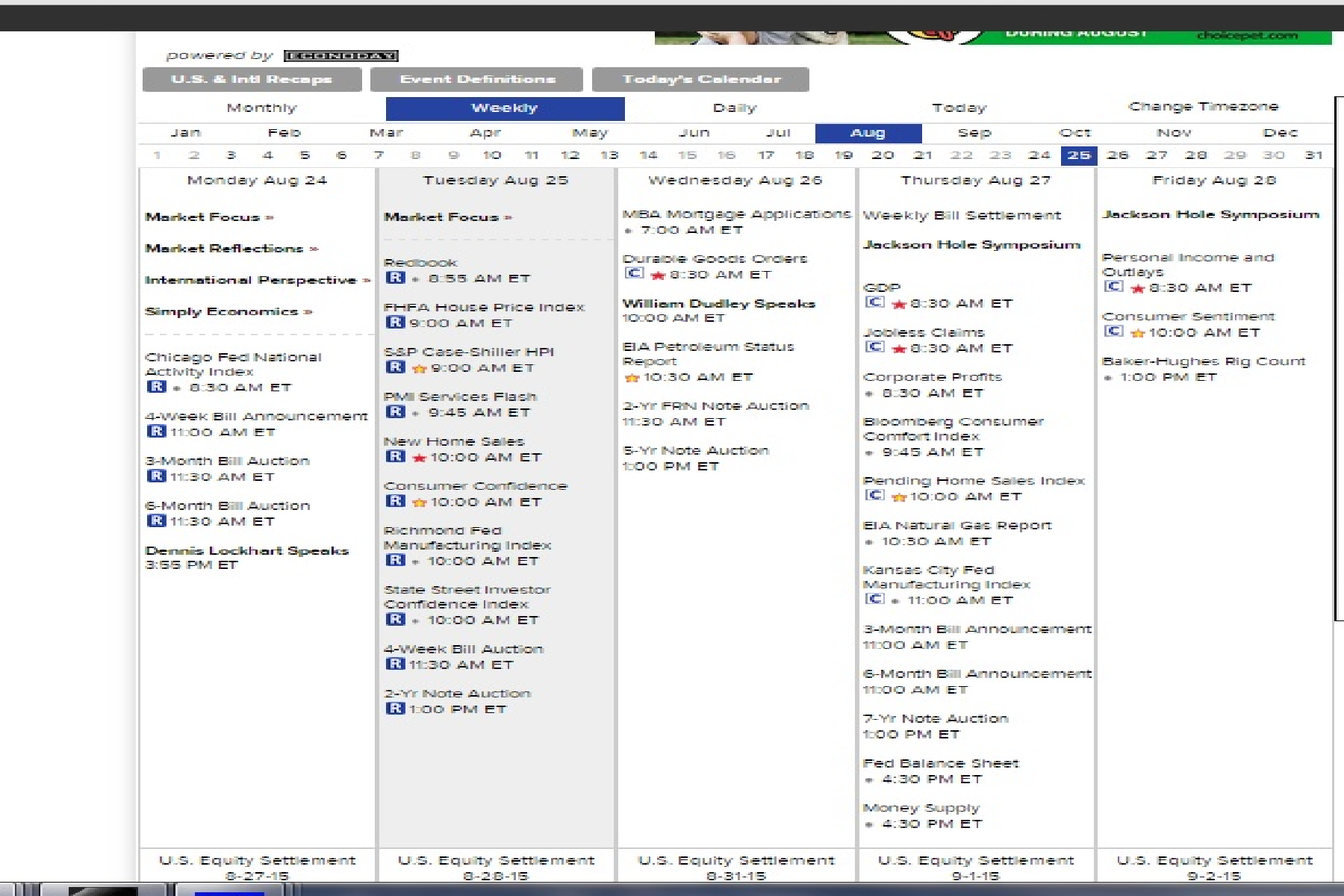
The week ahead — Economic data from Econoday.com:
Tags: Viagra for women
Posted in Weekly Summary | No Comments »
August 17th, 2015
“Son if you are going to be wrong, be wrong quickly, and for a de minimis loss of capital.” — Leon Levy
1. People Bank of China (PBoC) Devalue Yuan Against US Dollar After Weak Data — China sent a shock wave through currency markets by depreciating the Yuan almost 4 percent in 2-day period against the U.S. dollar to levels last seen three years ago. The move had a knock-on effect on currencies throughout the region, with the Singapore, New Zealand and Australian dollars, as well as the South Korean won, also dropping against the U.S. dollar in reaction. Also, Chinese exports slumped 8.3 percent in July, the biggest drop in four months and far worse than expectations for a 1 percent fall. Exports to the European Union fell 12.3 percent in July while those to the United States dropped 1.3 percent.
2. Moody Downgraded Brazil — Moody’s Investors Service has cut Brazil’s credit rating to near-junk status, citing weaker-than-expected economic performance, an upward trend in government spending, and lack of consensus on government reforms. Brazil’s government bond rating now stands at Baa3 with a stable outlook. “The numbers confirm that the authorities have been unable to deliver primary surpluses large enough to prevent an increase in debt ratios in 2015-2016,” Moody’s said.
3. Greece Rescue Terms Agreed — Athens and its international creditors agreed to specific reforms and budget cuts that would unlock nearly $95 bil in bailout aid after leaders reached a deal last month on the outlines of a new rescue plan. However, Greece PM Alexis Tsipras may face a political backlash that could force him to call snap elections.
4. Eurozone Growth Slows in Second Quarter — GDP (Gross Domestic Product) in the 19-nation region rose 0.3%, below views and down from 0.4% growth in the prior quarter. The top two economies lagged expectations, with Germany’s economy grew 0.4%, Italy’s 0.2%, while France reporting no growth. With market jolts coming from China, and Greece on the verge of a new bailout program, the euro area’s promising revival may still see difficulties ahead.
5. China Slowdown Worries and Oil Glut Press Oil to 6 1/2-year Low — crude prices have returned to more-than six-year lows as huge stockpiles and refinery shutdowns add to concerns about oversupply, while China’s devalued yuan heaps pressure on commodity markets. Oil futures slid earlier to $41.35 a barrel, a level last seen on March 4, 2009,.
6. Apple Now Aiming for 2016 Web TV Service Launch — Bloomberg, after previously aiming for a fall launch, Apple (NASDAQ:AAPL) is now looking to bring its Web TV service to market in 2016. The delay is blamed on slow-moving licensing talks with TV networks and the need for capacity upgrades. Sources suggest Apple wants to charge about $40/month for its service, in comparison to Dish’s (NASDAQ:DISH) Sling TV (which provides a limited number of channels) for $20/month and Sony’s (NYSE:SNE) more expansive PlayStation Vue service for $50-$70/month.
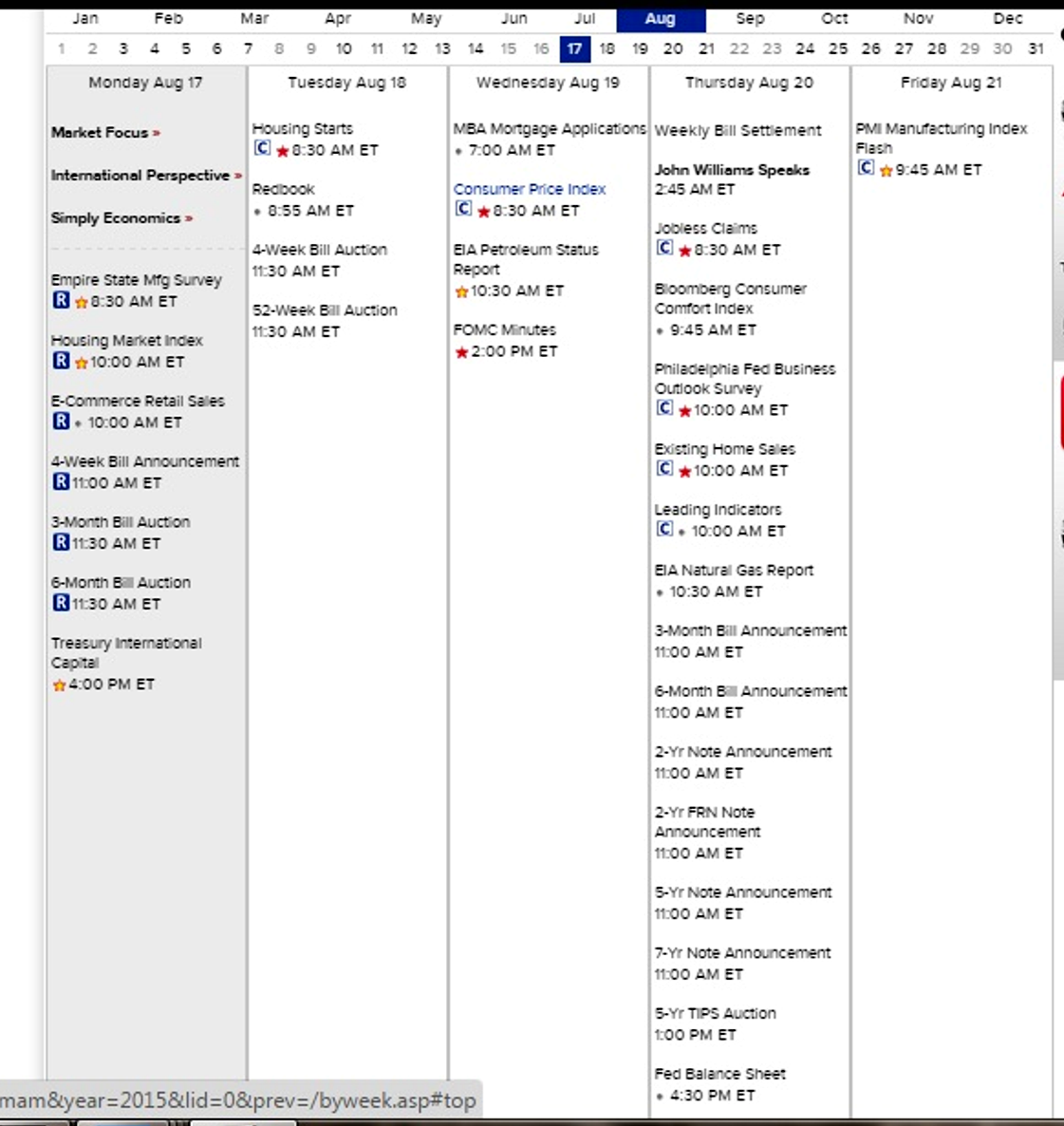
The week ahead — Economic data from Econoday.com:
Tags: Apple TV, China Yuan
Posted in Weekly Summary | No Comments »