“Markets are constantly in a state of uncertainty and flux, and money is made by discounting the obvious and betting on the unexpected.” – George Soros
1. Iran and Major Powers Reach Nuclear Deal — Iran and six major powers clinched a historic nuclear deal last Tues. Iran is allowed could carry out “specific research and development (R&D) activities for the first 8 years” of the deal, with further enrichment activities possible afterwards, “for exclusively peaceful purposes,” according to a copy of the JCPOA posted on the Russian government’s Facebook page. Tehran is also not permitted to stockpile large amounts of enriched uranium. Oil prices came under pressure following the news, in anticipation of Iran bringing more oil onto the market and forcing prices down.
2. China 2Q GDP rose 7% — China GDP rose 7% in the three months through June, making it more likely the country will hit its 2015 growth target of about 7%. Despite the upbeat economic data, Chinese shares extended their slump. Some 696 mainland firms remained suspended from trading, representing about a quarter of the number of companies listed on Shanghai and Shenzhen.
3. Retail Sales Disappoint Again — Sales fell 0.3% in June, defying expectations for a 0.3% gain, while a sizable 1.2% increase in May was revised down to 1.4%. Ex autos, the June drop was only 0.1%. The latest data will likely reduce the Q2 GDP. Retail Sales comprises about 70% of US GDP.
4. Eurozone Finance Ministers Agree to Third Greek Bailout ‘in principle’ — the Eurozone finance ministers reached a decision to grant Greece “in principle” a 3-year bailout from the bloc’s bailout fund, but that this was “subject to the completion of relevant national procedures.” The measures were approved by the Greek parliament in exchange for up to €86 billion in fresh loans; However, 32 members of PM Alexis Tsipras’ Syriza party voted “No”, a sign the premier may have lost his majority.
5. China Unleashes $483 Billion to Stem the Market Rout — Bloomberg, China has created what amounts to a state-run margin trader with $483 billion of firepower, its latest effort to end a stock-market rout that threatens to drag down economic growth and erode confidence in President Xi Jinping’s government. China Securities Finance Corp. can access as much as 3 trillion yuan of borrowed funds from sources including the central bank and commercial lenders. The money may be used to buy shares and provide liquidity to brokerages.
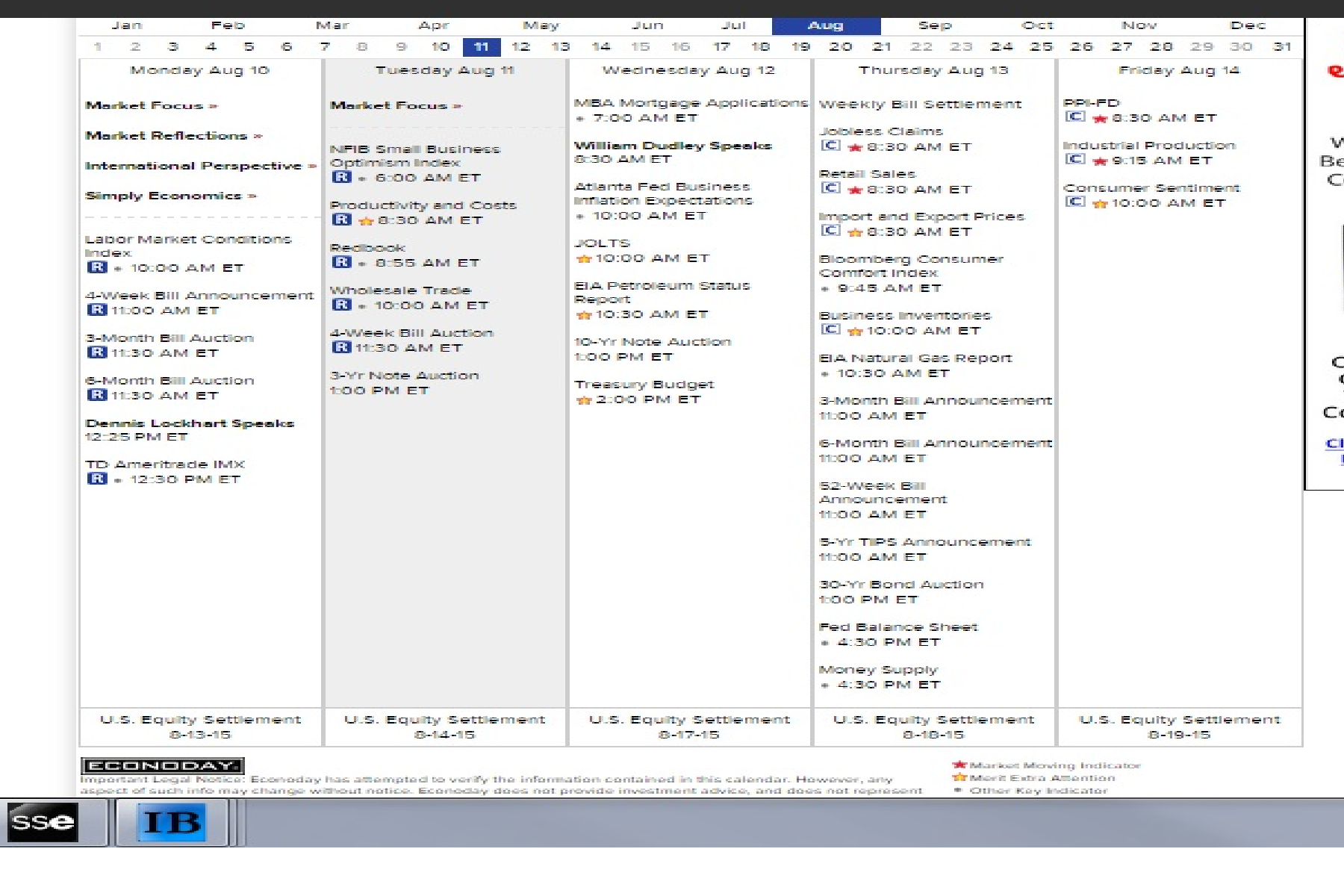
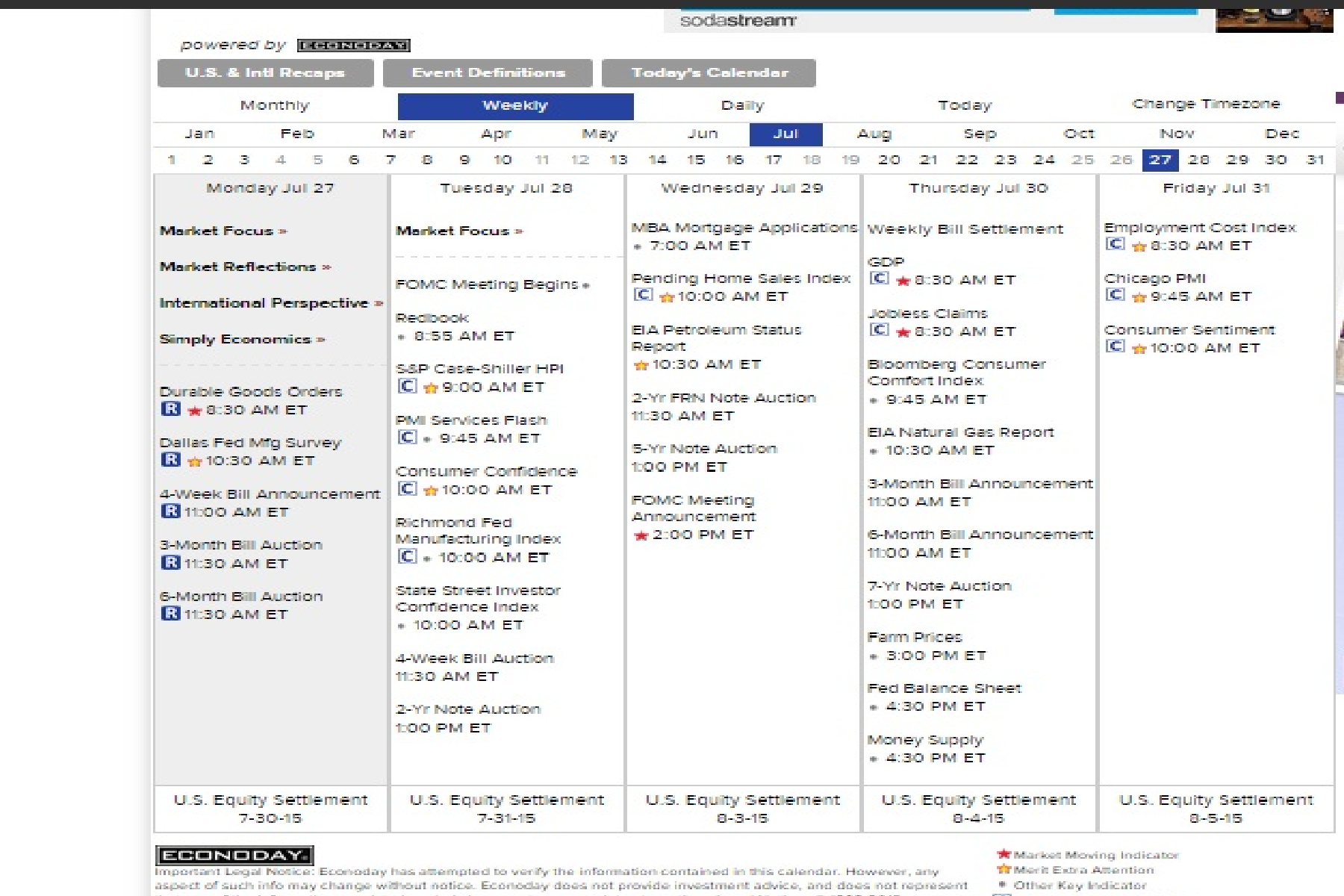
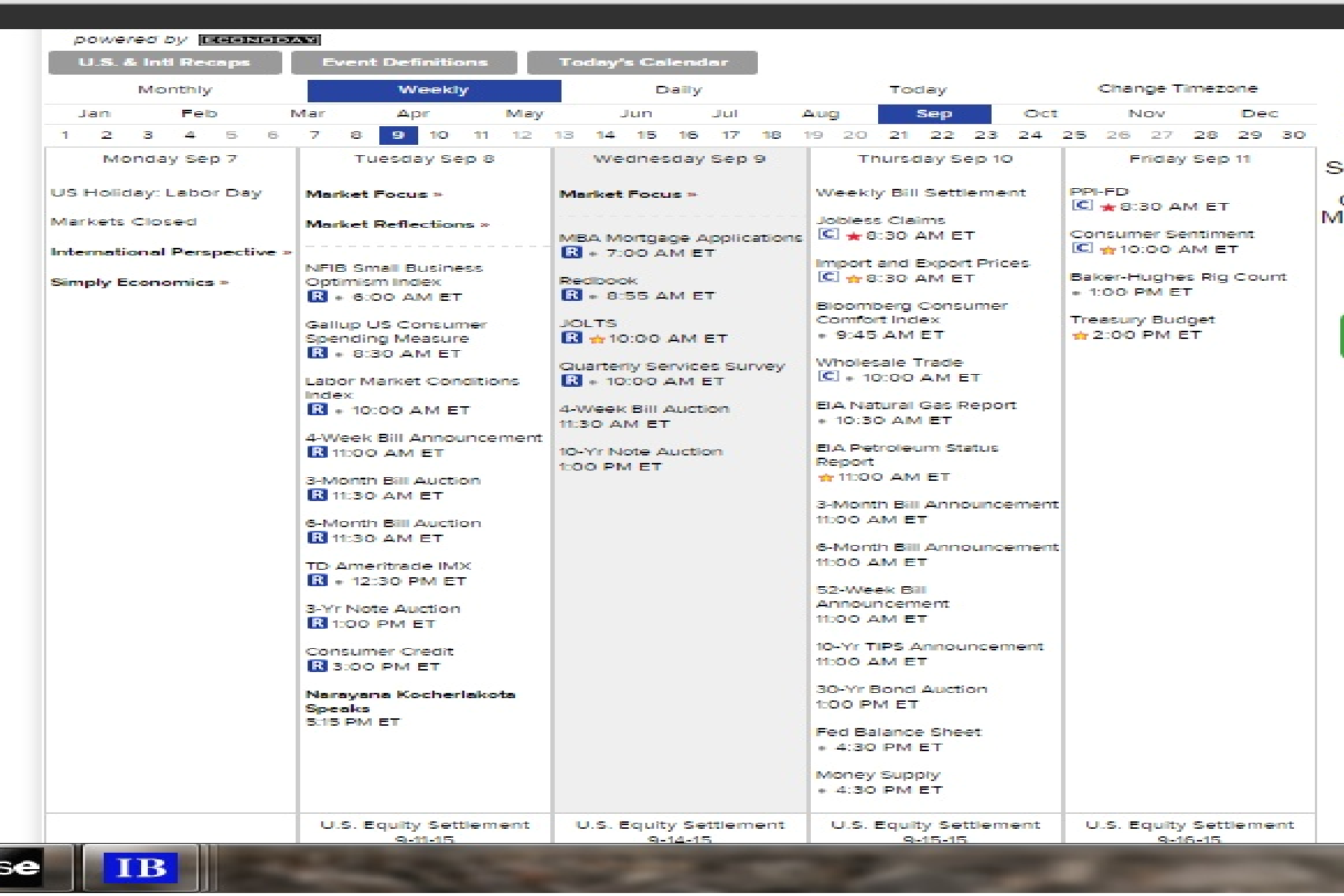
The week ahead — Economic data from Econoday.com:
 Tags: Greece Bailout, Iran Nuclear Deal
Posted in Weekly Summary | No Comments »
July 13th, 2015
“One characteristic I’ve found among successful traders is that they function effectively when they’re not trading. When markets become very quiet and range bound, they occupy themselves with a variety of activities, from sharing ideas with peers to conducting research. Traders who do not tolerate inactivity well inevitably feel the need to trade, often when there is no objective edge present. For them, losing money is less onerous than experiencing boredom.” — unknown
1. China Markets Fall Sharply Despite Fresh Help From Beijing — Chinese shares plunged again last week as investors shrugged off a series of regulatory support measures. The panic in mainland markets also rippled across the border including Hong Kong.
2. FOMC June Meeting Minutes — minutes from the Fed’s June 16-17 meeting showed most policy makers continued to justify an interest rate hike later. However, they were worried about Greece & China, where conditions have since deteriorated. Fed officials also voiced concerns about US consumer caution, business investment and exports.
3. IBM Announced New kind of Ultra-Dense Chip — IBM has announced a new kind of ultra-dense chip, which squeezes in four times as much computing power as the best silicon currently available. The new chips will usher in the possibility of creating 7-nanometer transistors (a strand of DNA in comparison measures 2.5 nanometers in diameter). IBM (NYSE:IBM) made the research advance by using silicon-germanium instead of pure silicon, allowing transistors to switch faster and use less power by sitting more densely on a chip.
4. Europe Weighs Greek Proposal as Tsipras Seeks Lawmaker Support — the Greek PM submitted the packet of spending cuts, pension savings and tax increases to the European Commission. The government offered to meet most of the demands made by creditors in exchange for a third rescue to “fully cover” Greece’s financing needs through 2018. The bailout from the European Stability Mechanism may amount to 59 billion euros.
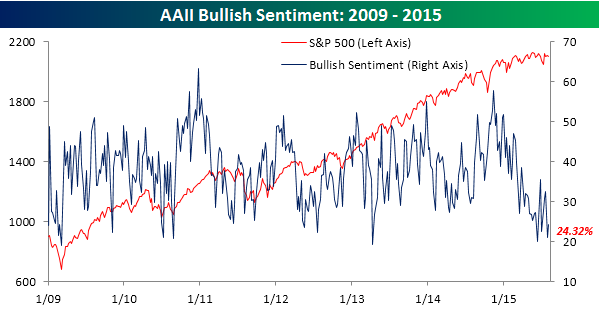
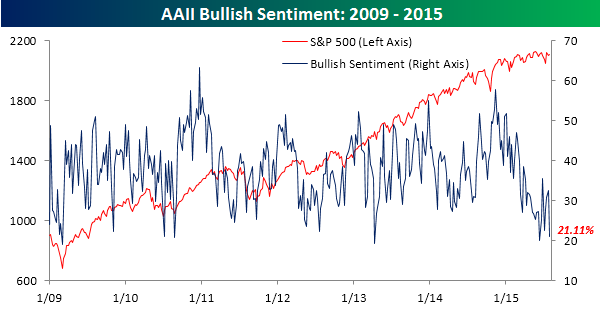
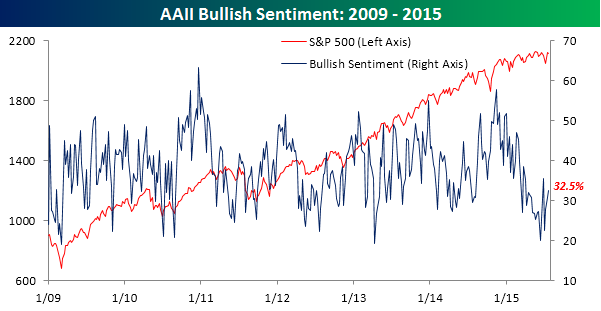
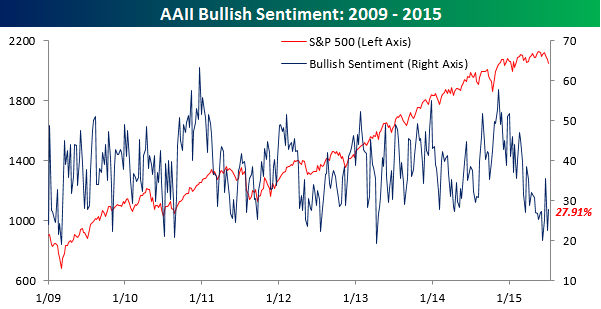
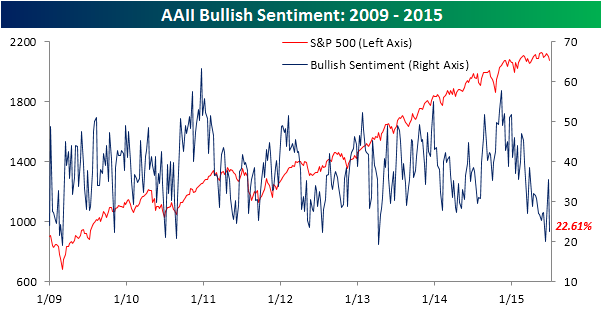
5. Investor Sentiment Rebounds Slightly — according the weekly sentiment survey from the American Association of Individual Investors (AAII), bullish sentiment increased from a depressed reading of 22.61% last week to 27.91% this week. Even at current levels, though, bullish sentiment remains low by historical standards. In fact, it has now been below its bull market average of 38.28% for 15 straight weeks, which is the longest streak since July 2012.
6. Greece Capitulates To Stay In The Eurozone — the eurozone and Greece have agreed in principle to a third bailout that will keep the beleaguered country in the currency area, for now, after almost total capitulation from Prime Minister Alexis Tsipras. Greece will have to put €50B of state assets in a trust fund so that they can be sold off and the proceeds used to repay debt. The government will also have to get further austerity measures through parliament, a tough ask given the “no” vote in the recent referendum.
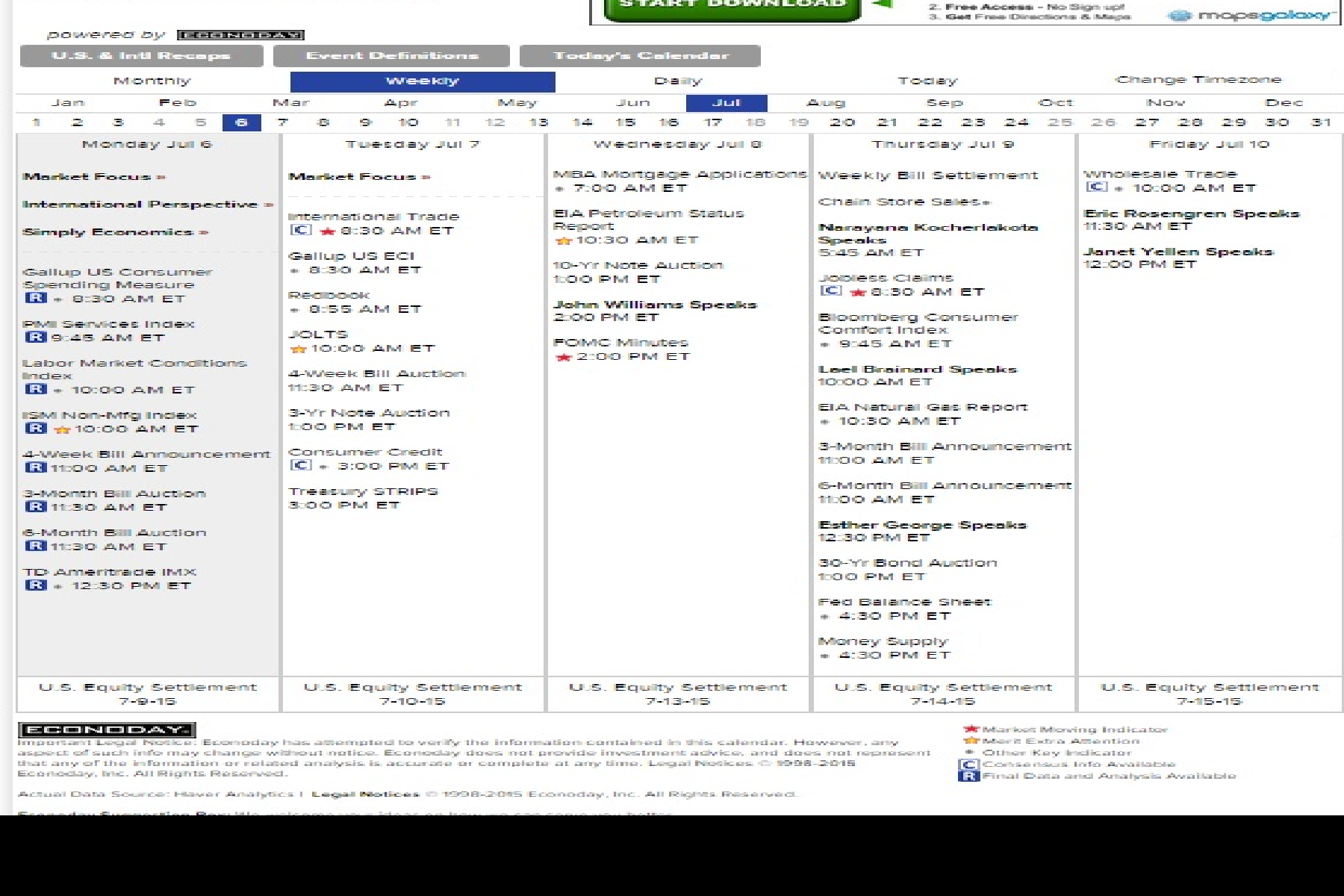
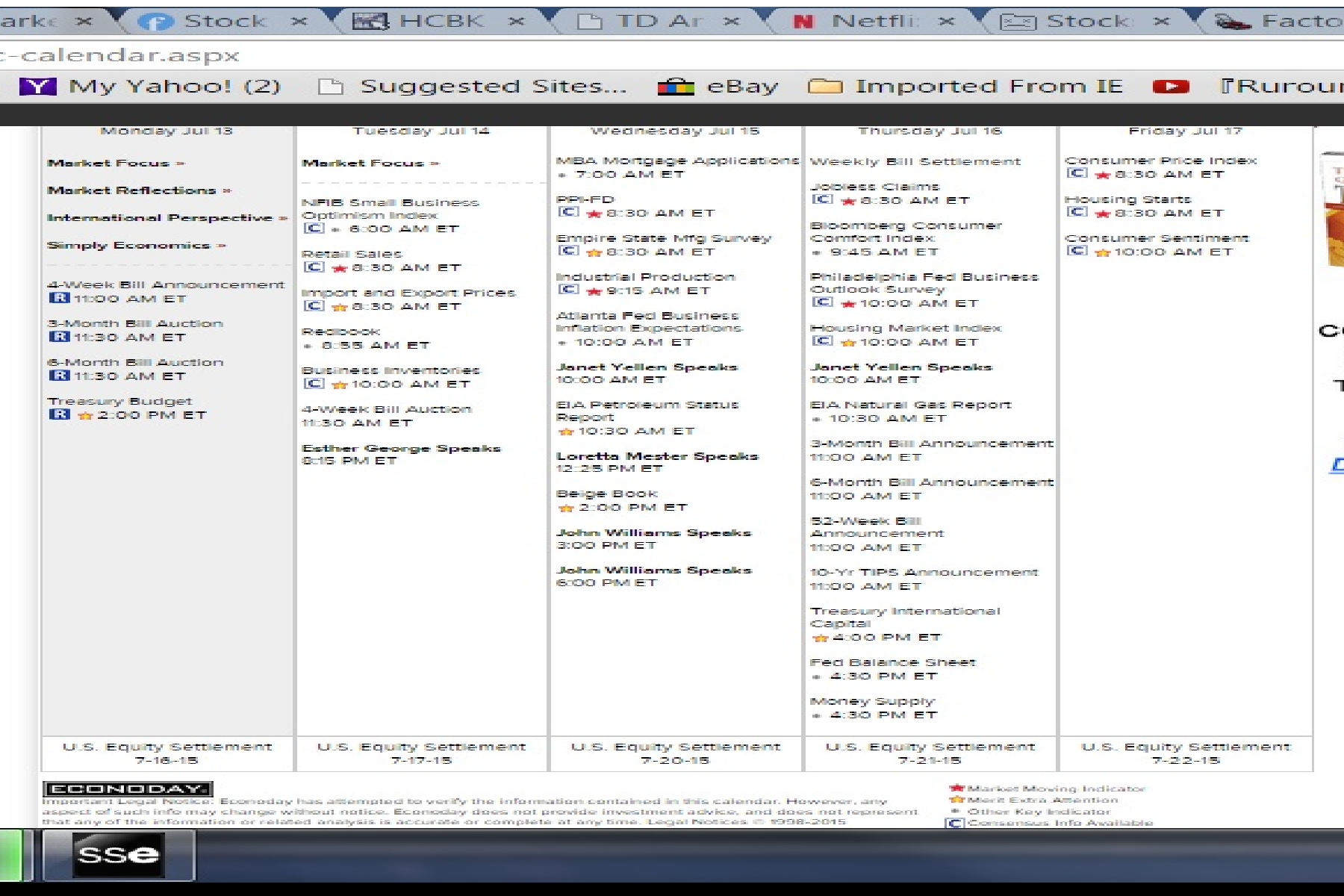
The week ahead — Economic data from Econoday.com:
Tags: Chinese Bear Market, FOMC Minutes
Posted in Weekly Summary | No Comments »
July 6th, 2015
… “in the Chinese language the word “crisis” is composed of two characters, one stands for danger and the other opportunity.” — unknown
1. Puerto Rico’s ‘Death Spiral’ Gets a Reprieve — Puerto Rico’s governor announced earlier in the week that the small U.S. territory cannot pay its roughly $72 billion in debt. However, $1.9 billion in debt payments that were due were paid. Padilla then appealed to Washington to make unprecedented, “concrete” changes in bankruptcy rules to help rescue the island’s finances. Although U.S. cities and municipalities are eligible to file for bankruptcy, states and Puerto Rico are barred from seeking protection.
2. Eurogroup Said ‘No grounds for further talks’ on Greece — Eurogroup chairman Jeroen Dijsellbloem said after a conference call with fellow ministers that the Eurozone finance ministers see “no grounds for further talks” with Greece ahead of the country’s Sunday bailout referendum. Greece also became the first advanced economy to default on a payment to the International Monetary Fund. That, plus the expiry of Greece’s bailout package, brings the debt-burdened country to the brink of financial collapse and raises the chances it could eventually leave the European Union — a “Grexit”.
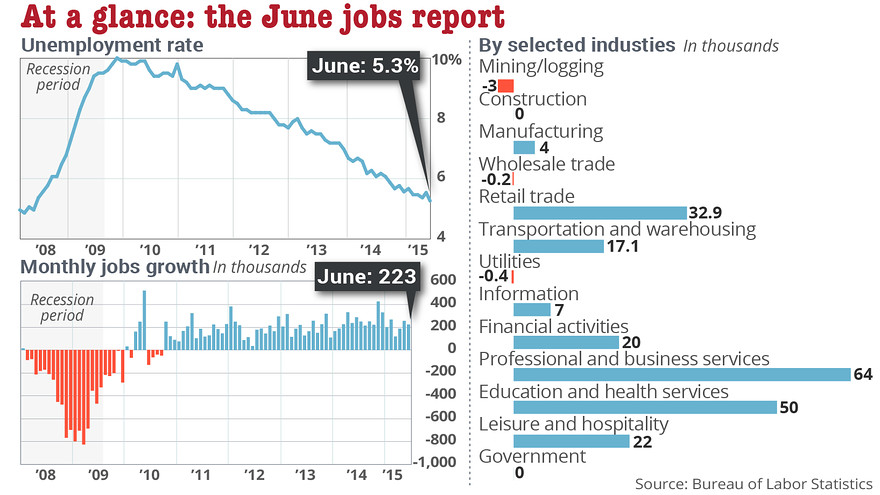
3. U.S. Adds 223,000 Jobs in June As Unemployment Falls to 7-year Low — MarketWatch, the U.S. created 223,000 new jobs in June and also offered evidence the U.S. is not expanding quite as fast as it was in the middle of 2014. Employment gains for May and April were reduced, the wages of U.S. workers were disappointingly flat and the percentage of Americans in the labor force fell to the lowest level in 38 years, the government reported.
4. DOJ Probing Price Collusion on Airlines — the Justice Department announced a probe whether airlines were colluding to grow at a slower pace as part of an effort to keep airfares high. Airline stocks sold off in response to the antitrust investigation. Those effected are: UAL , AAL, LUV, DAL, ALK, HA, JBLU, SAVE, SKYW, VA.
5. China Stock Rout Worsens as Watchdog Opens Probe — the bloodbath in Chinese equities extended into last Friday, with the benchmark Shanghai Composite plunging as much as 7 percent amid reports that the securities market regulator has launched a probe into suspected market manipulation. China Securities Regulatory Commission (CSRC) spokesman had set up a team to look at “clues of illegal manipulation across markets,”.
6. American Association of Individual Investors (AAII) Bullish Sentiment — the index Bullish Sentiment dropped last week from 35.6% down to 22.61%. This was the largest one-week decline in bullish sentiment since May 2013 and represents the 14th straight week where bullish sentiment has been below its long-term average.
 Tags: June Job Rpt
Posted in Weekly Summary | No Comments »
June 29th, 2015
…“People somehow think you must buy at the bottom and sell at the top to be successful in the market. That’s nonsense! The idea is to buy when the probability is greatest that the market is going to advance”… Jesse Livermore
1. China Factory Activity Remains Weak in June — China’s factory activity contracted for the fourth straight month in June, suggesting that more stimulus measures may be on the way. The HSBC/Markit Flash China Manufacturing PMI edged up to 49.6, from 49.2 in May, but remained below the 50 mark which separates contraction from expansion. Manufacturers also continued to cut their staff numbers, with the June reduction the sharpest in more than six years.
2. Supreme Court Rules 6-3 to Save Obamacare Subsidies — the U.S. Supreme Court ruled Thursday to save subsidies for as many as 8 million people under the Affordable Care Act. In the case of King v. Burwell, justices determined that the subsidies should be available in states that don’t have their own exchanges. The court determined that the broader context of the ACA allows subsidies to all those under the Obamacare program.
3. Korea Cuts GDP Forecast On MERS, Plans $13.5 Billion Stimulus — as its economy gets hammered by the MERS virus, South Korea is planning a stimulus package of more than 15T won ($13.5B) to cushion the economic impact of the deadly respiratory disease. The country’s finance ministry also cut its outlook for economic growth this year to 3.1% and slashed its inflation projection to 0.7%.
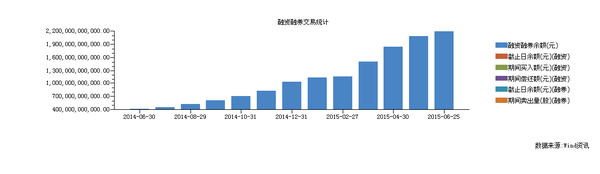
4. China Stocks Plunge 7%, Slide Toward Bear Territory — China’s stock markets plunged toward bear territory last Friday as margin financing in China started to explode in December. The Shanghai market, China’s largest, closed down almost 20% from its recent peak, while the second-largest Shenzhen market fell 20%, entering bear-market territory. Margin financing balance rose by 200 billion yuan to 1 trillion yuan in December according to WIND data. See chart below
5. Greece to Hold Referendum — PM Alexis Tsipras, facing a June 30 deadline for a bailout deal but with his leftist Syriza party threatening to revolt over the terms, plans to hold a July 5 referendum. That could give him the mandate to pass painful reforms and deficit cutting measures.
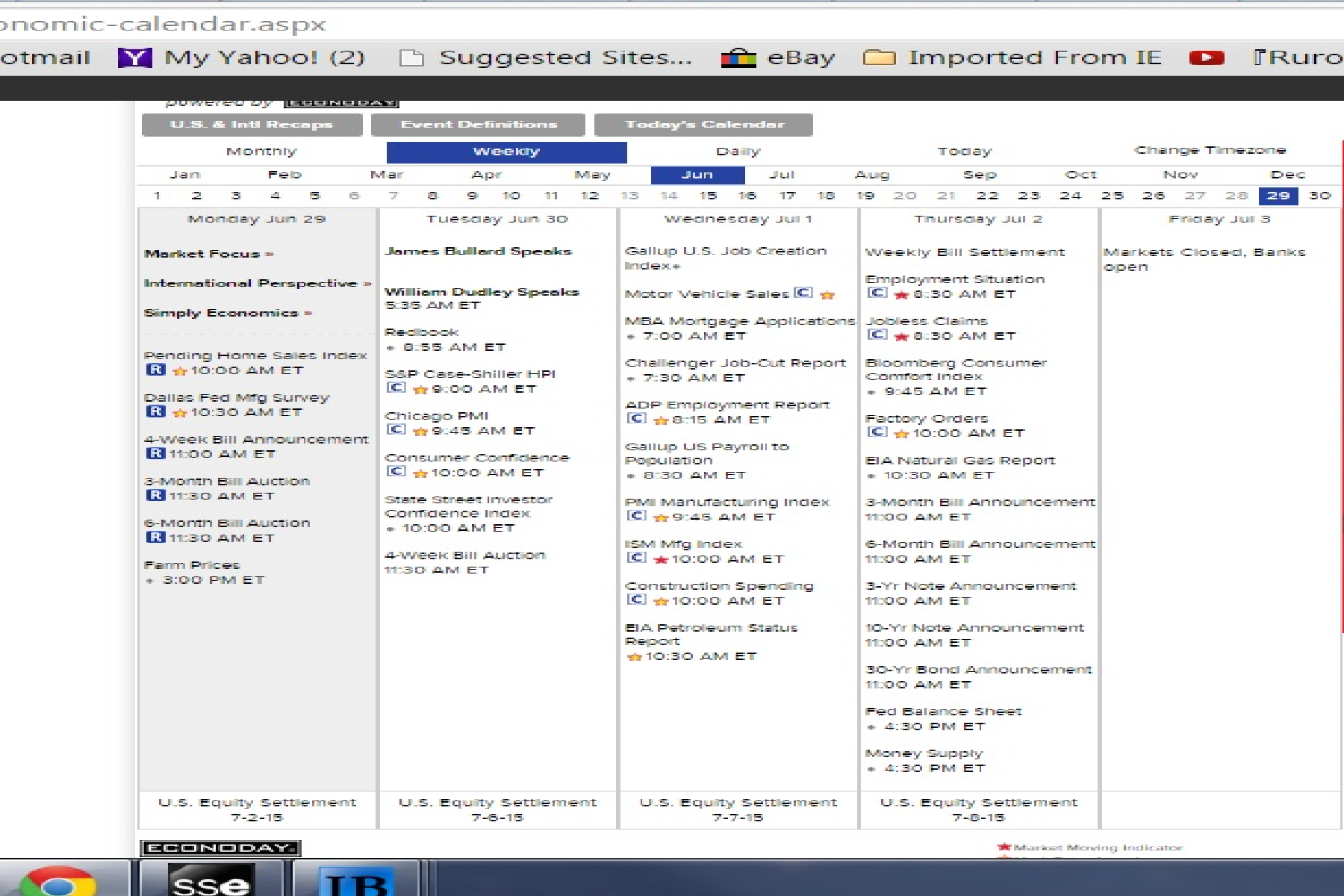
The week ahead — Economic data from Econoday.com:
Tags: China Bear Market, Grexit
Posted in Weekly Summary | No Comments »
June 22nd, 2015
..“Successful speculation requires staying on top of changes in industries and companies that either create new industries or improve on existing industries. The majority of your profits will come from these two … The shrewdest traders throughout history all adapted the skill of reactionary change, as the market constantly presents new and different opportunities.”.. — Bernard Baruch
1. Health-Insurance Sector in Consolidation Talks — merger talk in the health-insurance industry is heating up as firms grapple with the challenges and opportunities the federal healthcare overhaul has created. UnitedHealth (NYSE:UNH) has reportedly approached Aetna (NYSE:AET) about a takeover deal that would likely be valued at more than $40B, after Anthem (NYSE:ANTM) approached Cigna (NYSE:CI) with a $45B buyout offer that was rebuffed. Meanwhile, Aetna and others are considering buying Humana (NYSE:HUM), which is looking at strategic alternatives including a sale.
2. FDA Sets Date for Trans Fats Restrictions — beginning in 2018, companies will have to seek approval before they can put partially hydrogenated oils into foods, after the FDA said the ingredient should no longer be considered safe and laid out far-reaching restrictions. Possible companies effected by this decision are: Nestle (OTCPK:NSRGY), PepsiCo (NYSE:PEP), Tyson Foods (NYSE:TSN), Mondelez International (NASDAQ:MDLZ), Unilever (NYSE:UL), General Mills (NYSE:GIS), Kraft Foods (NASDAQ:KRFT), Kellogg (NYSE:K), Dean Foods (NYSE:DF), Campbell Soup (NYSE:CPB), Hormel (NYSE:HRL), Hershey (NYSE:HSY), Pilgrims Pride (NASDAQ:PPC).
3. EU Calls Emergency Summit on Greece — a meeting of eurozone finance ministers ended without a deal on Greece’s flailing bailout last Thursday, spurring a special summit of European leaders on Monday (June 22 2016). Greece’s €245 billion ($279 billion) bailout deal from other eurozone governments and the International Monetary Fund runs out on June 30. That same day the country faces a €1.54 billion payment to the IMF that it won’t be able to make without a new aid transfer.
4. China Stocks in Correction — Chinese shares suffered their worst week in more than seven years last week. Both the Shanghai and Shenzhen markets fell into correction territory. The Shanghai Composite (SHCOMP) finished down 6.4% at 4,478.36 and lost 13.3% for the week, marking the second time this year it has fallen into correction territory. Fears over liquidity and margin trading were cited as reasons for the declines. Year to date, Shanghai is still up 38.4% and Shenzhen is up 93.8%.
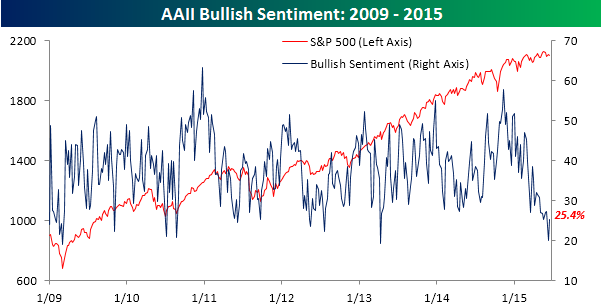
5. Bullish Sentiment Rebounded Last week — courtesy of BIG, the weekly survey from AAII, individual investor bullish sentiment rebounded from 20.0% up to 25.4%. In spite of the rebound, bullish sentiment has now been below 40% for 17 consecutive weeks. The last time we saw bullish sentiment below 40% for this long was back in the summer of 2012.
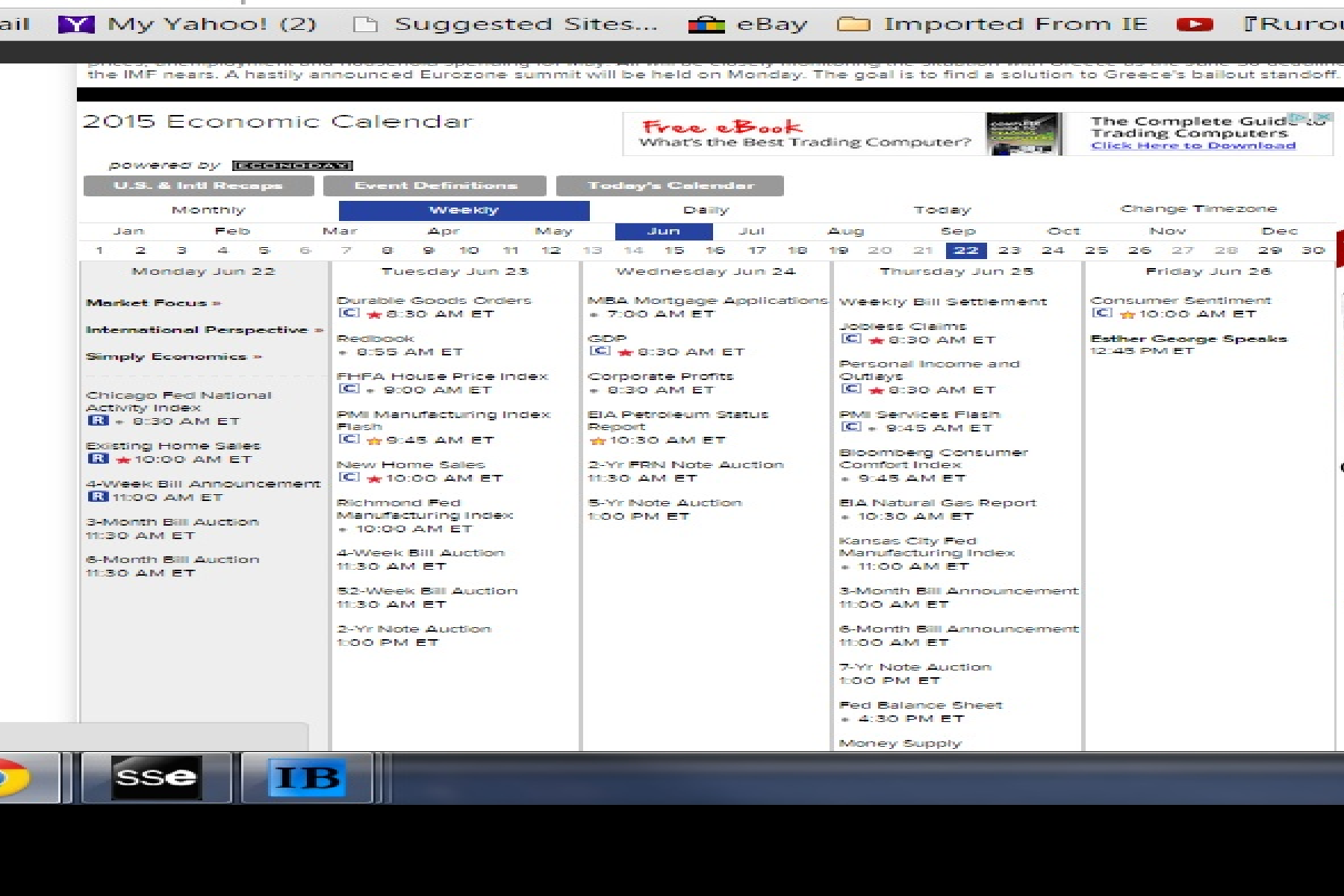
The week ahead — Economic data from Econoday.com:
Tags: Bullish Sentiment, China Market, Grexit
Posted in Weekly Summary | No Comments »
June 15th, 2015
“The market is better at predicting the news than the news in predicting the market” — Gerald Loeb.
1. China’s Imports Mark Need for More Stimulus — China’s exports fell for a third month in May, while imports slumped the most in three months, underscoring a sluggish domestic environment in need of more stimulus. Annual exports fell 2.5% while imports plunged 17.6%, data from the General Administration of Customs showed on Monday. Many analysts have already penciled in sub-7% growth for the second quarter, raising the risk that the government will not meet its full-year growth target of around 7%.
2. Google (GOOG) Electronic Payment Android Pay Update — according to the WSJ, Google ‘s mobile phone payment service, Android Pay, will not garner any transaction fees from credit card companies, possibly putting pressure on Apple (NASDAQ:AAPL) to drop or lower its charges for Apple Pay. Dominant payment networks, Visa (NYSE:V) and MasterCard (NYSE:MA), recently standardized their “tokenization” card-security service and made it free, preventing payment services, such as Google (GOOG, GOOGL), from charging fees to issuers.
3. Chinese rally Sign of Excess — Mainland speculators have borrowed a record $348B to bet on further gains, price-to-earnings ratios have climbed to the highest levels in five years, while Chinese exchanges have created $6.5T in just 12 months of trading. The economy, meanwhile, is mired in its weakest expansion since 1990.
4. China Stocks Will Have to Wait to Join the MSCI Index — MarketWatch, global stock-index compiler MSCI maker says issues remain before it can include mainland China-listed A-shares. MSCI offered a list of some issues it would discuss with the regulators, including the allocation of investing quotas for large investors, capital mobility and details over beneficial ownership.
5. May Retail Sales Surged Point to Revived U.S. Growth — MarketWatch, Sales at U.S. retailers rose sharply in May and increased for the third straight month, suggesting that warmer weather induced consumers to spending more in the spring after a winter lull. Consumers splurged on big-ticket items in May, when sales of new cars and trucks hit a postrecession high. Sales at auto dealers rose 2%.
6. Greece Deal in Peril — IMF creditors walked out of talks late last week citing “Greece decisions not negotiations” are needed. Greece’s is scrambling , as time runs out for the country to fend off a looming default.
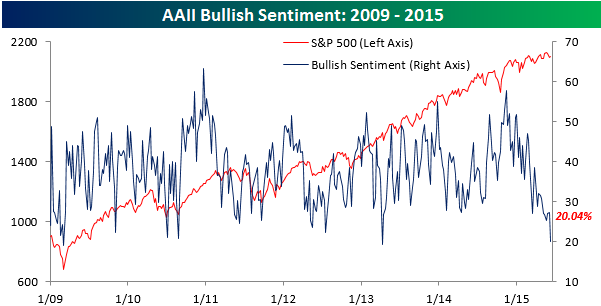
7. Bearish Sentiment Overtake The Bulls – courtesy of BIG, bullish sentiment fell from 27.34% down to 20.04%. This is the lowest weekly reading for bullish sentiment in more than two years (April 2013). At its current level, bullish sentiment is now just slightly more than a point above its lowest levels since the start of 2009 (18.92%).
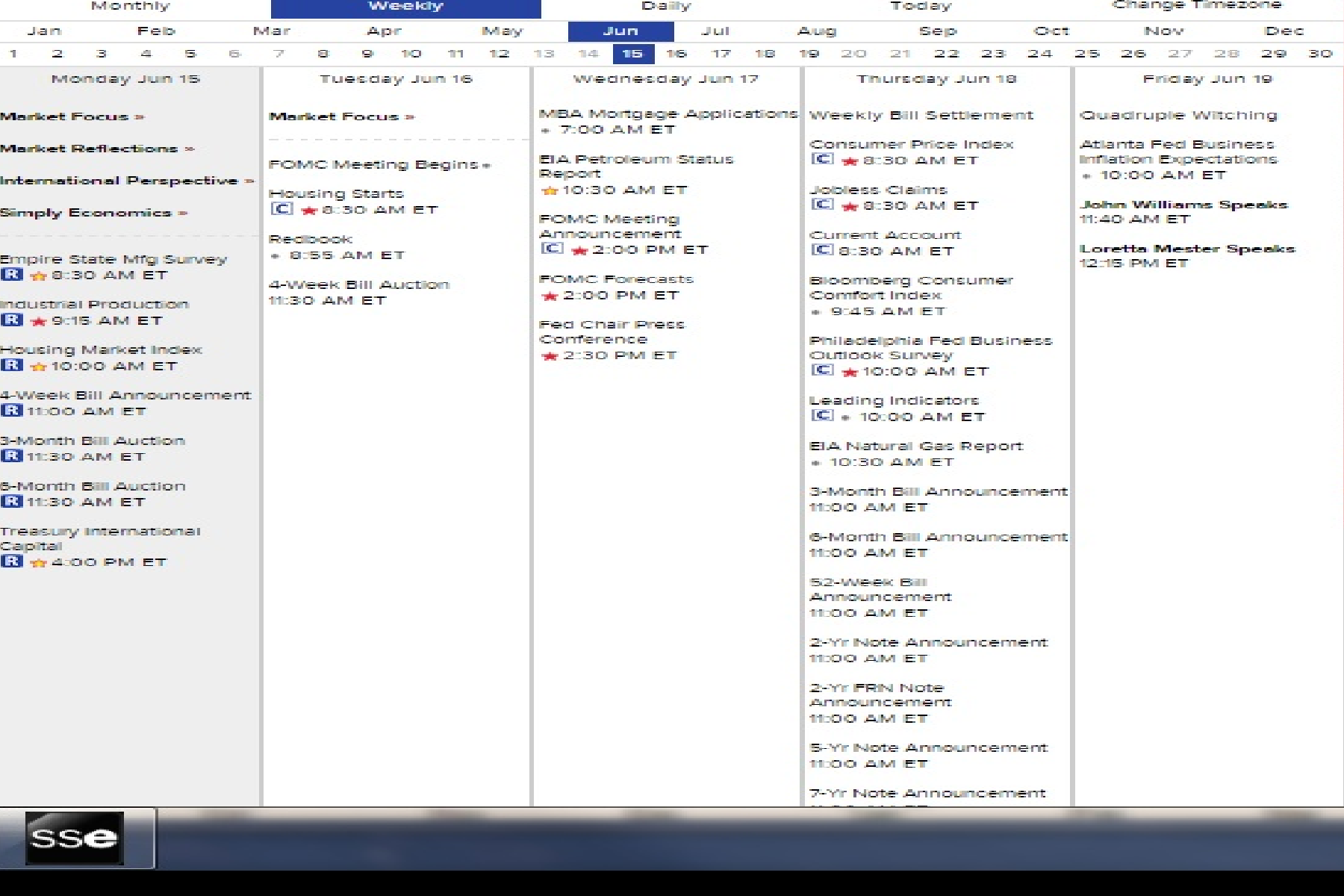
The week ahead — Economic data from Econoday.com:
Tags: Bullish Sentiment, Electronic Payment, Grexit, May Retail Sales
Posted in Weekly Summary | No Comments »