Week of May 26, 2023 Weekly Recap & The Week Ahead
Monday, June 5th, 2023There will not be any re-cap for the week of May 26th through June 2nd, 2023. We are away for some needed R&R.
Have a good week.
The staffs at EGS.
| Market Outlook |
| Equity Guidance Blog — Financial Market Overview |
There will not be any re-cap for the week of May 26th through June 2nd, 2023. We are away for some needed R&R.
Have a good week.
The staffs at EGS.
“The mind is a fascinating instrument that can make or break you.” ― yvan Byeajee
1. Home Prices Posted Largest Annual Drop in More Than 11 Years in April — U.S. existing home sales, which make up most of the housing market, fell 3.4% in April from the prior month to a seasonally adjusted annual rate of 4.28 million, the National Association of Realtors reported. April sales fell 23.2% from a year earlier.
The national median existing-home price fell 1.7% in April from a year earlier to $388,800, the biggest year-over-year price decline since January 2012, NAR said. Median prices, which aren’t seasonally adjusted, were down 6% from a record $413,800 in June. Home prices have fallen the most in the western half of the U.S., while prices continue to rise from a year earlier in many eastern markets.
2. Risks Posed by AI Technology Spur Calls for New Regulatory Agency — Rising concern in Congress over the risks posed by powerful artificial- intelligence tools in the hands of consumers is giving momentum to a long-simmering idea: Creating a federal agency to regulate technology platforms including AI systems. The agency could be charged with granting licenses for AI platforms, setting operating standards and enforcing compliance with the rules, according to proponents including Sam Altman, chief executive of ChatGPT creator OpenAI. It is one of many ideas being kicked around in Washington as lawmakers contend with a new technology with humanlike abilities to complete an array of tasks, including holding conversations and creating videos—but which also could be used to commit sophisticated crimes and spread false information.
3. Tokyo Meeting Highlights Democracies’ Push to Secure Chip Supplies — top executives from the biggest chip makers in the U.S., Taiwan and South Korea met the Japanese prime minister on Thursday as the world’s industrial democracies look to deepen cooperation in the production of components they increasingly see as central to national security. Japan’s Fumio Kishida met representatives of Intel, TSMC, Samsung and other chip companies, part of Tokyo’s push to step up its domestic manufacturing of computer chips. Kishida said it was essential to tackle “the global issue of stabilizing supply chains” as the U.S. and its partners look to exclude China from a global chip alliance.
The meeting featuring business executives and officials from what are sometimes called the “Fab Four” chip-making powers—the U.S., Taiwan, South Korea and Japan—came on the eve of a summit of leaders of the Group of Seven nations in Hiroshima, Japan, where bolstering strategies to contain China is a top agenda item.
4. Fed Chair Jerome Powell Keeps June Interest-Rate Pause in Play — federal Reserve Chair Jerome Powell suggested he was open to holding interest rates steady at the central bank’s meeting next month, saying that the current banking stress could mean rates may not need to rise as high as otherwise to slow the economy. The Fed has raised its benchmark federal-funds rate rapidly over the past year to fight inflation, most recently this month to a range between 5% and 5.25%, a 16-year high.
Officials have indicated that their decision on whether to raise rates again at their June 13-14 policy meeting could be a close call. A handful have said inflation and economic activity aren’t slowing enough to justify leaving rates unchanged. But others, including Powell, have hinted that they might skip a rate rise to assess the effects of their past increases and the banking-sector strains.
The week ahead — Economic data from Econoday.com:
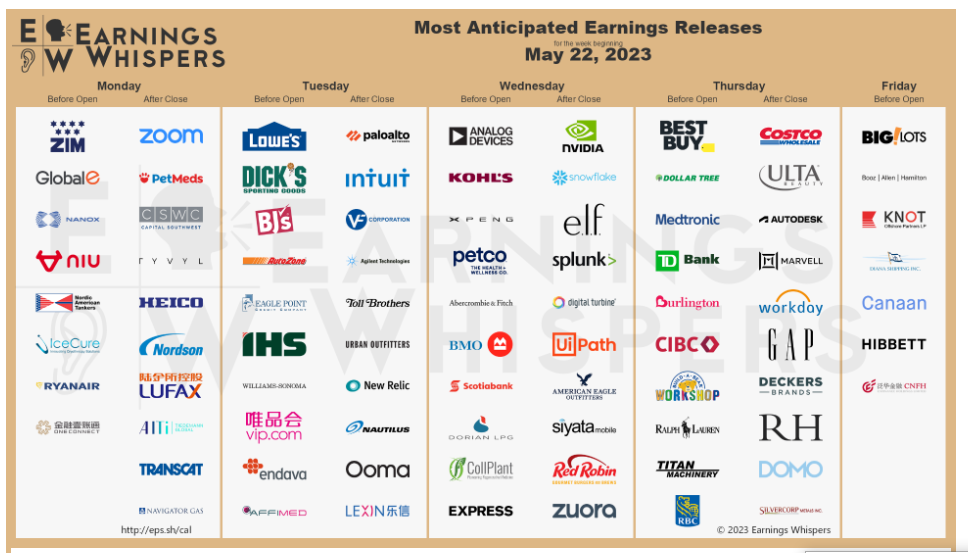
There will not be any re-cap for the week of May 12th, 2023. We are away due to a urgency family matter.
Have a good week.
The staffs at EGS.
The key to trading success is emotional discipline. If intelligence were the key, there would be a lot more people making money trading… I know this will sound like a cliché, but the single most important reason that people lose money in the financial markets is that they don’t cut their losses short. — Victor Spandereo
1. Biden to Deploy Active-Duty Troops to Southern Border as Title 42 Ends — President Biden is sending 1,500 active-duty troops to the southern border, while cities across the country are declaring states of emergency and asking for federal support as the country prepares for a surge of migration expected to accompany the lifting of Title 42 border restrictions next week. A large number of migrants have already been illegally entering El Paso, Texas, in recent days. Hundreds unable to find spots in shelters gathered in the past few days around downtown churches in the border city looking for help, according to photos and videos of the scene.
2. Federal Reserve Raises Rates, Signals Potential Pause — the Federal Reserve approved another quarter-percentage-point interest-rate rise and signaled it could be done lifting rates after that. officials said in their new statement Wednesday they would monitor economic and financial-market developments and the effects of their earlier rate increases “in determining the extent to which additional policy firming may be appropriate to return inflation to 2% over time.”
The statement used language broadly similar to how officials concluded their interest-rate increases in 2006, with officials indicating any further change in rates was more likely to be an increase than a decrease.
3. Robust Hiring in April Shows U.S. Job Market Remains Hot in Cooling Economy — employers added 253,000 jobs in April, the best gain since January, the Labor Department said Friday. Job growth was revised lower in February and March. The jobless rate fell to 3.4% last month, matching the lowest reading since 1969. The low unemployment rate keeps upward pressure on wages, which grew 4.4% in April from a year earlier. That was slightly higher than a 4.3% annual increase in March. Over the past year, inflation hit historic highs, economic growth slowed, the Federal Reserve rapidly raised interest rates and stress emerged in the banking sector. Many economists anticipated those challenges would trigger the labor market to crack.
4. Scrambling to Avoid Default, White House Weighs Debt-Limit Fallback Options — The Biden administration and Capitol Hill leaders are scrambling to avoid a first-ever government default that could arrive as soon as June 1, taking potential alternative strategies more seriously after months of deadlock over raising the country’s borrowing limit.
Publicly, both Republicans and Democrats are still sticking to their demands as the clock ticks. GOP lawmakers are seeking to force cuts to federal spending in exchange for supporting raising the debt limit, while Democrats continue to call for a debt-limit increase without any other policy conditions. The new, accelerated timeline means lawmakers may not have the time to negotiate a broad agreement on contentious budget questions. One way to meet the rapidly approaching deadline would be to raise the debt limit enough to allow the government to keep paying its bills for a few more months, rather than a longer-term solution.
The week ahead — Economic data from Econoday.com:
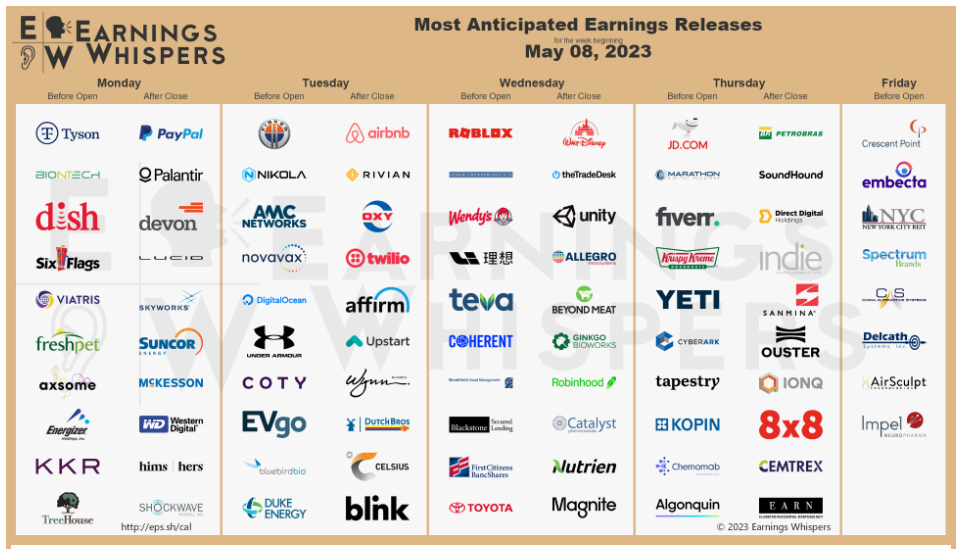
“The main purpose of the stock market is to make fools of as many men as possible.” ― Bernard M. Baruch
1. Home Prices Rose in February for First Time Since June — The S&P CoreLogic Case-Shiller National Home Price Index, which measures home prices across the nation, rose 0.2% in February compared with January on a seasonally adjusted basis. On a year-over-year basis, the index rose 2% in February, down from a 3.7% annual rate the prior month. The annual increase was the smallest since July 2012.
2. Republicans Pass Debt-Ceiling Bill Aiming to Spark Talks With Biden — House Republicans passed a bill proposing to raise the nation’s $31.4 trillion borrowing limit in exchange for deep cuts in government spending, aiming to jump-start talks with President Biden ahead of an approaching deadline for the federal government to avoid default. The Republicans’ Limit, Save, Grow Act of 2023, which has no chance of passing the Democratic-controlled Senate, serves as the GOP’s opening bid as it heads into expected negotiations with Mr. Biden and congressional Democrats. Republicans want the spending reductions in exchange for agreeing to raise the debt ceiling. Mr. Biden wants an increase with no conditions attached but has said he would negotiate separately on fiscal policy.
3. GDP Report Shows Economic Growth Slowed in First Quarter — U.S. economic growth decelerated to a 1.1% annual rate in the first quarter as consumers faced high inflation, rising interest rates and the onset of banking problems. The rise in U.S. gross domestic product in the first three months of the year marked a slowdown from inflation- and seasonally adjusted 2.6% growth in the fourth quarter, the Commerce Department reported. Consumers cut retail spending in February and March. Home sales and manufacturing output dropped last month, and robust hiring growth eased gradually.
4. Wage Gains Pick Up as Fed Contemplates Next Rate Decision — wage growth stayed elevated to start the year and inflation remained high, likely keeping Federal Reserve policy makers on track to raise rates again next week. Employers spent 1.2% more on wages and benefits in the first quarter from the prior three months, a slight uptick from an upwardly revised 1.1% increase in the fourth quarter, the Labor Department said Friday. The employment-cost index advanced 4.8% last quarter from a year earlier, an easing from the 5.1% gain at the end of last year. The Fed’s preferred gauge of consumer inflation, the personal-consumption expenditures price index, cooled to 4.2% in March from a year earlier, a separate Commerce Department report said. That was down from the previous month’s 5.1% gain and a peak last June, but still well above the central bank’s 2% target.
5. First Republic Bank Is Seized and Sold to JPMorgan — regulators seized First Republic Bank FRC -43.30%decrease; red down pointing triangle and struck a deal to sell the bulk of its operations to JPMorgan Chase JPM 3.09%increase; green up pointing triangle & Co., heading off a chaotic collapse that threatened to reignite the recent banking crisis. JPMorgan said it will assume all of First Republic’s $92 billion in deposits—insured and uninsured. It is also buying most of the bank’s assets, including about $173 billion in loans and $30 billion in securities.
As part of the agreement, the Federal Deposit Insurance Corp. will share losses with JPMorgan on First Republic’s loans. The agency estimated that its insurance fund would take a hit of $13 billion in the deal. JPMorgan also said it would receive $50 billion in financing from the FDIC. San Francisco-based First Republic, the second-largest bank to fail in U.S. history, lost $100 billion in deposits in a March run following the collapse of fellow Bay Area lender Silicon Valley Bank. It limped along for weeks after a group of America’s biggest banks came to its rescue with a $30 billion deposit. Those deposits will be repaid after the deal closes, JPMorgan said.
The week ahead — Economic data from Econoday.com:
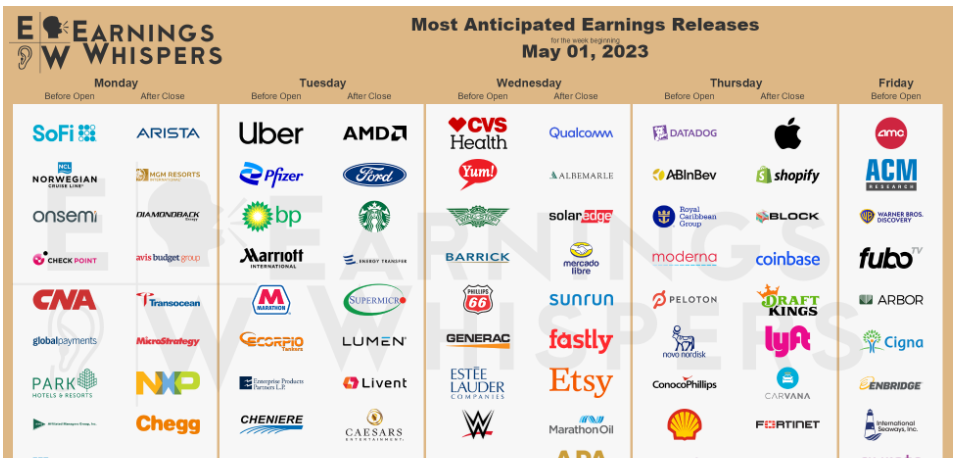
“Something that everyone knows isn’t worth anything.” ― Bernard Baruch
1. Single Dose of Omicron-Targeting Vaccines to Become Main Covid-19 Shot in U.S. — the Food and Drug Administration also authorized a second booster of the updated shots for people at high risk of Covid-19, specifically people 65 years and older or people who have weak immune systems.
The agency’s actions mark the latest tweaks to Covid-19 vaccines, and could be followed up by further efforts to simplify the complicated vaccination regimen, perhaps by enshrining plans for a once-a-year shot for most people.
2. Home Prices in March Posted Biggest Annual Decline in 11 Years — U.S. existing-home sales decreased 2.4% in March from the prior month to a seasonally adjusted annual rate of 4.44 million, the National Association of Realtors reported. March sales fell 22% from a year earlier. March marked the 13th time in the previous 14 months that sales have slowed. The housing market had a surprisingly strong February, when sales rose a revised 13.75% from the previous month. But after mortgage rates ticked higher, March sales resumed the extended period of declines.
3. Auto Dealers Feel the Squeeze — AutoNation said late last week that on a same-store basis, it sold 2.8% fewer new vehicles and 17.5% fewer used cars in the first quarter compared with a year earlier. Lithia LAD -0.08%decrease; red down pointing triangle Motors on Wednesday said it sold 6.3% fewer new vehicles and 2.4% fewer used vehicles over the same period. Cars are sitting on lots for longer as a result: Lithia said there were about 52 days of supply of new vehicles in the first quarter, up from 47 days a quarter earlier. AutoNation is carrying 25 days’ worth of new vehicle supply, up from 19 days from the prior quarter. Rising rates aren’t only a problem when it comes to selling cars. With so many more of them idling on lots, rising interest rates are adding up to higher floor plan financing expenses, eroding profits: Lithia Motors and AutoNations’ floor plan interest expenses last quarter were more than five times what they were a year earlier.
4. U.S. Begins Planning for 6G Wireless Communications — the White House will meet with corporate, government and academic experts to begin developing goals and strategies for the new 6G communications technology, which would have the ability to take cloud computing and the mobile internet to true global ubiquity, among other improvements.
The next generation of telecom is still years away from deployment, but it could pave the way for global internet access still unavailable with the current 5G standard, which makes smartphone downloads and wireless hot-spot connections faster. Expanding access to the internet has been a priority for the Biden administration as part of its infrastructure
The week ahead — Economic data from Econoday.com:
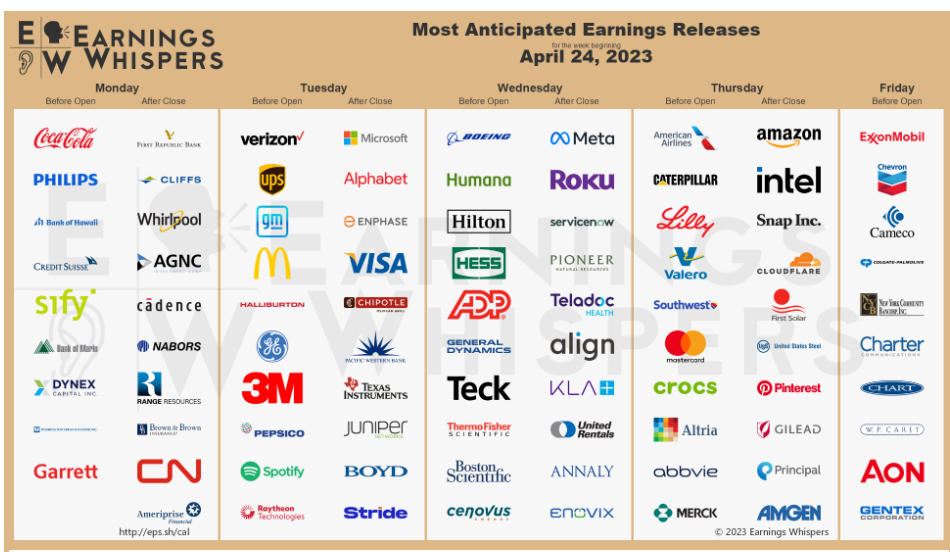
“Do more of what works and less of what doesn’t.” — unknown
1. U.S. Inflation Eased to 5% in March — the consumer-price index, a closely watched inflation gauge that measures what consumers pay for goods and services, rose 5% last month from a year earlier, down from February’s 6% increase and the smallest gain since May 2021, Consumers saw lower prices last month for groceries, gasoline, medical care and utilities and high prices for shelter, airline fares and insurance, the department said. Core prices, a measure of underlying inflation that excludes volatile energy and food categories, increased 5.6% in March from a year earlier, accelerating slightly from 5.5% the prior month. Core inflation, which economists see as a better predictor of future inflation, has stayed stubbornly high in part because of inflationary pressures from shelter costs.
2. I Bonds Lose Their Luster With Yield Set to Plunge Below 4% — yields on the popular Series I savings bonds are set to slump after a key measure of inflation showed signs of softening on Wednesday. Just a few months ago, they offered an historic 9.62% rate. Now that figure is expected to fall to 3.8%, putting the return closer to what you can get on certificates of deposit, high-yield savings accounts and money-market funds. Low-risk, inflation-linked I bonds soared in popularity over the past two years as investors looked for ways to shield their cash from rising prices. In the 15-month stretch beginning in November 2021, when I bond rates rose above 7% for the first time since 2000, sales topped $40 billion, according to the US Treasury Department.
3. US Producer Prices Fell in March by Most Since Start of Pandemic — the producer price index for final demand decreased 0.5% from a month earlier, according to data out Thursday from the Bureau of Labor Statistics. The figure was below all estimates in a Bloomberg survey of economists. The PPI slowed on an annual basis, rising 2.7% from a year ago, the smallest gain in more than two years.
Excluding the volatile food and energy components, the so-called core PPI fell 0.1% from February and increased 3.4% from a year ago. Most of the monthly decline in the overall PPI was due to goods, with 80% of that decrease tied to a drop in gasoline. Margins for machinery and vehicle wholesaling were a major factor in the 0.3% slide in services costs. Those prices slid by the most since April 2020.
4. Retail Sales Fell in March — Shoppers pulled back on purchases of items such as vehicles, furniture and appliances amid climbing interest rates. Overall purchases at stores, restaurants and online declined a seasonally adjusted 1% in March from the prior month, the Commerce Department said Friday. Consumers also spent less on gasoline, reflecting a downward trend in prices. Manufacturing output, which is also sensitive to interest rates, declined 0.5% in March from the prior month, and is down from a year earlier, the Fed said in a separate report Friday. And after a strong start to the year, hiring has eased for two straight months and the number of job openings has declined, signs the red-hot labor market is also cooling.
The week ahead — Economic data from Econoday.com:
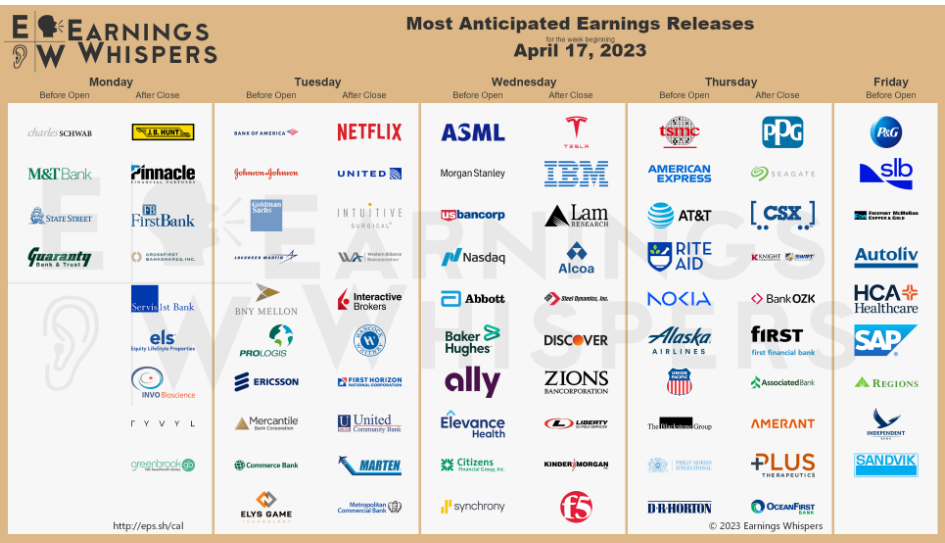
‘Every morning in Africa, a gazelle wakes up; it knows it must run faster than the fastest lion or it will be killed.” — Leon Cooperman
1. U.S. Job Openings Dropped in February — the number of job openings fell in February, dropping below 10 million for the first time in nearly two years in a sign that employers’ demand for workers eased amid a still strong labor market. That fits the overall picture of a solid but slightly cooler labor market in February. Employers added 311,000 jobs—fewer than in January but a still robust gain—while the unemployment rate edged higher but remained low at 3.6%.
“We’re finally seeing companies cutting back their openings, which is the first step towards easing the tightness of the labor market,” said Lightcast Senior Economist Ron Hetrick. “This could be what a soft landing looks like in today’s economy.”
2. US Service Gauge Falls More Than Expected as Demand Moderates — The group’s index of new orders at service providers dropped more than 10 points to a three-month low of 52.2. While still consistent with expansion, the scale of the drop suggests a significant slowing in the pace of bookings growth. The business activity measure, which mirrors the ISM’s factory production index, slipped to 55.4. “There has been a pullback in the rate of growth for the services sector, attributed mainly to a cooling off in the new orders growth rate, an employment environment that varies by industry and continued improvements in capacity and logistics,” Anthony Nieves, chair of the ISM Services Business Survey Committee, said in a statement.
3. Fed’s Emergency Loans to Banks Fall, But Remain High — Banks once again reduced their borrowings from two Federal Reserve backstop lending facilities in the most recent week, a sign the financial stresses that emerged following a string of bank collapses last month may be stabilizing. Emergency borrowing retreated for the third straight week, suggesting liquidity demand continues to ease following the second-largest bank failure in US history. Over the past few weeks, banks appear to have shifted a larger share of their borrowing out of the discount window, the Fed’s traditional backstop lending program, and into the new emergency lending facility it launched last month to help stem contagion in the bank sector.
4. March Jobs Report Shows Hiring Gradually Cooling — Employers added 236,000 workers last month, a historically strong gain but the smallest in more than two years, the Labor Department reported. The unemployment rate ticked down to 3.5%. More Americans jumped into the labor market in March, helping take pressure off wage increases. Average hourly earnings rose 4.2% last month from a year earlier, the smallest annual gain since mid-2021 when inflation was surging.
Steady hiring growth last month could keep the Federal Reserve on track to consider raising interest rates again at its meeting in early May. But slower wage gains could also allow officials to hint at a pause after that. Fed officials have signaled they will pay close attention to other measures of economic activity including bank lending conditions as they debate their next move.
The week ahead — Economic data from Econoday.com:
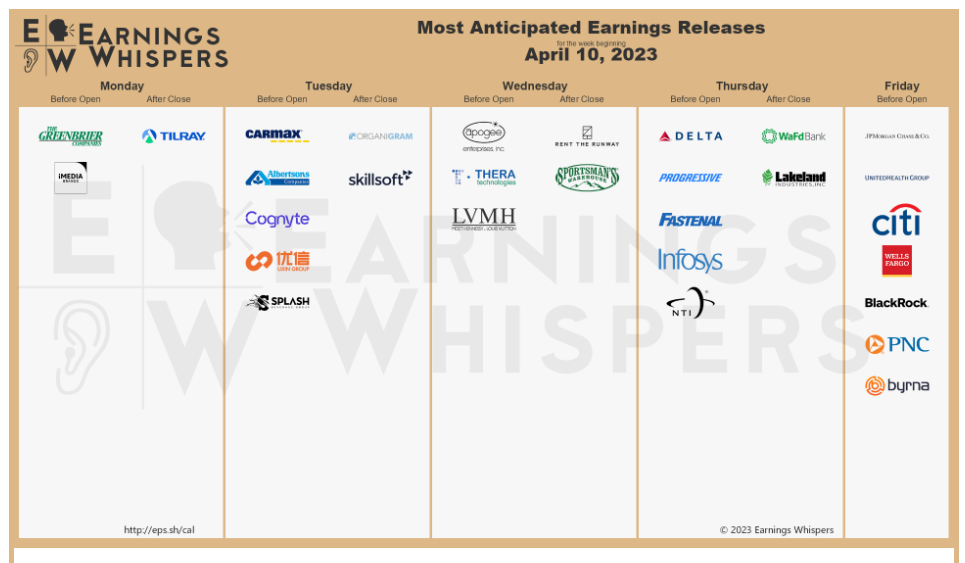
Sir John Templeton: “Bull markets are born on despair, grow on skepticism, mature on optimism and die on euphoria.”
1. Consumer Spending Growth Moderated in February and Core Inflation Eased — Consumer spending increased a seasonally adjusted 0.2% in February, from January’s revised 2% increase, which was the largest one-month gain in nearly two years, the Commerce Department said Friday. When adjusted for rising prices, spending fell 0.1% in February from the prior month, after rising a revised 1.5% in January.
The core personal-consumption expenditures price index—one of the Fed’s preferred gauges of inflation—climbed 4.6% in February from a year earlier, down from 4.7% the prior month. Many economists see the core measure, which omits volatile food and energy prices, as a better predictor of future inflation.
2. White House Calls for Tougher Midsize Bank Rules — The recommendations call for new rules from the Federal Reserve and other banking regulators that would apply to banks with $100 billion to $250 billion in assets. There were approximately 20 firms in that asset range as of the end of 2022, according to the Federal Financial Institutions Examination Council.
The Fed is already rethinking a number of its rules related to those banks after Silicon Valley Bank and Signature Bank failed. Changes could include tougher capital and liquidity requirements, as well as steps to strengthen stress tests that assess banks’ ability to weather a hypothetical severe downturn.
3. New EV Rules Mean Fewer Models Eligible for Tax Credit — The new rules, issued by the Treasury Department Friday, aim to make the U.S. less reliant on batteries and critical minerals shipped from China. For car buyers to claim the full $7,500 tax credit, the batteries must contain set amounts of components made in North America and critical minerals sourced in the U.S. or from certain friendly countries.
The criteria will take effect on April 18, when a list of models that qualify for the tax credit will be issued. Until then, consumers can claim the full tax credit when they buy vehicles that are currently eligible, before some are expected to drop off the list.
4. Nasdaq turns in best performance since 2020 — The S&P 500 rose 7% in the first quarter, while the Dow Jones Industrial Average added 0.4%. The Nasdaq Composite soared. The technology-heavy index jumped 17%, outperforming the Dow industrials by the widest margin since 2001. Overall, it was Nasdaq’s best quarter since the second quarter of 2020. Recent projections show Fed officials expect the federal-funds rate to rise to at least 5.1% from its current range of 4.75% to 5%. That suggests the Fed could push through one more quarter-point interest-rate increase and then hold rates at that level for the remainder of the year.
The week ahead — Economic data from Econoday.com:
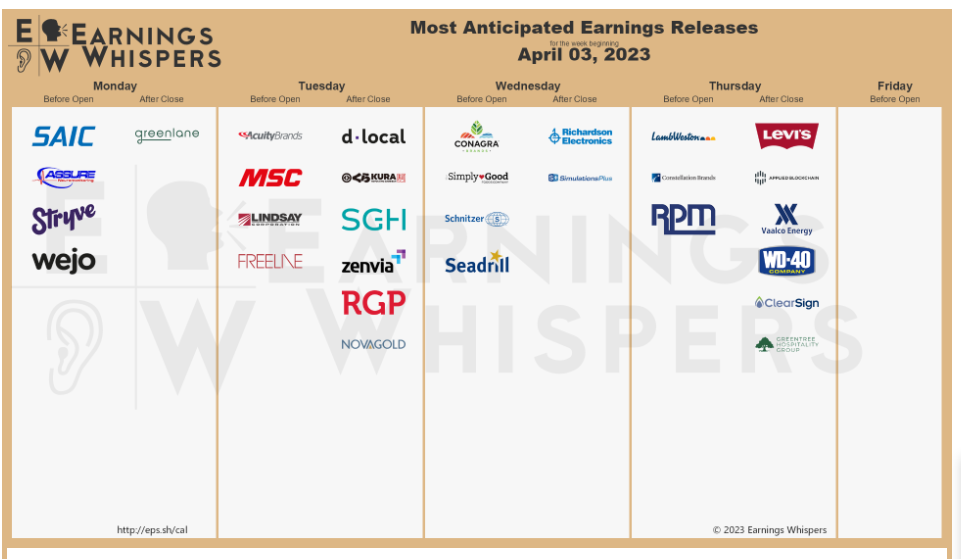
“The stock market is never obvious. It is designed to fool most of the people, most of the time”- Jesse Livermore —
1. Yellen Says US Will Intervene If Needed to Protect Smaller Banks — Treasury Secretary Janet Yellen said on last week the US government could repeat the drastic actions it took recently to protect bank depositors if smaller lenders are threatened. US authorities took extraordinary steps earlier this month to bolster that confidence following the collapses of Silicon Valley Bank and Signature Bank. Regulators guaranteed insured and uninsured deposits at the two institutions. The Federal Reserve also launched a new backstop for lenders and altered rules at its emergency lending facility — the so-called discount window — to help them meet deposit withdrawals.
2. Rent Inflation for US Single-Family Homes Drops Near Two-Year Low — rent increases for US single-family homes eased for a ninth straight month in January, pushing the annual rate to the lowest since the spring of 2021, according to CoreLogic. Nationwide, the typical rent for a single-family home rose 5.7% from a year earlier, data from the real estate analytics provider show. All 20 major metro areas tracked by CoreLogic posted single-digit annual rent increases, for the first time since late 2020.
3. Fed Raises Rates but Nods to Greater Uncertainty After Banking Stress — the Federal Reserve approved another quarter-percentage-point interest-rate increase but signaled that banking-system turmoil might end its rate-rise campaign sooner than seemed likely two weeks ago.
The decision Wednesday marked the Fed’s ninth consecutive rate increase aimed at battling inflation over the past year. It will bring its benchmark federal-funds rate to a range between 4.75% and 5%, the highest level since September 2007. The policy statement said it was too soon to tell how much recent banking stress would slow the economy. “The U.S. banking system is sound and resilient,” the statement said. “Recent developments are likely to result in tighter credit conditions for households and businesses and to weigh on economic activity, hiring, and inflation. The extent of these effects is uncertain.”
4. Deutsche Bank Stock Tumbles on Contagion Fears — Investors sparked a selloff in Deutsche Bank AG DB -4.20%decrease; red down pointing triangle and thrust one of Europe’s most important lenders into the center of concerns about the health of the global financial system. The concern over Deutsche Bank emerged days after Credit Suisse Group AG was forced into a takeover by its larger and more stable rival UBS Group AG. Since the collapse of Silicon Valley Bank in the U.S. earlier this month, investors have scoured the globe for institutions perceived as vulnerable. Deutsche Bank sits at the heart of the German economy. Despite years of retrenchment to make the bank smaller and safer, it remains a globally vital bank, with a major footprint on Wall Street trading bonds, derivatives and currencies. It serves multinational companies with bread-and-butter basics of lending, managing money and corporate accounts.
The week ahead — Economic data from Econoday.com:
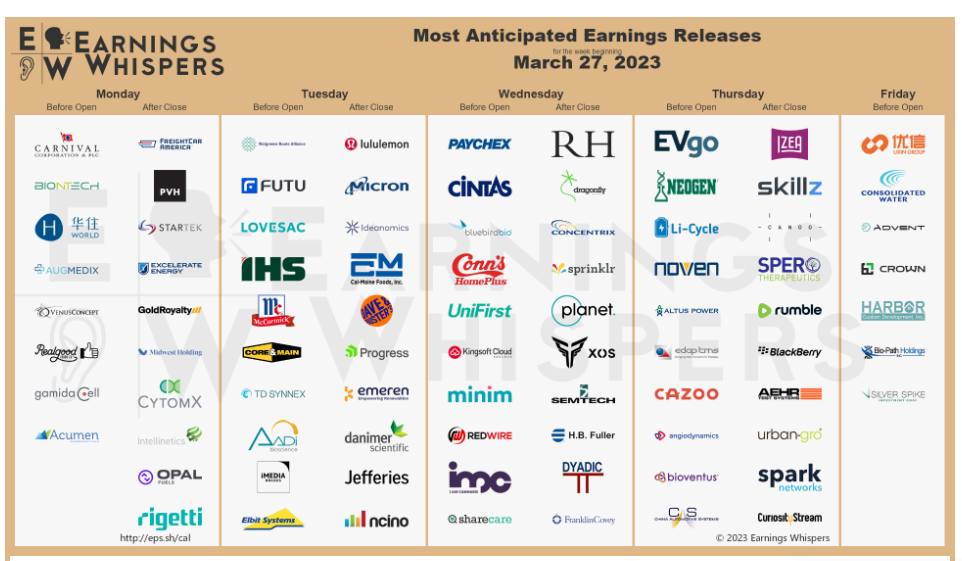
© Copyright 2026 Market Outlook All Rights Reserved
Design by EGS
Sponsored by Equity Guidance LLC