Week of Dec 19 ’25 Weekly Recap & The Week Ahead
Tuesday, December 23rd, 2025“The market is a device for transferring money from the impatient to the patient.” – Warren Buffett
1. U.S. Unemployment Rose in November Despite Job Gains — Nonfarm payrolls increased 64,000 in November after declining 105,000 in October, adding to the choppiness seen in the labor market in recent months. The unemployment rate rose to 4.6%, according to Bureau of Labor Statistics data out Tuesday, continuing its upward climb as many out-of-work Americans struggled to land new jobs. The decline in October payrolls, which was the largest since the end of 2020, was due to a 162,000 plunge in federal government employment as workers who accepted the Trump administration’s deferred resignation offers officially dropped off payrolls.Fed officials are split over whether more cuts are needed next year. The median Fed official penciled in just one reduction in 2026, according to rate projections released alongside the decision, but some policymakers see no further cuts. Traders, meanwhile, have been counting on two.
2. October Retail Sales Fell Flat. Weak Car Sales Weighed On the Data— Retail sales were virtually unchanged in October from September, according to data released Tuesday by the Census Bureau. Economists polled by FactSet expected a 0.05% increase. Sales rose 3.5% on an annual basis. September’s headline retail sales were revised lower to a 0.1% monthly increase from a 0.2% increase previously. That weaker vehicle sales weighed on October’s figure—sales at car and parts dealers were down 1.6% from September—wasn’t a surprise. Many people rushed to buy a car earlier this year, fearing tariffs would push costs prohibitively higher later on.
3. US Core CPI Eases to Four-Year Low in Shutdown-Impacted Report — The core consumer price index, which excludes the often-volatile food and energy categories, increased 2.6% in November from a year ago, according to Bureau of Labor Statistics data out Thursday. The overall CPI climbed 2.7% in November from a year ago. The longest-ever government shutdown prevented the BLS from collecting much of the October price data. That not only limited the agency’s ability to determine month-over-month changes for the broader measures of inflation, but some economists noted it likely impacted the annual November figures as well. Despite numerous caveats, the report offers some hope that inflationary pressures are easing after remaining stuck in a narrow range since early this year. The BLS said the core CPI rose just 0.2% over the two months ended in November, restrained by declines in costs of hotel stays, recreation and apparel. Prices of household furnishings and personal care products rose.
4. Mortgage Rates Are Falling but Owners Still Won’t Sell — Nearly 30 million households, or 54% of primary mortgage-holders, have mortgage rates at or below 4%. They were able to buy homes or refinance their mortgages when rates fell to 3% or lower in 2020 and 2021.
Now, many of those who want to move don’t feel it is worth it to buy a home and take on mortgage rates that have doubled. This “lock-in effect” has helped freeze the housing market for three straight years, suppressing the number of U.S. homes for sale and keeping inventory well below historic levels for most of that period. The Federal Reserve cut short-term interest rates this month but signaled it might be done with further rate cuts for now. Mortgage rates edged lower to 6.21% this week, holding near the one-year low reached in October, Freddie Mac said.
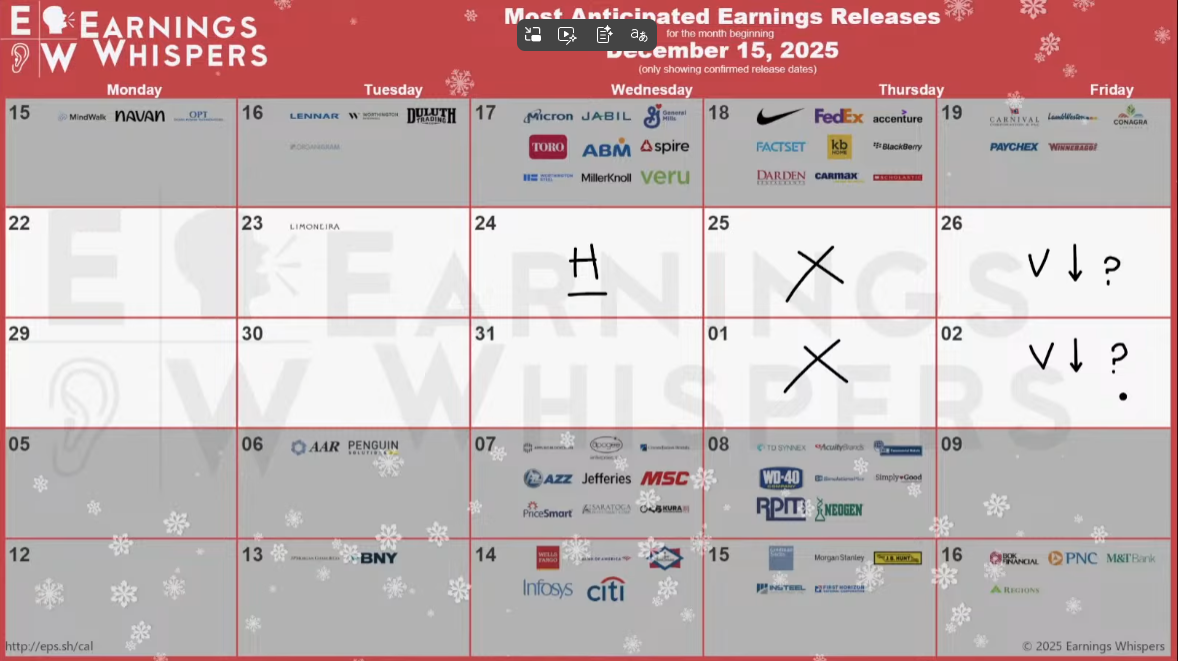
The week ahead — Economic data from Econoday.com: